Hake in cider sauce is one of the signature dishes of Asturias, the cider-producing region in northern Spain where natural cider is deeply woven into local food culture. This recipe uses the gentle acidity and light fruitiness of natural cider to build a delicate sauce around hake loins, the mild white fish that is a staple on Spanish tables.
You'll find this dish on the menu at Asturian cider houses, known as sidrerías, especially during cider season from January through August, when long communal lunches called espichas fill the region's cider cellars and restaurants. It's just as common as a home-cooked family meal, since it pairs a light, healthy fish with the distinctive flavor of cider without requiring complicated technique.
Print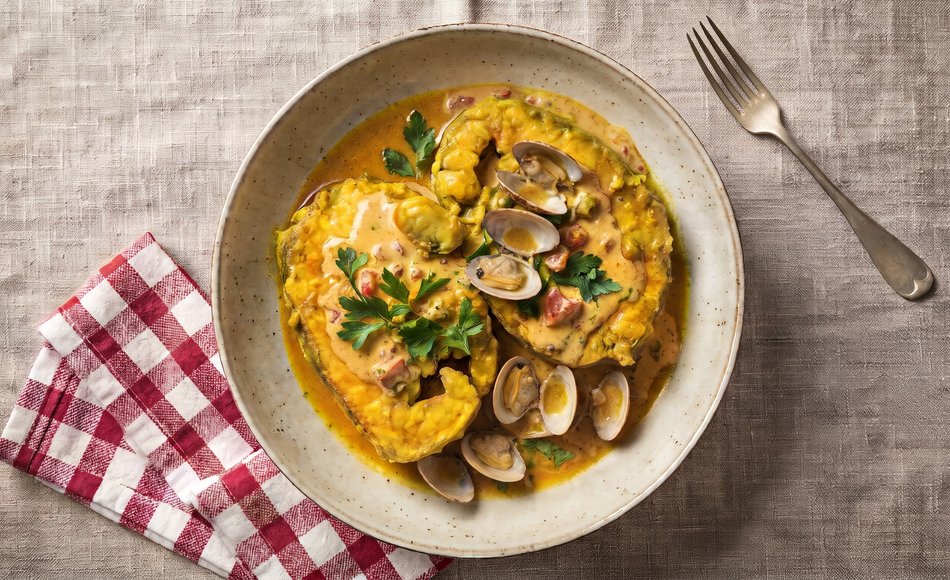
Asturian Hake in Cider Sauce
- Prep Time: 15 minutes
- Cook Time: 20 minutes
- Total Time: 35 minutes
- Yield: 4 servings
- Category: Main Course
- Cuisine: Asturian
Ingredients
- 4 thick fresh hake loins, 180 g / about 6 oz each (about 720 g total)
- 250 ml of natural Asturian cider (1 cup)
- 200 g of finely chopped white onion (1 medium onion)
- 20 g of chopped garlic (4 garlic cloves)
- 200 ml of fish stock (1 cup)
- 30 g of all-purpose flour (3 tablespoons)
- 60 ml of olive oil (4 tablespoons)
- 15 g of fresh chopped parsley (2 tablespoons)
- 300 g of clams (2 cups) (optional)
- Salt, to taste
- Ground black pepper, to taste (optional)
Preparation
- Prep the hake, pat the loins dry with paper towels, season with salt and pepper, and dust lightly with flour, shaking off the excess so only a thin coating remains.
- Sear the fish, heat the olive oil in a wide pot and sear the hake loins on both sides for a couple of minutes, just enough to seal them; remove and set aside.
- Sauté the onion and garlic, in the same oil, add the chopped onion and cook over medium heat until translucent, then stir in the garlic and cook for another minute without letting it burn.
- Add the cider and fish stock, pour in the natural cider and let it reduce for a couple of minutes so the alcohol cooks off, then add the fish stock and stir well into the sautéed onion.
- Cook the hake in the sauce, return the hake loins to the pot, add the clams if using, cover, and cook over medium-low heat until the fish is opaque and flakes easily and the clams open, about 6 to 8 minutes; discard any clams that do not open.
- Garnish and serve, sprinkle fresh chopped parsley over the sauce and serve the hake hot, spooned over with the cider sauce.
Practical Tips
- Use natural Asturian cider, not sweet or sparkling cider, since its dry acidity and lower sweetness are what balance the traditional sauce.
- Don't overcook the hake: the loins should stay moist and flaky, so pull them from the heat as soon as the flesh separates easily into flakes.
- If using clams, soak them in salted water for an hour beforehand so they release any sand before adding them to the pot.
- The flour left on the fish also helps lightly thicken the sauce, so don't shake off too much of it.
Serving Suggestions
Asturian hake in cider sauce is traditionally served in the same pot or in a shallow bowl, generously covered with the sauce and with the clams visible if used. It's best enjoyed freshly made, while the fish is still hot and the sauce keeps its light texture.
Recommended sides
- Boiled or steamed potatoes
- Crusty bread to soak up the sauce
- A glass of natural Asturian cider
A Bit of History
Asturias holds a Protected Designation of Origin for its natural cider, made from regional apples through spontaneous fermentation, with no added carbonation. It's traditionally poured, or 'escanciado', from high above the glass to aerate it right before drinking, a ritual that's as much a part of cider culture as the drink itself.
The pairing of fish and cider isn't a coincidence: in Asturian cider houses, where cider is served in small pours called culines throughout the meal, cooking fish in the very drink shared at the table is a natural way to use an ingredient that's always on hand in the region's kitchens.
Frequently Asked Questions
Use natural Asturian cider, not sweet or sparkling cider, since its dry acidity and lower sweetness are what balance the traditional sauce.
The flour creates a thin coating that helps seal the fish while searing, and what remains on the fish also helps lightly thicken the sauce.
It is done when the fish turns opaque and flakes easily, after about 6 to 8 minutes of cooking in the sauce.
Soak them in salted water for an hour beforehand so they release any sand, and discard any clams that do not open during cooking.
It is recommended to serve it with boiled or steamed potatoes, crusty bread to soak up the sauce, and a glass of natural Asturian cider.