Borage with potatoes in ajoarriero garlic sauce is one of Aragón's best-loved vegetable dishes, built around the thick, fleshy stalks of borage that have been grown for generations in the market gardens along the Ebro River, especially around Zaragoza.
The word "ajoarriero" points to the hot garlic, olive oil, and paprika dressing once prepared by mule drivers on Spain's old trade routes; over time, cooks began pouring that same sizzling garlic sauce over seasonal vegetables like borage, turning a humble dish into one of the signature flavors of Aragonese cooking.
Print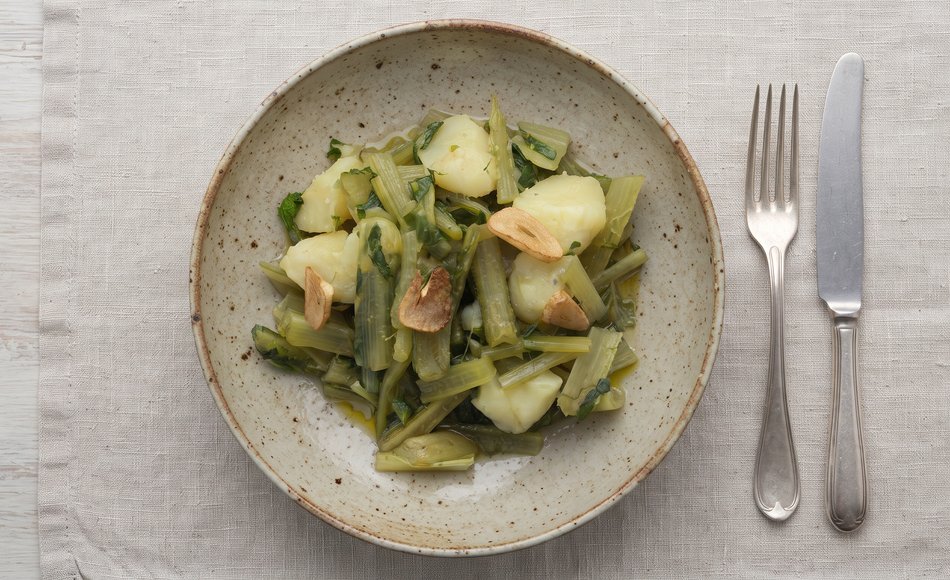
Spanish Borage with Potatoes in Ajoarriero Garlic Sauce
- Prep Time: 20 minutes
- Cook Time: 30 minutes
- Total Time: 50 minutes
- Yield: 4 servings
- Category: Main Course
- Cuisine: Spanish (Aragonese)
Ingredients
- 1 kg of fresh borage (2 large bunches)
- 500 g of potatoes (3 to 4 medium potatoes)
- 6 cloves of garlic (1 small head)
- 100 ml of extra virgin olive oil (generous 1/3 cup)
- 1 tsp of sweet paprika
- 1 tbsp of white wine vinegar (optional)
- Salt, to taste
- 80 g of diced serrano ham (about 3/4 cup) (optional)
- 2 hard-boiled eggs (optional)
- Salted water for boiling the borage and potatoes
Preparation
- Clean the borage, pull off the tougher outer leaves, separate the stalks, and peel them with a knife or vegetable peeler to remove the stringy fibers, just as you would with celery; then cut them into pieces about 2 inches long and rinse well under running water.
- Boil the borage and potatoes, bring a large pot of salted water to a boil, add the peeled potatoes cut into medium chunks first, and after 5 minutes add the borage stalks; cook everything together for 20 to 25 minutes, until both are tender when pierced with a fork.
- Drain and arrange on a platter, drain off the cooking water, drain the borage and potatoes well, and arrange them on a wide serving platter, keeping the potato pieces fairly whole so they don't fall apart.
- Make the ajoarriero garlic sauce, heat the olive oil in a skillet over medium heat, thinly slice the garlic, and cook it slowly until golden but not burnt; remove the pan from the heat, stir in the sweet paprika quickly so it doesn't turn bitter, and if using vinegar, add it carefully since it will sputter.
- Pour the hot sauce over the vegetables, drizzle the garlic and paprika oil evenly over the borage and potatoes so every piece is well coated.
- Serve right away, if you like, scatter the sautéed serrano ham from the same pan on top, or add quartered hard-boiled eggs, and bring the dish to the table while the oil is still sizzling.
Kitchen Tricks
- If any borage stalks turn out especially fibrous while cleaning them, discard those pieces outright, since only the tender parts are pleasant to eat.
- Freeze cleaned, cooked borage in portions when it's in season (fall and winter) so you can enjoy it year-round.
- Don't let the garlic burn while browning it, since that turns the whole sauce bitter; pull it off the heat as soon as it turns light gold.
Traditional variations
- In some Aragonese homes, the borage is coated in egg and flour and fried, giving rise to the well-known "battered borage" (borraja rebozada).
- In Navarra and La Rioja, it's common to top the dish with a whole poached or fried egg instead of chopped hard-boiled egg.
Traditional Way to Serve
Serve it hot, right after making the garlic sauce, as a first course or a hearty side dish, bringing the whole platter to the center of the table to share.
Recommended sides
- Crusty rustic bread for mopping up the garlic oil
- A young local red or rosé wine
Origin and Tradition
Borage is so deeply rooted in Aragonese market gardens that it holds a Protected Geographical Indication ("Borraja de Aragón"), a rare distinction for a vegetable long considered humble, everyday home cooking.
The "ajoarriero" style takes its name from the arrieros, the mule drivers who once crossed Spain hauling goods along trade routes. Their cooking was practical and built on few ingredients, relying on garlic, olive oil, and paprika, a combination that eventually gave its name to this distinctive garlic sauce.
Frequently Asked Questions
Remove the tough outer leaves, peel the stalks to remove the strings, like celery, and cut them into pieces about 5 cm (2 inches) long.
The potatoes go in first and, after 5 minutes, the borage; together for 20 to 25 minutes in salted water.
Olive oil with golden sliced garlic and sweet paprika, poured hot over the vegetables.
Don't let the garlic burn, and add the paprika with the pan off the heat.
Sautéed serrano ham or quartered hard-boiled eggs on top, and bread to dip in the oil.