Crema catalana is one of Catalonia's most iconic desserts: a silky custard infused with lemon zest and cinnamon, thickened with cornstarch and egg yolks, and finished with a thin, crackling crust of caramelized sugar. Unlike its French cousin crème brûlée, it's cooked entirely on the stovetop rather than baked, giving it a distinctly lighter, more delicate texture.
This dessert is closely tied to the feast of Sant Josep (Saint Joseph), celebrated on March 19th, which also happens to be Father's Day in Spain. For generations, Catalan families have made or bought crema catalana around that date, turning it into one of the season's most anticipated treats, though today it's enjoyed across Spain all year round.
Print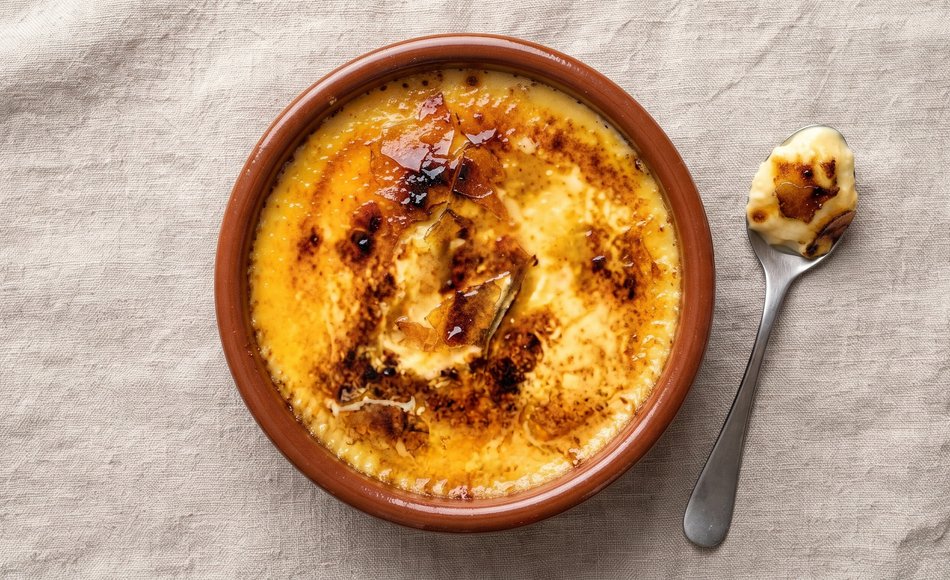
Spanish Crema Catalana (Catalan Cream)
- Prep Time: 15 minutes
- Cook Time: 20 minutes
- Total Time: 3 hours 35 minutes
- Yield: 6 servings
- Category: Dessert
- Cuisine: Catalan
Ingredients
- 1 liter of whole milk (4 cups)
- Peel of 1 lemon, white pith removed
- 1 cinnamon stick
- 8 egg yolks
- 200 g of granulated sugar (for the custard) (1 cup)
- 40 g of cornstarch (4 tablespoons)
- 100 g of granulated sugar (for caramelizing) (6 tablespoons)
Preparation
- Infuse the milk, pour the milk into a saucepan with the lemon peel and cinnamon stick, and heat it over medium heat without letting it boil, until it starts to steam and release its aroma; remove it from the heat and let it steep for 10 minutes.
- Whisk the yolks with the sugar, in a separate bowl, whisk the egg yolks with the sugar until pale and creamy, then stir in the cornstarch dissolved in a splash of cold milk until no lumps remain.
- Combine and cook over low heat, strain the infused milk to remove the lemon peel and cinnamon stick, pour it gradually into the yolk mixture while whisking constantly, then return everything to the pan over low heat and cook, stirring nonstop, until the custard thickens enough to coat the back of a spoon, about 8 to 10 minutes.
- Portion and chill, divide the hot custard among individual shallow clay or ceramic dishes, let them cool to room temperature, then refrigerate for at least 3 hours, ideally overnight, until fully set and cold.
- Caramelize the sugar, just before serving, sprinkle a thin, even layer of sugar over each custard and torch it with a kitchen blowtorch, or a caramelizing iron, until it forms a crisp, golden crust.
- Serve right away, bring the crema catalana to the table as soon as the sugar is caramelized, so guests enjoy the contrast between the crackling crust and the cold, creamy custard at its best.
Kitchen Tips
- Don't let the milk come to a boil during infusing, as it could curdle or affect the final texture of the custard.
- Always strain the infused milk before mixing it with the yolks, to remove any bits of lemon peel or cinnamon and get a perfectly smooth custard.
- If you don't have a kitchen torch, you can caramelize the sugar under the oven broiler, watching closely so it doesn't burn.
- Caramelize the sugar right before serving; doing it too far ahead lets the custard's moisture soften the crisp crust.
Traditional variations
- Some families add orange peel along with the lemon peel, giving the custard a more complex citrus aroma.
- Older traditional recipes use rice flour instead of cornstarch to thicken the custard, though cornstarch is by far the most common choice today.
Recommended Presentation
Crema catalana is always served in its own individual clay or ceramic dish, the same one it was caramelized in, so each diner cracks the sugar crust with a spoon right at the table.
It's traditionally enjoyed as an after-meal dessert, especially during the family lunch on Saint Joseph's Day, though it can be made any time of year.
Recommended sides
- Crema catalana is traditionally enjoyed on its own, with no accompaniments, since the caramelized crust and creamy custard are the star of the show.
Origin and Tradition
Crema catalana is deeply tied to the feast of Sant Josep (Saint Joseph), celebrated on March 19th, which also coincides with Father's Day in Spain. Around that date, Catalan pastry shops fill up with freshly made crema catalana, and many families prepare it at home as part of the festive meal.
There's an ongoing debate over whether crema catalana is the ancestor of French crème brûlée or whether the two desserts developed independently. The technical difference is clear: crema catalana is cooked on the stovetop with cornstarch and egg yolks, while crème brûlée is baked in a water bath with cream and needs no starch at all.
Frequently Asked Questions
Because it could curdle or affect the final texture of the custard; it should only be heated until it starts to steam and release its aroma.
At least 3 hours, ideally overnight, until the custards are fully set and cold.
You can caramelize the sugar under the oven broiler, watching closely so it doesn't burn.
It's served in its own individual clay or ceramic dish, the same one it was caramelized in.
When it thickens enough to coat the back of a spoon, which takes about 8 to 10 minutes of cooking over low heat.