Frisuelos are very thin, delicate crêpes from Asturias, in northern Spain, made from a light batter of flour, milk, eggs, and sugar, scented with anise and lemon zest. They're the star sweet of Antroxu, the Asturian Carnival, though many households make them well beyond that season as an afternoon treat.
The recipe is passed down through generations, and every Asturian family tends to have its own way of dosing the anise or getting the batter just thin enough. Eating frisuelos hot, straight off the pan and dusted with sugar, is part of childhood memories for much of Asturias.
Print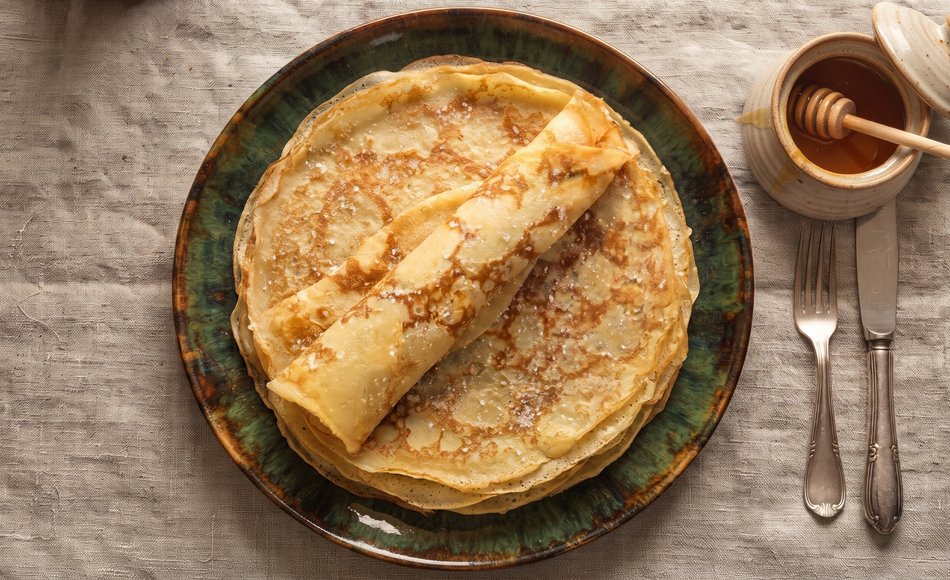
Asturian Frisuelos
- Prep Time: 15 minutes
- Cook Time: 20 minutes
- Total Time: 1 hour
- Yield: 4 servings
- Category: Dessert
- Cuisine: Asturian / Spanish
Ingredients
- 250 g of all-purpose flour (2 cups)
- 500 ml of whole milk (2 cups)
- 3 large eggs
- 50 g of granulated sugar (4 tablespoons)
- 1 pinch of salt
- 15 ml of anise liqueur (aguardiente de anís or another dry anise spirit) (1 tablespoon)
- Zest of 1 lemon
- 30 g of butter, for frying (2 tablespoons)
- Sugar, for dusting, to taste (optional)
Preparation
- Make the batter, in a large bowl whisk the eggs with the sugar and the pinch of salt until slightly pale, then slowly whisk in the milk until fully combined.
- Add the flour and flavorings, sift the flour into the mixture and whisk until no lumps remain, then stir in the anise liqueur and lemon zest until fully incorporated. Let the batter rest for 20 to 30 minutes at room temperature so the flour hydrates and the frisuelos turn out thinner.
- Heat the pan, grease a wide nonstick skillet with a little butter and heat it over medium-high heat until hot but not smoking.
- Cook the frisuelos, pour a small ladleful of batter into the pan, tilting it so the batter coats the bottom in a very thin layer, cook for 1 to 2 minutes per side until the edges lift and the surface shows golden spots, then carefully flip and cook the other side.
- Stack and serve, remove each frisuelo to a plate, dusting with sugar between layers if you like, and continue cooking the rest of the batter the same way.
Kitchen Tricks
- Don't skip the resting time — batter that hasn't rested makes thicker, less delicate frisuelos.
- If the batter feels too thick, add a splash more milk until it reaches a consistency similar to heavy cream.
- Use a dedicated crêpe pan if you have one — its flat surface helps the batter spread evenly.
- Don't overdo the butter or oil in the pan — too much makes the frisuelos greasy and keeps them from browning evenly.
Traditional variations
- Some Asturian households replace the dry anise liqueur with matalahúva (anise seeds) steeped beforehand in warm milk.
- Some versions add a splash of natural Asturian cider to the batter in place of part of the milk.
- Closer to the Galician border, thicker versions resembling filloas are made, though traditional Asturian frisuelos are distinguished by being thinner and anise-flavored.
Traditional Way to Serve
Frisuelos are traditionally served freshly made, warm or at room temperature, folded in half or rolled up and generously dusted with white sugar. They are the star sweet of Antroxu, though many families also make them for afternoon snacks throughout the year.
Recommended sides
- Dusted white sugar
- Asturian heather honey
- Coffee with milk or hot chocolate
Origin and Tradition
The name "frisuelo" likely comes from the Latin frigere ("to fry"), and this recipe has been made in Asturias for generations as part of Antroxu, the Asturian Carnival, when sweets were traditionally fried before the start of Lent.
Although they resemble French crêpes at first glance, frisuelos have their own identity defined by the anise flavor and lemon zest, and shouldn't be confused with Galician filloas, which tend to be thicker and, in some traditional recipes, are made with pork blood or wine.
Frequently Asked Questions
Resting the batter for 20 to 30 minutes at room temperature lets the flour hydrate, which makes the frisuelos turn out thinner; batter that hasn't rested makes thicker, less delicate frisuelos.
Add a splash more milk until the batter reaches a consistency similar to heavy cream.
Cook it for 1 to 2 minutes per side until the edges lift and the surface shows golden spots, then carefully flip it.
They're traditionally dusted with white sugar and served with Asturian heather honey or coffee with milk or hot chocolate.
Frisuelos are thinner and flavored with anise, while Galician filloas tend to be thicker and, in some traditional recipes, are made with pork blood or wine.