Estofat de vedella is one of the most iconic beef stews in Catalan cuisine, a hearty one-pot dish that braises beef low and slow with vegetables, wine, and a final picada of almonds and dark chocolate that gives the sauce its signature thick, velvety texture.
It's a deeply familiar recipe, closely tied to Sunday lunches across Catalonia, where the slow pace of the cooking and a day of resting in the fridge are considered essential parts of getting it right. It's traditionally cooked in a clay cazuela over low heat, letting the meat soften gradually as the flavors of the sofrito, wine, and spices come together.
The touch of dark chocolate, which might surprise anyone unfamiliar with Catalan cooking, is actually an old and widespread practice in the region, also found in dishes like hare civet or certain game sauces, reflecting a centuries-old convent pastry tradition that has long worked cacao into savory cooking.
Print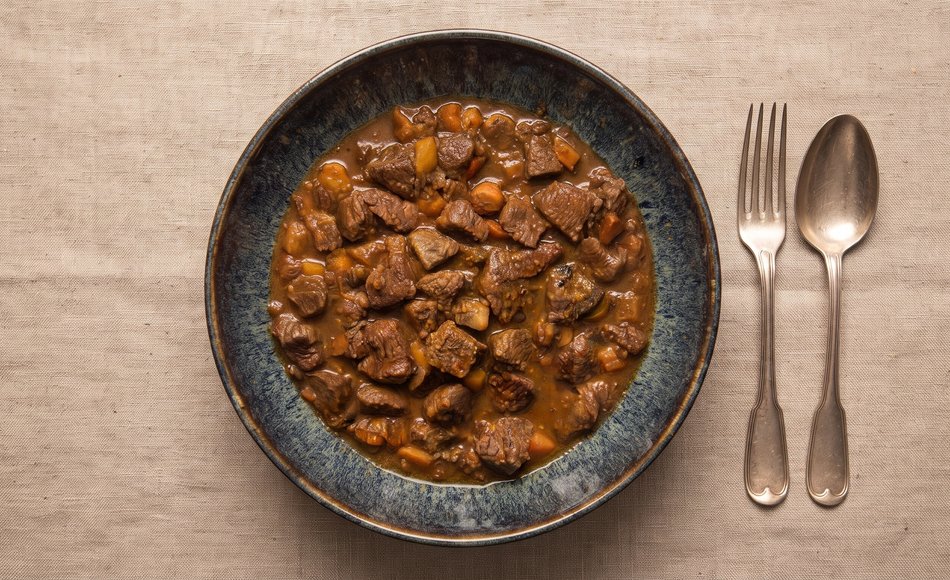
Catalan Beef Stew (Estofat de Vedella)
- Prep Time: 30 minutes
- Cook Time: 2 hours
- Total Time: 2 hours 30 minutes
- Yield: 4 servings
- Category: Main Course
- Cuisine: Catalan
Ingredients
- 1 kg of beef chuck or shank, cut into 4-5 cm (1½-2 inch) chunks (about 2.2 lb)
- 500 g of potatoes, peeled and cut into large chunks (about 1.1 lb (3 medium potatoes))
- 300 g of yellow onion, finely chopped (about 2 large onions)
- 200 g of carrot, sliced (about 2 medium carrots)
- 400 g of ripe tomato, grated (or crushed canned tomato) (about 3 large tomatoes)
- 4 cloves of garlic, minced
- 200 ml of dry red wine or Spanish rancio wine (about 3/4 cup)
- 500 ml of beef broth or water (about 2 cups)
- 2 bay leaves
- 1 cinnamon stick, 5 cm (about 2 inches)
- 30 g of dark chocolate (70% cacao), grated (about 2 small squares)
- 30 g of toasted almonds (a small handful)
- 1 slice of day-old bread, fried
- 60 ml of extra virgin olive oil (about 1/4 cup (4 tablespoons))
- Salt and freshly ground black pepper, to taste
- a handful of fresh parsley, chopped (for garnish) (optional)
Preparation
- Sear the beef, heat the olive oil in a large pot or Dutch oven over medium-high heat and brown the beef chunks on all sides until deeply colored; remove and set aside.
- Build the sofrito, in the same pot, cook the onion over medium heat until translucent, then add the carrot and garlic and cook 5 minutes more before stirring in the grated tomato, letting it reduce until most of its liquid has evaporated.
- Braise the meat, return the beef to the pot, pour in the wine and let the alcohol cook off for a couple of minutes; add the broth, bay leaves, and cinnamon stick, cover, and simmer over low heat for about 1 hour 30 minutes, stirring occasionally.
- Add the potatoes, once the meat is starting to turn tender, add the potatoes to the pot and continue cooking, covered, for another 25 to 30 minutes, until they're soft but still holding their shape.
- Make the picada, in a mortar or food processor, mash the fried bread, toasted almonds, and grated chocolate together with a couple of tablespoons of the stew's broth until you get a smooth paste.
- Finish the stew, stir the picada into the stew, mixing well, and simmer uncovered for 10 more minutes to thicken the sauce; adjust the salt and pepper, remove the cinnamon stick and bay leaves, and serve piping hot.
Kitchen Tricks
- Choose a beef cut with some connective tissue, like chuck, shank, or short rib, so it turns tender during the long braise.
- If you have time, make the stew a day ahead: resting in the fridge deepens the flavor and makes it easy to skim off excess fat.
- Don't skip the picada, it's what gives this dish its velvety texture and the touch that defines Catalan cooking.
- Use a Spanish rancio wine if you can find one, it adds a deeper, nuttier note than a regular dry red.
Traditional variations
- In the fall, many families add or swap in wild mushrooms (rovellons or porcini), a common variation in rural Catalonia.
- Some home versions skip the chocolate in the picada, using just bread, garlic, and almonds, without being considered any less authentic.
Recommended Presentation
Serve the estofat de vedella piping hot, straight from the pot to the table, in a clay cazuela if you have one, since it holds the heat and echoes the traditional slow-cooked style of the dish.
This stew tastes even better the next day, so it's common to make it ahead of time for family Sunday lunches.
Recommended sides
- Crusty pagès bread for soaking up the sauce
- White rice
- A young red wine or Catalan rancio wine
A Bit of History
Using chocolate in savory dishes like this stew is one of the signatures of Catalan cuisine, inherited from a pastry and convent tradition that, since the 18th century, worked cacao — then a luxury good arriving from the Americas — into meat and game stews.
The picada, a mix of nuts, fried bread, and sometimes chocolate or spices, is a technique unique to Catalan cooking used to both thicken and round out the flavor of stews, fish dishes, and other one-pot meals.
Frequently Asked Questions
Yes, in fact it's recommended to make it a day ahead, since resting in the fridge deepens the flavor and makes it easy to skim off excess fat; the stew also tastes even better the next day.
Choose a cut with some connective tissue, like chuck, shank, or short rib, since it turns tender during the long braise.
Yes, some home versions skip the chocolate and use just bread, garlic, and almonds, without being considered any less authentic.
It's recommended to serve it with crusty pagès bread for soaking up the sauce, white rice, and a young red wine or Catalan rancio wine.
Yes, in the fall many families add or swap in wild mushrooms like rovellons or porcini.