
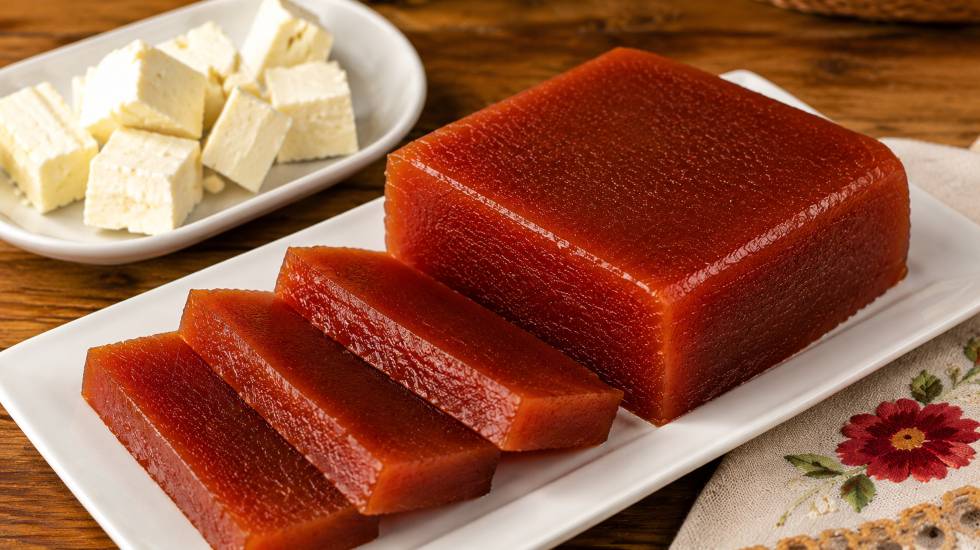
Quince paste is a traditional fruit confection made by slowly cooking quince fruit with sugar until it develops a dense texture and a deep ruby-red color. It is one of the most iconic preserves in Spanish and Latin American cuisine.
Originally developed as a method for preserving seasonal fruit, quince paste became popular due to its long shelf life and distinctive sweet-tart flavor. The natural pectin in quince helps create its signature firm consistency.
Today it is commonly enjoyed as a dessert, snack, or cheese accompaniment. It is especially famous when paired with cheese, creating a sweet and savory combination appreciated throughout the Spanish-speaking world.
Print
Quince Paste
- Prep Time: 20 minutes
- Cook Time: 1 hour 40 minutes
- Total Time: 2 minutes
- Yield: 4
- Category: Dessert
- Cuisine: Spanish
Ingredients
- 1 kg ripe quinces (about 6–8 medium fruits)
- 1 kg granulated sugar (5 cups)
- 500 ml water (2 cups)
- 30 ml lemon juice (2 tablespoons)
Preparation
- Wash the quinces thoroughly to remove their natural fuzz. Cut them into quarters, remove the cores and seeds, and place them in a large pot with the water.
- Cook over medium heat for 35 to 45 minutes until the fruit becomes very tender. Drain and allow it to cool slightly.
- Puree the cooked quinces until completely smooth using a food processor, blender, or food mill.
- Return the puree to a wide pot, add the sugar and lemon juice, and stir until everything is fully combined.
- Cook over low heat for 50 to 60 minutes, stirring frequently to prevent sticking. Continue cooking until the mixture becomes thick, glossy, and develops a deep reddish color.
- Pour the hot paste into lightly moistened molds or containers and smooth the surface evenly.
- Allow it to cool completely, then refrigerate for several hours or overnight until firm enough to slice.
Chef’s Tips
- Use fully ripe quinces for the best flavor and color.
- Stir regularly during the final cooking stage.
- A heavy-bottomed pot helps prevent scorching.
- Strain the puree for an extra-smooth texture.
- Store refrigerated in airtight containers.
- The color naturally deepens as it cooks.
Traditional Variations
- Quince paste made with the peel included.
- Firm quince paste intended for slicing and serving with cheese.
- Softer quince spread suitable for breads and pastries.
How to Serve
Serve chilled and sliced into squares or rectangles. Traditionally, it is paired with fresh or semi-hard cheeses. It is also widely used as a filling for pastries, pies, and traditional baked goods. Coffee, tea, or hot chocolate are common beverage pairings.
Recommended Side Dishes
- Fresh cheese
- Semi-hard cheese
- Butter cookies
- Rustic bread
- Black coffee
- Herbal tea
Did You Know?
Quince naturally contains high levels of pectin, which allows quince paste to achieve its firm texture without added gelatin or commercial thickening agents.
Frequently Asked Questions
When stored in an airtight container in the refrigerator, quince paste can remain in excellent condition for several weeks thanks to its high sugar content.
Yes. Many traditional recipes include the peel because it contributes flavor and color. Just make sure the fruit is thoroughly washed before cooking.
Insufficient cooking time or incorrect sugar ratios are the most common causes. The mixture should become very thick before being poured into molds.
Yes. Freeze it in tightly wrapped portions for several months. Its texture and flavor remain very stable after thawing.
Besides serving it with cheese, quince paste is commonly used in pies, pastries, empanadas, tart fillings, and many traditional desserts.