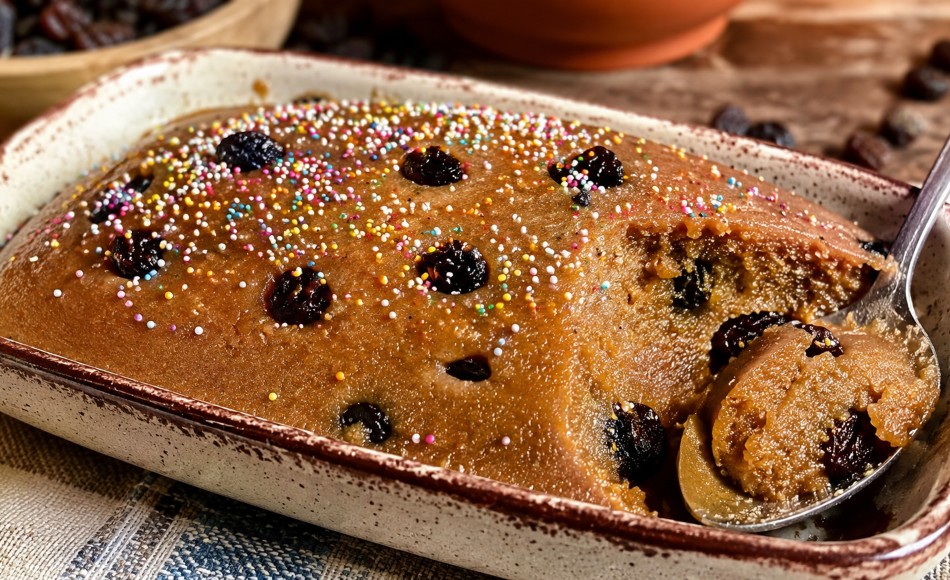
Peruvian raisin sango, also widely known as sanguito, is an old-fashioned criollo sweet made with toasted yellow corn flour, chancaca, fat, spices, and raisins. Its texture is thick, soft, and slightly grainy, similar to a firm pudding, but with a deeper toasted and caramel-like flavor.
It is considered a traditional Peruvian dessert of the past, associated with homemade cooking, Lima-style sweets, and popular treats once commonly sold in streets, markets, and fairs. Traditional Peruvian sanguito is commonly recognized for its use of yellow corn flour, chancaca or sugar, raisins, and cinnamon.
Print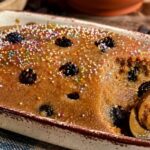
Peruvian Raisin Sango
- Prep Time: 10 minutes
- Cook Time: 35 minutes
- Total Time: 45 minutes
- Yield: 6
- Category: Dessert
- Cuisine: Peruvian
Ingredients
- 200 g yellow corn flour (1½ cups)
- 250 g chopped chancaca or panela (1 large block or 1¼ cups chopped)
- 750 ml water (3 cups)
- 80 g lard or vegetable shortening (⅓ cup)
- 80 g black raisins (½ cup)
- 2 cinnamon sticks
- 4 whole cloves
- 3 g anise seeds (½ teaspoon)
- 1 strip orange peel
- 1 g salt (¼ teaspoon)
- 20 g colored sprinkles for decorating (2 tablespoons)
Preparation
- Make the chancaca syrup, place the water, chancaca, cinnamon sticks, cloves, anise seeds, orange peel, and salt in a pot. Cook over medium heat until the chancaca fully dissolves and the liquid becomes fragrant with spices. Strain the syrup and keep it warm.
- Toast the flour, place the yellow corn flour in a wide pot or heavy-bottomed pan and stir constantly over low heat for about 6 to 8 minutes, until it smells toasted and becomes slightly deeper in color. Do not let it burn, because that would make the sango bitter.
- Add the fat, add the lard or shortening to the toasted flour and mix well until fully incorporated. The mixture should look moist, loose, and glossy, like a sandy base evenly coated with fat.
- Cook the sango, add the hot syrup gradually, stirring constantly with a wooden spoon to prevent lumps. Cook over low heat for 15 to 20 minutes, until the mixture thickens, becomes smooth, and begins to pull slightly away from the sides of the pot.
- Add the raisins, stir in the raisins once the sango has developed body and continue cooking for a few more minutes, until they soften slightly and are evenly distributed throughout the mixture.
- Serve and decorate, spoon the sango into small dessert bowls or a serving dish while hot or warm. Sprinkle colored sprinkles on top, as is common in traditional sanguito presentations, and serve while it still has a creamy texture.
Chef’s Tips
Toast the flour patiently over low heat. This step defines the flavor of the sango because it gives the dessert its characteristic toasted corn aroma.
Add the hot syrup gradually to avoid lumps. If you pour it in all at once, the flour may clump together.
Stir constantly during the final cooking stage. Sango thickens quickly and can stick to the bottom of the pot.
Do not cook it until dry. It should be thick and firm, but still moist and soft when served.
Traditional Variations
Some Peruvian recipes use sugar instead of chancaca, although chancaca gives the dessert a deeper, more traditional criollo flavor.
There are also versions made with butter instead of lard or shortening, especially in modern home kitchens.
In some homes, extra raisins are added, and colored sprinkles are used when serving, a presentation strongly associated with traditional Peruvian sanguito.
Traditional Serving Style
Peruvian raisin sango is served hot, warm, or at room temperature in small dessert bowls or individual portions. Traditionally, it is decorated with colored sprinkles and enjoyed as an afternoon sweet or criollo dessert.
You can serve it with Peruvian drip coffee, emoliente, tea, hot anise infusion, or a mild herbal drink. It can also be part of a Peruvian sweets table alongside purple corn pudding, rice pudding, picarones, or camotillos.
Recommended Pairings
- Peruvian drip coffee
- Emoliente
- Hot anise infusion
- Hot tea
- Purple corn pudding
- Rice pudding
A Bit of History
Sango, or sanguito, is considered an old traditional Peruvian sweet. Its preparation with corn flour, fat, chancaca, raisins, and spices connects it to popular criollo cooking, where humble ingredients were transformed into hearty, aromatic desserts.
Some gastronomic references describe sanguito as a sweet porridge-like preparation made with toasted corn or wheat flour, water, fat, and salt, showing its connection to thick, simple, old-style popular dishes.
Frequently Asked Questions
Yes. In many Peruvian references and recipes, it is known as sanguito, especially when made as a sweet with corn flour, chancaca or sugar, fat, raisins, and spices. The name “raisin sango” highlights one of its most characteristic ingredients.
The most recognized version uses yellow corn flour. You should toast it before cooking it with the syrup, because that step gives the dessert its deep flavor and traditional aroma.
Yes, some versions use sugar, but chancaca is preferred for a darker, more caramel-like, traditional flavor. If you use sugar, the result will be lighter in color and less deep in taste.
Lumps usually form when the liquid is added too quickly or when the mixture is not stirred constantly. To prevent this, add the hot syrup gradually and keep mixing with a wooden spoon while the flour absorbs it.
It can be served hot, warm, or at room temperature. Freshly made sango has a creamier texture; as it cools, it becomes firmer. Traditionally, it is often enjoyed warm and decorated with colored sprinkles.