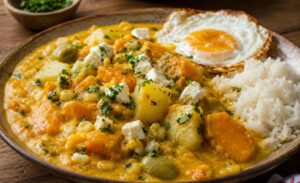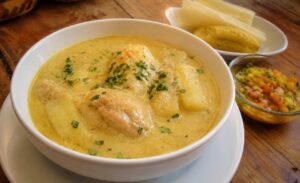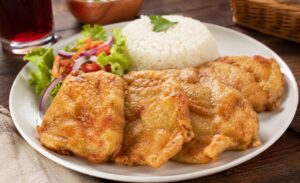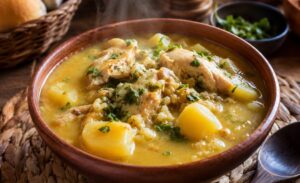

Peruvian paiche picadillo is a traditional dish from the Amazon made with paiche, one of the region’s most representative and valued river fish. Its firm, white, mild-tasting flesh can be shredded and mixed with a simple seasoning base of onion, garlic, chili pepper, cilantro or sachaculantro, creating a flavorful, generous, and very home-style dish.
In regions such as Loreto, Ucayali, San Martín, and Madre de Dios, paiche is eaten fresh, dried, or salted, and it appears in many family recipes. Picadillo is one of the most practical ways to use it, especially when made with previously cooked, roasted, or desalted paiche.
This recipe keeps the traditional Amazonian style: a dry but juicy shredded fish stew with fresh herbs and simple sides such as cassava, rice, plantain, or cocona chili sauce. It is an everyday preparation, but one with strong regional value in Peruvian Amazonian cooking.
Print
Peruvian Paiche Picadillo
- Prep Time: 20 minutes
- Cook Time: 25 minutes
- Total Time: 45 minutes
- Yield: 4
- Category: Main Course
- Cuisine: Peruvian
Ingredients
- 700 g cooked and shredded fresh paiche, or desalted dried paiche (4 cups)
- 120 g finely chopped red onion (1 medium onion)
- 15 g minced garlic (3 cloves)
- 40 g chopped Amazonian sweet chili or seeded ají limo (3 tablespoons)
- 200 g peeled, seeded, chopped tomato (2 medium tomatoes)
- 25 g chopped sachaculantro or fresh cilantro (½ cup)
- 45 ml vegetable oil (3 tablespoons)
- 8 g salt (1½ teaspoons, adjust if using dried paiche)
- 2 g ground black pepper (½ teaspoon)
- 2 g ground cumin (½ teaspoon)
- 120 ml fish broth or water (½ cup)
- 500 g boiled cassava for serving (3 cups)
- 400 g cooked white rice for serving (2 cups)
Preparation
- Prepare the paiche, if using fresh paiche, cook it in lightly salted water for 12 to 15 minutes, until firm and easy to pull apart into large flakes. If using dried paiche, soak it overnight, change the water several times, and cook it until tender before shredding.
- Make the seasoning base, heat the oil in a wide skillet or shallow pot and sauté the onion over medium heat until soft and slightly translucent. Add the garlic, cumin, black pepper, and chopped chili, and cook for 2 to 3 minutes until fragrant.
- Add the tomato, stir in the chopped tomato and cook for 5 to 7 minutes, stirring occasionally, until it partially breaks down and forms a juicy base. The seasoning should be concentrated, but not dry.
- Add the paiche, incorporate the shredded fish and mix carefully so it absorbs the seasoning without breaking apart too much. Add the broth or water little by little and cook for 8 to 10 minutes over medium-low heat, until the picadillo is moist, flavorful, and well combined.
- Finish with herbs, add the chopped sachaculantro or cilantro, taste for salt, and adjust only if needed. Cook for 2 more minutes so the herbs release their aroma while staying fresh.
- Serve hot, place the paiche picadillo on a plate and serve with boiled cassava, white rice, roasted plantain, or cocona chili sauce. The result should be a juicy, aromatic shredded fish stew with a clear Amazonian flavor.
Practical Tips
If using dried or salted paiche, desalinate it patiently so the dish does not become too salty.
Do not shred the fish too finely; traditional picadillo keeps visible pieces of paiche.
Cook the seasoning base until the tomato loses its acidity and blends well with the onion and chili.
Sachaculantro gives a more Amazonian flavor, but fresh cilantro is a good alternative if you cannot find it.
Add the broth gradually to keep the picadillo juicy without turning it into a soup.
Traditional Variations
In some areas of the Peruvian Amazon, picadillo is made with dried and salted paiche, previously soaked and desalted, which gives it a more intense flavor.
There are also versions made with fresh cooked or roasted paiche, especially when the fish is available in local markets.
In certain homes, ají charapita is added for a more Amazonian heat, while other families prefer sweet chili for a milder preparation.
Some home-style versions include a little more tomato or onion to make the picadillo juicier.
Traditional Serving Style
Serve paiche picadillo hot, in generous portions, with boiled cassava or white rice. It also pairs very well with roasted plantain, plain tacacho, or a fresh chonta salad.
In the Peruvian Amazon, it is often served with cocona chili sauce and regional drinks such as aguajina, camu camu juice, cocona juice, or masato. It is ideal for family lunches because it is generous and preserves the distinctive flavor of Amazonian fish.
Recommended Pairings
- Boiled cassava
- White rice
- Roasted plantain
- Cocona chili sauce
- Chonta salad
- Plain tacacho
- Aguajina
- Camu camu juice
Culinary Curiosity
Paiche is one of the most emblematic freshwater fish of the Amazon and can grow to a very large size, which is why its meat is used in many different preparations: fresh, dried, salted, roasted, fried, or stewed. In many Amazonian kitchens, picadillo began as a practical way to use cooked or preserved pieces of fish without wasting anything.
Its firm texture allows paiche to hold together even after being shredded and stewed, making it ideal for recipes like this one. That is why paiche picadillo is simple, but deeply representative of Amazonian home cooking.
Frequently Asked Questions
Peruvian paiche picadillo is an Amazonian stew made with shredded paiche, onion, garlic, chili pepper, tomato, and fresh herbs. It can be prepared with cooked fresh paiche or with desalted dried paiche. It is a home-style, flavorful dish that is very traditional in Peru’s Amazon regions.
It can be made with either. Fresh paiche gives a milder flavor and juicy texture, while dried or salted paiche provides a stronger, more traditional taste. If using dried paiche, soak it for several hours and change the water to remove excess salt before cooking.
The most common sides are boiled cassava, white rice, roasted plantain, plain tacacho, or chonta salad. It is also often served with cocona chili sauce, which adds acidity and freshness. It is a complete and satisfying dish for an Amazonian family lunch.
It depends on the chili pepper used. With Amazonian sweet chili, it stays aromatic and mild; with ají charapita or ají limo, it becomes spicier. The traditional version allows you to adjust the heat while keeping the flavor of the paiche and seasoning base at the center.
Do not overcook it, and add a little broth or water when mixing it into the seasoning base. It is also best to shred it into medium pieces, not very fine strands, so it keeps its texture. The picadillo should be moist and juicy, not dry or broken down.