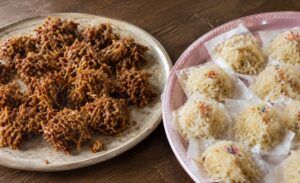

Peruvian picarones are one of the most beloved fried desserts in criollo cuisine. They are made with a fermented dough based on squash, sweet potato, flour, and yeast, then fried into ring shapes and served with a warm chancaca syrup flavored with spices.
They are especially popular in Lima and many Peruvian cities, where they are sold at fairs, anticucho stands, plazas, markets, and traditional evening food stalls. Their aroma of anise, cinnamon, cloves, and warm chancaca syrup is part of the food memory of many Peruvian families.
Although they may look a little like doughnuts, picarones have their own identity: a light, slightly elastic dough with natural sweetness from squash and sweet potato, and a dark, spiced, glossy syrup. This recipe follows the most representative traditional Peruvian version.
Print
Peruvian Picarones
- Prep Time: 35 minutes
- Cook Time: 35 minutes
- Total Time: 2 hours 40 minutes
- Yield: 8
- Category: Dessert
- Cuisine: Peruvian
Ingredients
- 500 g peeled macre squash, cut into chunks (3 cups)
- 500 g yellow sweet potato, peeled and cut into chunks (3 cups)
- 700 g all-purpose wheat flour (5½ cups)
- 10 g instant dry yeast (1 tablespoon)
- 30 g white sugar (2 tablespoons)
- 5 g anise seeds (1 teaspoon)
- 2 g salt (½ teaspoon)
- 500 ml warm cooking water from the squash and sweet potato (about 2 cups)
- 1 liter vegetable oil (4 cups, for frying)
For the chancaca syrup
- 500 g chancaca, chopped
- 500 ml water (2 cups)
- 100 g brown sugar (½ cup)
- 1 cinnamon stick
- 4 cloves
- 5 g anise seeds (1 teaspoon)
- 1 strip orange peel
- 1 fig leaf, optional traditional ingredient
- 5 ml lemon juice (1 teaspoon)
Preparation
- Cook the squash and sweet potato, place the squash and sweet potato in a pot with enough water to cover them. Add the anise seeds and cook over medium heat for 20 to 25 minutes, until both are very soft. Drain, reserve the cooking water, and mash the squash and sweet potato into a smooth purée.
- Prepare the dough, place the warm purée in a large bowl and add the flour, yeast, sugar, and salt. Gradually add the warm cooking water while mixing with your hand until you get a sticky, elastic, very moist dough. Beat the dough by lifting it and gently slapping it against the bowl for several minutes to build air and elasticity.
- Ferment the dough, cover the bowl with a clean cloth and let it rest in a warm place for 1½ to 2 hours, until the dough has risen, looks spongy, and shows bubbles on the surface.
- Make the syrup, place the chancaca, water, brown sugar, cinnamon, cloves, anise, orange peel, and fig leaf in a saucepan. Cook over medium heat for 20 to 30 minutes, until the chancaca dissolves and the syrup thickens slightly. Strain it, add the lemon juice, and keep the syrup warm.
- Shape the picarones, heat the oil in a deep pot over medium-high heat. Wet your fingers with water mixed with a pinch of salt, take a portion of dough, open a hole in the center with your fingers, and carefully slide it into the hot oil, forming an irregular ring.
- Fry until golden, cook the picarones in batches for 2 to 3 minutes per side, turning them with a stick or long utensil until they are golden, puffed, and slightly crisp on the outside. Remove them and place them on paper towels.
- Serve with syrup, place the hot picarones on a plate and generously pour warm chancaca syrup over them. Serve immediately to enjoy the contrast between the crisp dough, soft interior, and spiced syrup.
Practical Tips
Use the cooking water warm, not hot, so it does not damage the yeast and helps the dough ferment properly.
Picarones dough should not be dry like bread dough; it should be moist, elastic, and sticky.
Wet your hands before shaping each ring so the dough is easier to handle and does not stick too much.
Fry in hot but not smoking oil; if it is too cold, the picarones will absorb oil, and if it is too hot, they will brown outside before cooking inside.
The syrup should stay pourable, not hard like caramel, so it can coat the picarones well.
Traditional Variations
In some Lima-style recipes, more squash is used to create a softer and more aromatic dough.
In other family versions, more yellow sweet potato is added to give the dough a stronger natural sweetness.
The syrup may be flavored with fig leaf, orange peel, cinnamon, cloves, and anise, depending on each home or traditional stand.
In some places, the dough is lighter and airier, while other versions are more rustic and dense, but they are always served with chancaca syrup.
Traditional Serving Style
Serve picarones hot, freshly fried, in portions of three or four pieces, generously covered with warm chancaca syrup. The traditional presentation is simple: golden, irregular rings shining with syrup.
They are especially enjoyed in the afternoon or evening, after anticuchos, criollo meals, or as a fair-style treat. For drinks, they pair well with emoliente, Peruvian brewed coffee, hot herbal infusions, or cold chicha morada.
Recommended Pairings
- Warm chancaca syrup
- Emoliente
- Peruvian brewed coffee
- Lemongrass infusion
- Chicha morada
- Anticuchos, as part of a traditional criollo meal
Culinary Curiosity
Peruvian picarones have roots in colonial-era pastry, but they developed their own identity by incorporating local ingredients such as squash and sweet potato. That combination clearly sets picarones apart from other fried desserts and gives them their characteristic texture.
In Lima, picarón stands are part of a very recognizable street food tradition. Watching the dough being shaped by hand and dropped into the oil as a ring is part of the charm of this dessert, just like the final moment when it is covered with chancaca syrup.
Frequently Asked Questions
Peruvian picarones are a traditional fried dessert made with a fermented dough of squash, sweet potato, flour, and yeast. They are fried into rings and served hot with chancaca syrup. They are very popular in Lima, fairs, anticucho stands, and traditional food stalls.
Although both are fried and ring-shaped, picarones contain squash and sweet potato in the dough, which gives them a moister, more elastic, aromatic texture. They are not coated with sugar or glaze; instead, they are served with spiced chancaca syrup, an essential part of the Peruvian recipe.
Fermentation helps the dough rise, create bubbles, and become light when fried. If it does not ferment properly, the picarones may turn out heavy or dense. That is why it is important to use active yeast, warm liquid, and let the dough rest in a warm place until it increases in volume.
Chancaca syrup is a dark syrup made with chancaca, water, spices, and often orange peel or fig leaf. It has a deep, sweet, spiced flavor. It is essential for traditional picarones because it provides the shine, aroma, and characteristic sweetness of the dessert.
The ring shape is made by taking a portion of dough with wet fingers, opening a hole in the center, and carefully dropping the dough into hot oil. The ring does not need to be perfect; traditional picarones usually have an irregular, handmade shape.