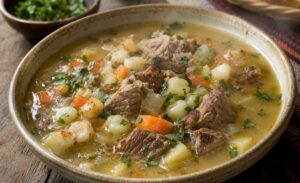
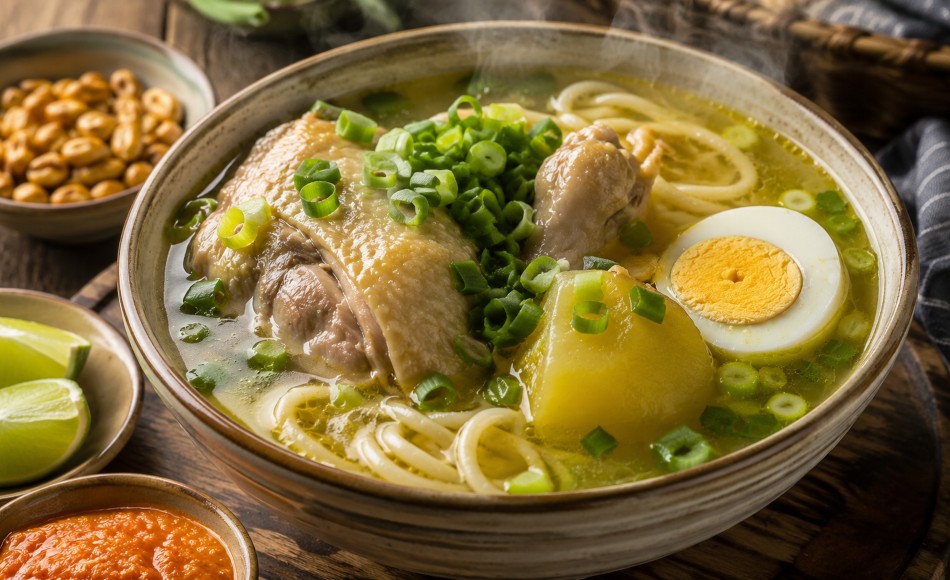
Peruvian caldo de gallina is one of the country’s most traditional and comforting soups. It is made by slowly simmering hen to create a rich broth, then serving it with potatoes, thick noodles, hard-boiled egg, ginger, celery, and scallions.
It is especially popular at markets, late-night food stands, and weekend breakfasts throughout Peru. Hen has a deeper flavor than standard chicken and needs slow cooking, which is the key to making a full-bodied and satisfying broth. Toasted cancha corn, lime, and chili sauce are the classic finishing touches.
Print
Peruvian Hen Broth
- Prep Time: 20 minutes
- Cook Time: 2 hours
- Total Time: 2 hours 20 minutes
- Yield: 6
- Category: Soup
- Cuisine: Peruvian
Ingredients
- 1.5 kg bone-in hen pieces (6 to 8 pieces)
- 3 liters water
- 150 g celery, cut into chunks (2 large stalks)
- 80 g leek, cut into chunks (1 small leek)
- 30 g fresh ginger, sliced (1 piece about 5 cm long)
- 5 g dried oregano (1 tablespoon)
- 12 g salt (2½ teaspoons)
- 3 g ground black pepper (¾ teaspoon)
- 500 g yellow potatoes or starchy white potatoes (4 medium potatoes)
- 250 g thick noodles or broken spaghetti (4 cups)
- 6 eggs
- 80 g chopped scallions (1 cup)
- 120 g toasted cancha corn (1 cup)
- 3 limes, cut into wedges
- 50 g ají amarillo or rocoto chili paste (⅓ cup), optional
Preparation
- Clean and cook the hen, place the hen pieces in a large pot with the water, celery, leek, ginger, oregano, 10 g of salt, and black pepper. Bring everything to a boil over medium heat, skim off any foam that rises to the surface, then reduce the heat.
- Build a rich broth, cook the hen partially covered for 1½ to 2 hours, until the meat is tender and pulls easily from the bone. Check the liquid level occasionally and add hot water when needed to keep enough broth in the pot.
- Cook the potatoes and eggs, wash the potatoes and add them whole to the broth during the final 25 minutes of cooking. Let them cook until tender. In a separate pot, boil the eggs for 10 minutes once the water reaches a boil; cool, peel, and halve them.
- Add the noodles, remove the celery, leek, and ginger from the broth. Add the thick noodles and the remaining 2 g of salt, then cook for 8 to 10 minutes, until tender but not falling apart. Taste the broth and adjust the salt if needed.
- Build each serving, cut the cooked potatoes in half and place one hen piece, noodles, and potato in each deep bowl. Ladle plenty of hot broth over the ingredients and add half a hard-boiled egg.
- Finish and serve, sprinkle chopped scallions over each bowl. Serve the caldo de gallina piping hot with toasted cancha corn, lime wedges, and ají amarillo or rocoto chili paste on the side.
Chef’s Tips
- Use free-range hen whenever possible for a richer and more traditional broth.
- Keep the broth at a gentle simmer after it boils so it stays flavorful and clear.
- Do not add the noodles too early, because they can absorb too much liquid and become mushy.
- Remove the ginger before serving so its flavor does not overpower the broth.
- Serve the soup as soon as it is ready, since the noodles continue absorbing broth as they rest.
Traditional Variations
In some parts of Peru, caldo de gallina includes chicken liver, gizzards, or other giblets. There are also versions served with rice instead of noodles, although the most familiar market-style presentation includes potatoes, thick noodles, hard-boiled egg, scallions, lime, and toasted cancha corn.
How to Serve
Serve caldo de gallina piping hot in deep bowls, with one piece of hen, potato, noodles, and half an egg in each portion. Keep the toasted cancha corn separate so it remains crisp, and offer lime wedges and chili paste for everyone to season their soup.
Recommended Accompaniments
- Toasted cancha corn.
- Fresh lime wedges.
- Ají amarillo chili paste.
- Rocoto chili paste.
- Warm crusty bread.
A Little History
Caldo de gallina is strongly associated with Peru’s late-night and early-morning food culture. Its rich broth and generous ingredients have made it a popular meal after celebrations, long trips, or demanding workdays.
The combination of hen, ginger, celery, potatoes, noodles, and egg is especially typical of traditional caldo stands, where each bowl is served as a filling and complete meal.
Frequently Asked Questions
Hen needs longer cooking than regular chicken. Simmer the pieces for 1½ to 2 hours over low heat, or until the meat is tender. Cooking time can vary depending on the hen’s age and size, so check that the meat softens easily before adding the noodles.
Yes, but the broth will have a milder flavor and need less cooking time. Use bone-in chicken pieces and simmer them for 45 to 60 minutes. Keep the celery, leek, ginger, potatoes, noodles, and egg to preserve the familiar flavor profile of Peruvian caldo de gallina.
Broth can become cloudy when it boils too aggressively or when the initial foam is not removed. For a clearer result, reduce the heat after boiling and skim the foam during the first minutes of cooking. Avoid stirring the broth constantly while it develops its flavor.
Yes. You can prepare the hen and broth up to one day ahead and refrigerate them. Reheat the broth until it simmers gently, then add the noodles shortly before serving. This prevents them from absorbing too much liquid or becoming soft during storage.