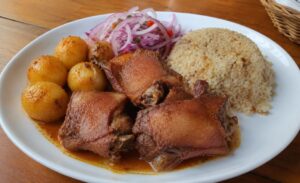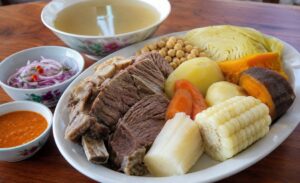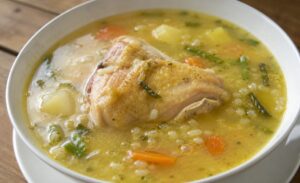

Peruvian puchero, also known as timpu in Cusco, is a festive Andean stew that brings together meats, tubers, vegetables, legumes, and fruit in a fragrant broth. It is especially traditional during Cusco Carnival, when families gather around a generous shared platter filled with local farm ingredients.
Its most distinctive feature is the contrast between savory ingredients, such as meat, cabbage, and chickpeas, and the natural sweetness of sweet potatoes, peaches, and pears. You cook each component carefully so it holds its shape while absorbing the flavor of the broth.
Print
Peruvian Puchero
- Prep Time: 30 minutes
- Cook Time: 1 hour 50 minutes
- Total Time: 2 hours 20 minutes
- Yield: 8
- Category: Main Course
- Cuisine: Peruvian
Ingredients
- 700 g beef brisket or beef flank, cut into large pieces
- 500 g lamb, cut into large pieces
- 300 g pork belly, cut into large pieces
- 2.5 liters water
- 200 g dried chickpeas (1 cup), soaked overnight
- 200 g white rice (1 cup)
- 800 g yellow potatoes or native potatoes, peeled
- 500 g yellow sweet potatoes, peeled and cut into large pieces
- 500 g cassava, peeled and cut into large pieces
- 400 g green cabbage, cut into wedges
- 4 medium ears of corn, cut in half
- 250 g carrots, peeled and cut into large pieces
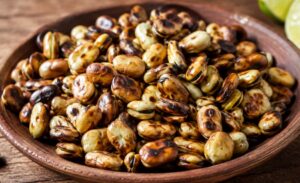
- 200 g fresh shelled fava beans (1½ cups)
- 4 small firm fresh peaches, washed
- 4 small firm pears, washed
- 1 large red onion, cut in half
- 20 g garlic, minced or blended (4 cloves)
- 10 g salt (2 teaspoons), or to taste
- 3 g ground black pepper (½ teaspoon)
- 5 g ground cumin (1 teaspoon)
- 10 g dried oregano (1 tablespoon)
- 20 g fresh mint (1 small bunch)
- 20 g fresh parsley (1 small bunch)
Preparation
- Cook the meats and chickpeas, place the beef, lamb, pork belly, soaked chickpeas, onion, garlic, salt, black pepper, cumin, and water in a large pot. Bring everything to a boil, skim off any foam, and cook over medium-low heat for 1 hour and 15 minutes, until the meats begin to soften.
- Add the firm ingredients, add the corn, carrots, and rinsed rice. Cook for 15 minutes so the rice and vegetables begin absorbing the broth’s flavor without falling apart.
- Cook the tubers, add the potatoes, sweet potatoes, and cassava. Keep cooking over medium heat for about 20 minutes, making sure the broth covers the ingredients. Add a little hot water if necessary.
- Add the vegetables and fruit, add the cabbage, fava beans, peaches, and whole pears. Cook for 12 to 15 more minutes, until the cabbage is tender and the fruit softens without breaking apart.
- Finish the puchero, add the fresh mint and parsley during the final 3 minutes of cooking. Taste the broth and adjust the salt. The finished stew should have rich broth, tender meats, and clearly defined vegetables, tubers, and fruit.
- Serve in the traditional style, arrange the meats, vegetables, tubers, fruit, and chickpeas on a large platter. Serve the broth separately or in deep bowls, making sure each portion includes some meat, rice, tubers, vegetables, and fruit.
Chef’s Tips
- Soak the chickpeas overnight so they cook evenly.
- Add peaches and pears near the end so they hold their shape and do not break down in the broth.
- Simmer the puchero gently; a very strong boil can break apart the potatoes, sweet potatoes, and fruit.
- Keep the tuber pieces large. Their generous size is part of the traditional presentation.
- Remove the meats once tender if the remaining ingredients need more cooking time, then return them to the pot just before serving.
Traditional Variations
In Cusco, puchero is often called timpu and may include white chuño, moraya, oca, or different types of potatoes depending on the season. Some families use only one meat, while others combine beef, lamb, and pork for a fuller broth.
The fruit can vary too: some versions use apples or quince instead of peaches and pears. However, the combination of meat, tubers, cabbage, chickpeas, and sweet fruit remains central to this festive dish.
How to Serve It
Serve Peruvian puchero piping hot, preferably on a large platter meant for sharing. Place the meats and solid ingredients in the center, then serve the broth in individual deep bowls.
Traditionally, you enjoy it as a main course during family gatherings and Carnival celebrations. Offer Peruvian ground chile on the side, with chicha de jora or chicha morada to drink.
Recommended Side Dishes
- Peruvian ground chile
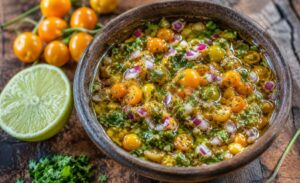
- Rocoto sauce
- Chicha de jora
- Chicha morada
- Toasted Andean cancha corn
Origin and Tradition
Puchero arrived in Peru with Spanish influence, but it developed its own Andean identity through native potatoes, corn, cassava, sweet potatoes, fava beans, and local fruit. In Cusco, timpu became closely associated with Carnival celebrations and the abundance of the harvest season.
Its preparation represents large-pot cooking and shared tables. Each ingredient offers a different flavor and texture, while the broth brings together all of the aromas in a warm, generous, family-centered meal.
Frequently Asked Questions
In Peru, puchero refers to a generous soup or stew made with meats, vegetables, and tubers. In Cusco, the dish is commonly called timpu and is known for using Andean ingredients such as potatoes, sweet potatoes, cassava, corn, cabbage, chickpeas, and fruit. Both names can describe very similar traditional preparations.
Fruit adds a delicate sweetness that balances the savory broth and meats. Peaches and pears are cooked whole or in large pieces near the end, so they absorb some broth without completely losing their texture. This sweet-and-savory balance is one of the most recognizable features of Cusco-style puchero.
Yes. You can make puchero with only beef, lamb, or pork, depending on what you have available. However, combining two or three meats creates a deeper broth that is closer to festive traditional versions. Adjust the cooking time according to the type and size of the meat cuts you use.
Once cooled, store the broth and solid ingredients in separate containers. Refrigerate for up to 3 days. Reheat gently over low heat and add a little water if the broth has reduced. Warm the fruit carefully so it does not fall apart.