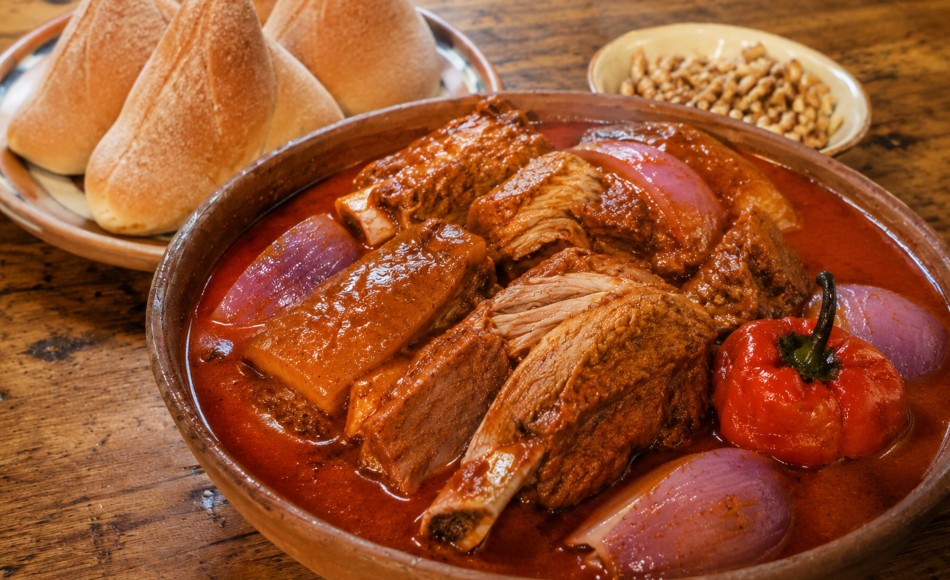
Arequipa-style adobo is one of the most iconic dishes from southern Peru. It is made with large pieces of pork, traditionally pork neck, slowly marinated in guiñapo chicha or chicha de jora, ají panca paste, garlic, herbs, and warm spices. The finished dish has tender pork, a rich reddish broth, and soft onion wedges that still hold their shape.
In Arequipa, adobo is closely associated with Sunday breakfast and traditional picanterías, the region’s historic local eateries. It is served piping hot with three-point bread, which is meant to soak up the intensely flavored broth. Guiñapo chicha, a fermented beverage made from dark corn, is one of the ingredients that gives the dish its distinctive regional identity.
Print
Arequipa Pork Adobo
- Prep Time: 30 minutes
- Cook Time: 2 hours 5 minutes
- Total Time: 14 hours 35 minutes
- Yield: 6
- Category: Soup
- Cuisine: Peruvian
Ingredients
- 1.5 kg pork neck, cut into large bone-in pieces
- 1.5 liters guiñapo chicha or unsweetened chicha de jora (6 cups)
- 250 g red onion, cut into thick wedges (2 large onions)
- 60 g garlic paste (4 tablespoons)
- 75 g ají panca paste (5 tablespoons)
- 30 ml red wine vinegar (2 tablespoons)
- 6 g ground cumin (2 teaspoons)
- 4 g ground black pepper (1 ½ teaspoons)
- 6 g salt (1 teaspoon), plus more to taste to adjust
- 3 g dried oregano (1 teaspoon)
- 2 sprigs fresh oregano
- 2 sprigs mint
- 1 small sprig rue
- 2 bay leaves
- 1 small cinnamon stick
- 4 whole cloves
- 1 whole rocoto pepper
- 500 ml hot water (2 cups), only if needed during cooking
Preparation
- Make the marinade, place the pork in a large bowl and mix it with the garlic paste, ají panca paste, vinegar, cumin, black pepper, and salt. Pour in the guiñapo chicha, add the bay leaves, cinnamon stick, and cloves, then cover and refrigerate for 12 hours.
- Cook the pork slowly, transfer everything from the bowl to a clay pot or heavy-bottomed pot. Bring it to a boil over medium heat, reduce the heat to low, and cook covered for 1 hour and 30 minutes. Stir occasionally so the pork does not stick to the bottom.
- Add the onion and herbs, add the onion wedges, dried oregano, fresh oregano, mint, rue, and whole rocoto pepper. Cook for another 25 to 35 minutes, until the pork is very tender and the broth has developed a full, rich texture. Add hot water only if the liquid reduces too much.
- Adjust and serve, remove the rue, cinnamon stick, cloves, and herb sprigs. Taste the broth, adjust the salt if needed, and let the adobo rest for 10 minutes before serving so the flavors settle.
Chef’s tips
- Choose bone-in pork neck with some fat, since it gives the broth a richer flavor and a more traditional texture.
- Do not replace guiñapo chicha with beer. Fermented chicha provides the acidity and distinctive flavor that define this dish.
- Keep the heat low during cooking. The pork should become very tender while the pieces remain intact.
- Add the onion during the second stage of cooking so it becomes soft and flavorful without completely falling apart.
Traditional variations
Some Arequipa picanterías use the sediment from guiñapo chicha, known as concho, for a stronger flavor and a slightly thicker broth. Family recipes may also include allspice-like local peppers or additional rocoto, but the essential base remains the same: pork, chicha, ají panca, onion, herbs, and slow cooking.
How to serve
Serve the adobo very hot in a deep bowl with plenty of broth, one piece of pork, and onion. Pair it with freshly baked Arequipa three-point bread, which is traditionally used to soak up the broth.
In Arequipa, it is also customary to enjoy it with hot anise tea or tea piteado, especially as part of a Sunday breakfast.
Recommended accompaniments
- Arequipa-style three-point bread.
- Hot anise tea or tea piteado.
- Guiñapo chicha for a traditional picantería-style meal.
A little history
Arequipa-style adobo is closely linked to picantería cooking and to the use of fermented chicha in savory preparations. Its name comes from the Spanish technique of adobar, or seasoning and marinating meat, which became intertwined with local ingredients such as ají panca and guiñapo chicha.
More than a pork stew, it is a dish connected to Sunday family gatherings and the culinary identity of Arequipa, often called the White City. Its bold broth and customary serving with bread reflect a deeply regional way of enjoying Peruvian food.
Frequently Asked Questions
Yes. Pork shoulder, pork shank, or pork ribs can work well, although pork neck is especially traditional because it contains bone, fat, and connective tissue. These elements enrich the broth during slow cooking. Avoid very lean cuts, since they can dry out and produce a less flavorful adobo.
Unsweetened chicha de jora is the closest substitute. Traditional Arequipa adobo uses guiñapo chicha, but chicha de jora still provides the fermented flavor needed for the marinade. Avoid sweet drinks, soda, or beer, since they noticeably change the character of the dish.
For the best flavor, marinate the pork for 10 to 12 hours in the refrigerator. This allows the chicha, ají panca, garlic, and spices to season the meat thoroughly. When necessary, you can marinate it for at least 4 hours, but the final flavor will be less developed.
In Arequipa, the most traditional accompaniment is three-point bread rather than rice. The bread is used to absorb the spiced broth. Rice or boiled sweet potatoes may appear in other Peruvian regions, but they are not part of the classic Arequipa-style presentation.