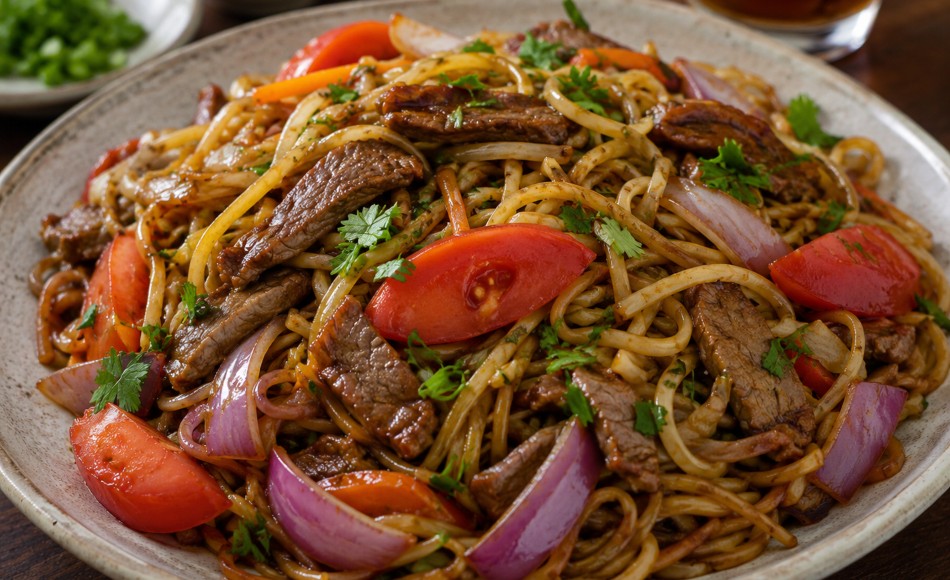
Peruvian stir-fried noodles, known as tallarín saltado, are one of the most popular dishes in Peruvian-Chinese cuisine, commonly called chifa. The dish combines cooked noodles with beef, red onion, tomato, ají amarillo, and soy sauce, all stir-fried over high heat for the signature smoky wok flavor.
It is a familiar dish in chifa restaurants and Peruvian homes. Its technique is closely related to lomo saltado, but it uses noodles instead of potatoes and brings together soy sauce, vinegar, and quick stir-frying for a juicy, deeply savory meal that represents Peru’s culinary fusion.
Print
Peruvian Stir Fried Noodles
- Prep Time: 20 minutes
- Cook Time: 20 minutes
- Total Time: 40 minutes
- Yield: 4
- Category: Main Course
- Cuisine: Peruvian
Ingredients
- 400 g dried noodles or spaghetti (14 oz)
- 500 g beef, cut into thin strips
- 8 g salt (1 ¼ teaspoons), divided
- 3 g ground black pepper (1 teaspoon)
- 30 ml soy sauce (2 tablespoons)
- 30 ml red wine vinegar (2 tablespoons)
- 45 ml vegetable oil (3 tablespoons), divided
- 250 g red onion, cut into thick wedges (2 medium onions)
- 300 g tomatoes, cut into wedges (3 medium tomatoes)
- 50 g fresh ají amarillo, cut into strips (2 medium peppers)
- 20 g garlic paste (1 ½ tablespoons)
- 15 g fresh ginger, grated (1 tablespoon)
- 30 ml oyster sauce (2 tablespoons)
- 120 ml beef stock or hot water (½ cup)
- 10 g fresh cilantro, chopped (2 tablespoons)
- 30 g scallions, chopped (¼ cup)
Preparation
- Cook the noodles, bring a large pot of water with 3 g of salt to a boil and cook the noodles until al dente, following the package instructions. Drain them, toss with 15 ml of oil, and set aside so they do not stick together.
- Season and sear the beef, mix the beef with 3 g of salt, black pepper, 15 ml of soy sauce, and 15 ml of vinegar. Heat a wok or large skillet over high heat, add 15 ml of oil, and stir-fry the beef for 2 to 3 minutes, until browned without overcooking. Remove it and set aside.
- Make the stir-fry base, add the remaining oil to the wok and cook the garlic and ginger for 20 seconds. Add the red onion, ají amarillo, and tomatoes, then stir-fry for 1 to 2 minutes over high heat. The vegetables should stay slightly crisp.
- Build the sauce, return the beef to the wok and add the remaining soy sauce, remaining vinegar, oyster sauce, and stock. Stir quickly for 1 minute, until the juices combine into a light sauce.
- Toss with the noodles, add the cooked noodles and toss them with broad movements so they absorb the sauce. Stir in the cilantro and scallions, taste, and adjust the salt if needed.
- Serve right away, transfer the stir-fried noodles to serving plates while still very hot. The dish should be juicy, with noodles evenly coated in sauce and vegetables that remain firm.
Chef’s tips
- Use a wok or very large skillet and heat it thoroughly before adding the beef for the best quick sear.
- Do not overcrowd the pan; when needed, cook the beef in two batches so it browns instead of steaming.
- Cook the noodles al dente because they will continue absorbing sauce during the stir-fry.
- Add the tomatoes near the end so they hold their shape and do not make the dish watery.
Traditional variations
Peruvian chifa restaurants also prepare tallarín saltado with chicken, pork, shrimp, or mixed meats and seafood. Some versions include extra vegetables such as bell pepper or green beans, but the best-known preparation keeps the core stir-fry of beef, onion, tomato, soy sauce, and noodles.
How to serve
Serve tallarín saltado immediately after cooking. Present it on a wide plate with plenty of beef, visible vegetables, and sauce distributed throughout the noodles.
It is traditionally enjoyed as a main dish on its own, although some chifa restaurants serve it with a small portion of arroz chaufa or Peruvian hot sauce.
Recommended accompaniments
- Homemade Peruvian hot sauce.
- A small serving of arroz chaufa.
- Cold Inca Kola or chicha morada.
Did you know?
Tallarín saltado reflects the Chinese influence on Peruvian cooking, which developed after Cantonese immigrants arrived in Peru during the nineteenth century. Over time, wok techniques blended with local ingredients such as ají amarillo, red onion, and cilantro.
Chifa cuisine became an essential part of Peru’s culinary identity, and tallarín saltado remains one of its most familiar and beloved dishes.
Frequently Asked Questions
Use a tender beef cut that you can slice thinly, such as sirloin, top sirloin, or flank steak. The key is cooking it quickly over high heat so it browns on the outside while remaining juicy inside. Avoid very tough cuts because they need long cooking times and are not suitable for a fast stir-fry.
Yes, dried spaghetti works well when traditional noodles are not available. Choose a medium-thickness pasta and cook it until al dente. It needs enough structure to handle the movement of the wok and absorb the sauce without breaking. Avoid very thin pasta, which can become soft once mixed with the stir-fry juices.
The characteristic flavor comes from high heat, soy sauce, garlic, ginger, and oyster sauce. Heat the wok thoroughly before cooking and stir-fry quickly to concentrate the aromas. Do not overcook the vegetables; they should stay fresh and slightly crisp for the classic chifa-style texture.
You can reheat it in a hot skillet with one tablespoon of stock or water, but it is best freshly made. As it sits, the noodles absorb some sauce and can become dry. Reheat it quickly over medium-high heat and avoid simmering it for too long so the noodles do not turn soft.