
Turrón de Doña Pepa is one of Peru’s most emblematic sweets and is deeply connected to Lima’s October tradition, known as the Purple Month because of the celebrations of the Lord of Miracles. It is made with baked dough sticks flavored with anise, shortening, and egg yolks, then stacked in layers and covered with a thick syrup made from fruit, spices, and chancaca.
Its history belongs to Peruvian criollo pastry and to Lima’s religious and popular customs. During October, this turrón appears in bakeries, homes, processions, fairs, and family tables, becoming a sweet symbol of devotion, memory, and celebration.
The most representative traditional version is recognized by its layers of crisp yet tender sticks, fragrant fruit-and-spice syrup, and colorful sprinkle topping. It is a generous, festive, unmistakably Peruvian dessert meant to be shared in small portions.
Print
Peruvian Turrón de Doña Pepa
- Prep Time: 45 minutes
- Cook Time: 1 hour 20 minutes
- Total Time: 2 hours 5 minutes
- Yield: 12
- Category: Dessert
- Cuisine: Peruvian
Ingredients
For the dough
- 500 g all-purpose wheat flour (4 cups)
- 150 g vegetable shortening or pork lard (¾ cup)
- 100 g unsalted butter (½ cup)
- 4 egg yolks
- 10 g anise seeds (2 teaspoons)
- 120 ml hot water (½ cup, for the anise infusion)
- 10 g white sugar (2 teaspoons)
- 4 g salt (¾ teaspoon)
For the syrup
- 500 g chancaca, chopped
- 300 g brown sugar (1½ cups)
- 1.5 liters water (6 cups)
- 300 g pineapple with peel, cut into pieces (2 cups)
- 1 apple, cut into pieces
- 1 quince, cut into pieces, optional traditional ingredient
- 1 orange, cut into pieces with peel
- 1 cinnamon stick
- 4 cloves
- 5 g anise seeds (1 teaspoon)
- 1 fig leaf, optional traditional ingredient
- 10 ml lemon juice (2 teaspoons)
For decorating
- 80 g colorful sprinkles (½ cup)
- 30 g small colorful candies (¼ cup)
Preparation
- Infuse the anise, place the anise seeds in the hot water and let them steep for 10 minutes. Strain the infusion and let it cool until warm, because you will use it to perfume and moisten the dough without adding too much liquid.
- Make the dough, place the flour in a large bowl and mix it with the salt and sugar. Add the shortening and butter, and rub them into the flour with your hands until the mixture looks sandy. Add the egg yolks and gradually pour in the anise infusion until you form a smooth, compact, workable dough. Do not overwork it, so the baked sticks stay delicate.
- Shape the sticks, divide the dough into small portions and roll them on the table into long sticks about 1 cm thick. Place them on a baking sheet, leaving a little space between them so they bake evenly.
- Bake the sticks, bake in a preheated 180 °C oven for 18 to 22 minutes, until the sticks are cooked, lightly golden, and firm. Let them cool completely before assembling the turrón so they do not break too easily.
- Make the syrup, place the water, chancaca, brown sugar, pineapple, apple, quince, orange, cinnamon, cloves, anise, and fig leaf in a large pot. Cook over medium heat for 45 to 60 minutes, until the fruit releases its flavor and the syrup reduces, turns dark, and becomes thick but still pourable.
- Strain and adjust the syrup, pass the mixture through a fine strainer, pressing the fruit gently to extract its flavor. Return the strained syrup to the pot, add the lemon juice, and cook for a few more minutes if it needs to thicken. It should fall in a dense thread, without hardening like caramel.
- Assemble the turrón, place a first layer of sticks on a tray or serving platter, all facing the same direction. Cover with warm syrup so it fills the spaces. Add a second layer of sticks in the opposite direction and cover again with syrup. Repeat until finished, forming a compact, well-bound block.
- Decorate and rest, cover the top with more syrup and sprinkle with colorful sprinkles and candies. Let the turrón rest for several hours, ideally overnight, so the sticks absorb part of the syrup and the texture becomes firm, moist, and traditional.
Practical Tips
Do not overwork the dough; mix it only until it comes together, because too much kneading can make the sticks tough.
Bake the sticks until firm, but not too dark, since they need to absorb the syrup without becoming overly dry.
The syrup should be thick and glossy, but pourable. If it reduces too much, it will harden as it cools and make assembly difficult.
Assemble the turrón with warm syrup, not cold syrup, so it penetrates better between the layers.
Let it rest before cutting; the flavor improves and the structure becomes more stable after several hours.
Traditional Variations
In some Lima-style recipes, the syrup is made with quince, pineapple, apple, orange, and fig leaf, giving it a deeper fruity aroma.
There are also family versions that use pork lard in the dough, while others combine vegetable shortening and butter for a softer texture.
In some homes, the sticks are thicker and more rustic, while bakeries often make them more uniform to create even layers.
The traditional decoration includes colorful sprinkles, although some versions add small candies for a more festive appearance.
Traditional Serving Style
Serve turrón de Doña Pepa in small portions, cut into squares or rectangles, because it is a very sweet and aromatic dessert. The ideal texture combines sticks slightly softened by the syrup, firm edges, and a glossy topping covered with sprinkles.
Traditionally, it is enjoyed during October, especially in the context of the Lord of Miracles celebrations. It can be paired with brewed coffee, herbal infusions, emoliente, or chicha morada, and it is also served as a sweet dessert at family gatherings.
Recommended Pairings
- Peruvian brewed coffee
- Lemongrass infusion
- Mild black tea
- Emoliente
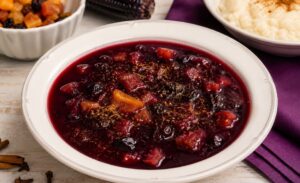
- Chicha morada
- Mazamorra morada, on criollo dessert tables
- It can also be served on its own as a traditional October sweet
Origin and Tradition
Turrón de Doña Pepa is closely linked to devotion to the Lord of Miracles, one of the most important religious expressions in Peru. Every October, Lima fills with processions, purple garments, and traditional sweets, and this turrón holds a central place in that collective memory.
Tradition attributes its creation to Josefa Marmanillo, popularly known as Doña Pepa, an Afro-Peruvian woman connected to the devotional history of the Lord of Miracles. Over time, her sweet became a Lima symbol that brings together pastry, popular faith, and criollo culture.
Frequently Asked Questions
Turrón de Doña Pepa is a traditional Peruvian sweet made with baked anise-flavored dough sticks, stacked in layers and covered with fruit, chancaca, and spice syrup. It is decorated with colorful sprinkles and is especially eaten in October during the Lord of Miracles celebrations.
It is eaten in October because it is tied to the Purple Month and devotion to the Lord of Miracles in Lima. During this month, turrón is widely sold and enjoyed in bakeries, streets, fairs, and Peruvian homes. Although it is now available year-round, October remains its most traditional season.
The syrup should be thick, glossy, and aromatic, but still pourable enough to coat the dough sticks well. If it is too thin, the turrón will not hold its structure; if overcooked, it may harden as it cools. The ideal point is when it falls from the spoon in a dense thread.
It is best to let it rest for several hours or overnight. This resting time allows the sticks to absorb part of the syrup and gives the turrón a more integrated texture. Right after assembly it may feel drier or less structured, but it improves significantly with rest.
Yes, many traditional versions use chancaca in the syrup along with sugar, fruit, and spices. Chancaca gives the syrup its dark color, deep flavor, and characteristic sweetness. It also helps create the criollo aroma that distinguishes Peruvian turrón from other similar sweets.