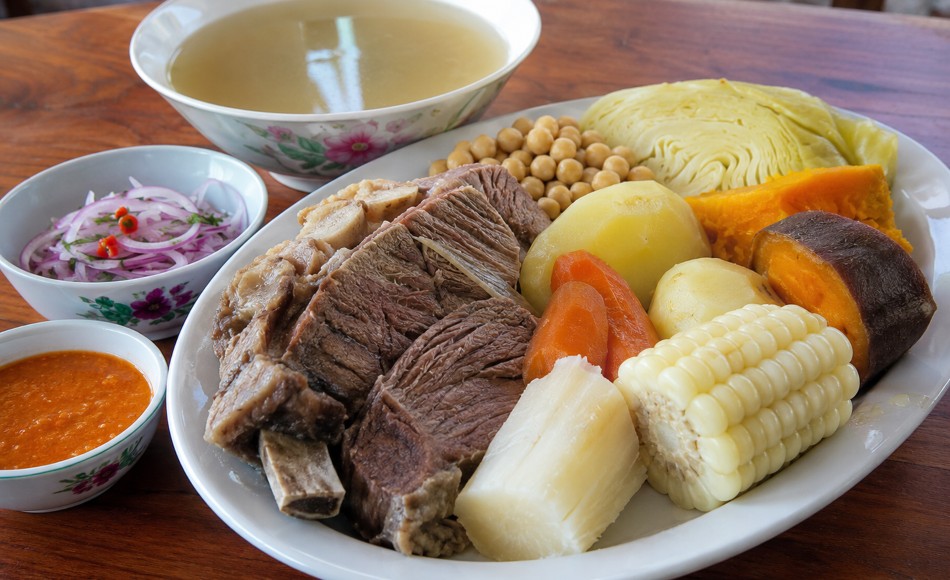
Peruvian sancochado is a substantial meal of beef and vegetables simmered in broth and historically related to puchero. In Lima, the clear broth is often served first, with the meat, tubers, corn, and vegetables arranged separately and accompanied by ají sauces.
This dish descends from the Spanish puchero, adapted with ingredients native to Peru such as corn, cassava, and sweet potato. It’s a common weekend family lunch, when there’s enough time for a long, slow simmer.
Print
Peruvian Sancochado
- Prep Time: 30 minutes
- Cook Time: 2 hours 30 minutes
- Total Time: 3 hours
- Yield: 8 servings
- Category: Soup
- Cuisine: Peruvian
Description
Peruvian beef broth served with cassava, potatoes, sweet potatoes, corn, cabbage, and other vegetables.
Ingredients
- 1.5 kg bone-in beef brisket (3.3 lb)
- 3 liters water (12 cups)
- 500 g peeled cassava (about 2 medium roots)
- 600 g white potatoes (6 medium)
- 500 g sweet potatoes (2 large)
- 400 g corn on the cob (2 ears)
- 300 g carrots (3 medium)
- 500 g cabbage (1/2 head)
- 300 g cooked chickpeas (2 cups)
- 300 g winter squash (2 cups)
- 100 g celery (2 stalks)
- 100 g leek (1 medium)
- Salt to taste
Preparation
- Start the broth, place the beef and cold water in a large pot. Bring to a boil, skim off the foam, and add the celery and leek. Simmer over low heat for 90 minutes.
- Add the tubers, add the corn, carrots, cassava, and sweet potatoes and cook for 20 minutes. Add the white potatoes, squash, and cooked chickpeas.
- Finish cooking, add the cabbage in large pieces and cook for another 20 to 25 minutes, until the meat and vegetables are tender but still hold their shape.
- Serve in two courses, strain part of the broth and serve it in bowls. Arrange the beef and vegetables on a separate platter with salsa criolla and ají sauce.
Chef’s Tips
- Skim the first foam carefully to keep the broth clear and clean-tasting.
- Add each vegetable according to its cooking time so it holds its shape instead of falling apart.
- Use a large pot; sancochado needs room for everything to cook evenly.
- Taste the broth before serving and adjust the salt at the end, since it concentrates during the long simmer.
Traditional Variations
Some families make a “three-meat sancochado,” combining beef, chicken, and pork in the same pot for a richer broth. Other versions swap part of the beef for a whole chicken for a milder-tasting broth.
On the northern coast it’s common to add extra corn kernels straight into the broth before serving, while in other regions plain white rice is served alongside as an extra side.
How to Serve
Serve in two courses: first the hot broth in a bowl, then a platter with the sliced meat and vegetables, along with salsa criolla and ají sauce so everyone can season their own plate.
Recommended Pairings
- Salsa criolla
- Ají sauce or rocoto
- Plain white rice (optional)
- A squeeze of lime for the broth
Did You Know?
The name “sancochado” comes from the verb “sancochar,” meaning to cook something in water until tender without letting it fall apart. Its roots trace back to the Spanish puchero, brought over during colonial times and adapted with Andean and Amazonian ingredients like corn, cassava, and sweet potato, becoming one of Peru’s most iconic one-pot meals.
Frequently Asked Questions
The broth is commonly served first, while the beef, tubers, corn, and vegetables are presented on a separate platter.
Bone-in brisket provides tender meat and gives the broth good body and flavor.
Yes. Refrigerate the broth and solid ingredients separately for up to three days.