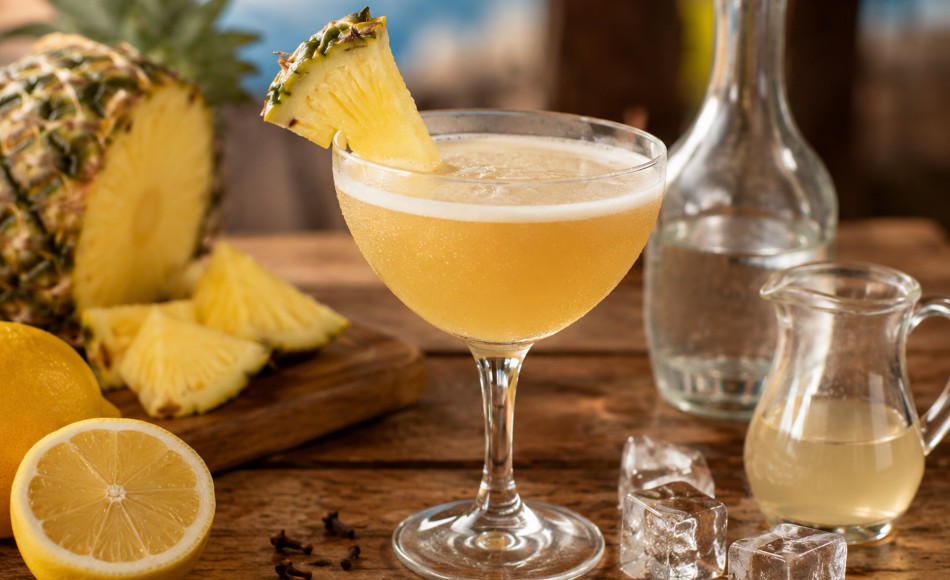
Pisco Punch is a tropical cocktail that combines pisco, pineapple, lemon, and syrup. Its flavor is fruity, citrus-forward, and lightly sweet, while still preserving the strength and character of the grape spirit. The classic drink is served cold and may be finished with dry white wine and a subtle clove aroma.
Although its principal spirit is Peruvian, the cocktail became famous in late nineteenth-century San Francisco, California. It is associated with bartender Duncan Nicol and the former Bank Exchange Saloon, where it became popular among travelers, merchants, and prominent figures in the city’s cultural life. Nicol’s exact formula did not survive, so modern recipes are reconstructions based on its historically associated ingredients.
One of today’s best-known versions keeps pisco at the center and balances it with fresh pineapple juice, lemon, syrup, dry white wine, and cloves. This combination appears in the formula published by the International Bartenders Association.
Print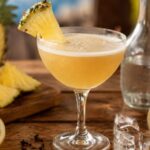
Peruvian Pisco Punch
- Prep Time: 15 minutes
- Total Time: 15 minutes
- Yield: 4
- Category: Beverage
- Cuisine: Peruvian
Ingredients
- 240 ml pure Quebranta pisco (1 cup or 8 ounces)
- 90 ml fresh, strained pineapple juice (⅓ cup plus 2 teaspoons)
- 60 ml freshly squeezed lemon juice (¼ cup)
- 60 ml simple syrup (¼ cup)
- 120 ml chilled dry white wine (½ cup)
- 12 cloves
- 300 g ice cubes (approximately 20 cubes)
- 120 g fresh pineapple, cut into 4 wedges for garnish
Preparation
- Infuse the simple, syrup with the cloves. Place the syrup and cloves in a mixing glass or cocktail shaker. Gently press the cloves for a few seconds to release their aroma, without crushing them completely, and let the mixture rest for 5 minutes.
- Mix the cocktail, adding the pisco, pineapple juice, and lemon juice. Add about two-thirds of the ice, close the shaker, and shake vigorously for 12 to 15 seconds, until the shaker is very cold.
- Strain the mixture, through the shaker’s strainer and then through a fine-mesh sieve to remove any clove pieces and pineapple pulp. Divide the mixture among four large glasses or lowball glasses with the remaining ice.
- Top up and serve, by pouring 30 ml of dry white wine over each glass and gently swirling once to combine without losing its freshness. Garnish each serving with a pineapple wedge and serve immediately.
Chef’s Tips
- Use quebranta pisco for a structured, clean drink that balances well with pineapple.
- Squeeze the lemon immediately before mixing to preserve its aroma and acidity.
- Strain fresh pineapple juice so the cocktail does not become excessively fibrous.
- Press the cloves gently; crushing them into powder can make the drink bitter and overpowering.
- Chill the white wine and glasses thoroughly to limit dilution.
- Do not prepare the completed cocktail too far ahead, as the fresh juices lose brightness and the ice changes its balance.
Traditional Variations
The exact historical formula from the Bank Exchange Saloon remains uncertain. Reconstructions generally include pisco, pineapple, citrus, sugar or gum syrup, and water or ice, but their proportions and methods of incorporating the fruit vary.
The version recognized by the International Bartenders Association adds dry white wine and uses cloves to flavor the syrup. Simpler formulas omit the wine and combine only pisco, pineapple juice, lemon or lime juice, and syrup.
Some recipes use gum syrup instead of regular simple syrup. Gum syrup gives the cocktail a silkier texture without changing its essential pisco, pineapple, and citrus profile.
How to Serve
Serve Pisco Punch thoroughly chilled in a large stemmed glass, cocktail glass, or rocks glass over ice. Keep the garnish simple with a small wedge of fresh pineapple.
It works particularly well as an aperitif at gatherings and celebrations. It can also accompany savory appetizers or be served at the beginning of a Peruvian meal. Because pineapple and syrup soften the perception of alcohol, it should be enjoyed in moderation.
Recommended Pairings
- Peruvian ceviche
- Fish tiradito
- Causa limeña
- Cheese-filled tequeños
- Fresh-cheese canapés
- Lightly salted toasted nuts
A Little History
Pisco Punch became famous at San Francisco’s Bank Exchange Saloon during the final decades of the nineteenth century. The cocktail became closely associated with Duncan Nicol, the establishment’s owner and bartender, and was remembered for its appealing flavor and the alcoholic strength concealed beneath its fruity profile.
Pisco reached California through Pacific trade routes, encouraging its presence in San Francisco bars. Pisco Punch therefore represents a historic meeting between Peruvian grape spirit, tropical fruit, and American cocktail culture. Although it originated outside Peru, it remains one of the most historically important international cocktails made with pisco.
Frequently Asked Questions
Peruvian quebranta pisco is an excellent choice because its firm, nonaromatic profile allows the pineapple and lemon to remain noticeable without hiding the spirit. Acholado pisco can also be used for a more complex and aromatic result while keeping the same proportions.
Historical reconstructions differ because Duncan Nicol’s original formula was not preserved. The contemporary International Bartenders Association version includes dry white wine added at the end. Other recognized recipes omit it and use only pisco, pineapple, citrus, and syrup.
Yes, but fresh pineapple juice provides a cleaner aroma and more natural acidity. When using bottled juice, select an unsweetened product and taste the cocktail before adding all the syrup, since some commercial juices are already quite sweet.
Simple syrup is made from sugar and water, while gum syrup also contains gum arabic. Both sweeten the cocktail, but gum syrup gives it a smoother, lightly velvety mouthfeel. You can use either one in the same quantity.
You may combine the pisco, pineapple juice, lemon juice, and syrup shortly before serving and keep the mixture refrigerated. Shake it with ice and add the white wine only at the last moment to preserve the correct temperature, freshness, and dilution.