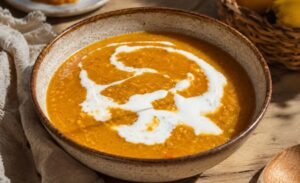

Fish chilcano is a clear, flavorful, and comforting broth from Peruvian cuisine. It is traditionally prepared by using fresh fish heads, bones, and trimmings, which simmer with onion, garlic, ginger, chili peppers, and herbs to create a light but deeply savory stock.
It is especially popular along Peru’s coast, where it is often served piping hot as a starter or a restorative meal after a day of fishing. A final touch of lime juice, chili pepper, and fresh cilantro brightens the seafood flavor without covering it.
Print
Peruvian Fish Chilcano
- Prep Time: 20 minutes
- Cook Time: 40 minutes
- Total Time: 1 hour
- Yield: 6
- Category: Soup
- Cuisine: Peruvian
Ingredients
- 1 kg fresh fish heads, bones, and trimmings (about 2.2 lb)
- 400 g firm white fish fillets, cut into large pieces (about 14 oz)
- 2 liters water (8 cups)
- 150 g red onion, sliced (1 large onion)
- 20 g crushed garlic (4 garlic cloves)
- 15 g fresh ginger, sliced (1 piece about 1½ inches long)
- 100 g chopped tomato (1 medium tomato)
- 30 g chopped celery (1 stalk)
- 20 g fresh ají amarillo, cut into strips (1 medium pepper)
- 8 g ají limo or rocoto chili pepper, chopped (1 small pepper)
- 20 g chopped fresh cilantro (½ cup)
- 10 g salt (2 teaspoons)
- 2 g ground black pepper (¼ teaspoon)
- 30 ml lime juice (2 tablespoons)
- 300 g cooked cassava, cut into pieces (1 small cassava root)
- 100 g toasted cancha corn (1 cup)
Preparation
- Clean the fish, rinse the fish heads, bones, and trimmings well under cold water. Remove the gills from the fish heads, since they can make the broth bitter, and reserve the fish fillet pieces for the final stage.
- Build the broth, place the fish heads, bones, trimmings, onion, garlic, ginger, tomato, celery, ají amarillo, and half of the cilantro in a large pot. Add the water, bring it to a boil, and skim off any foam that rises to the surface.
- Simmer gently, lower the heat and cook the broth for 25 to 30 minutes without boiling too aggressively. This gives you a clear, concentrated broth with the flavor of fresh fish and aromatic vegetables.
- Strain and season, remove the bones and vegetables with a slotted spoon, then strain the broth if you prefer a cleaner presentation. Return the liquid to the pot and season it with salt, black pepper, and chopped ají limo or rocoto.
- Cook the fillets, add the fish fillet pieces to the broth and cook for 4 to 6 minutes, until they turn opaque and tender. Do not stir forcefully, so the fish keeps its shape.
- Finish and serve, turn off the heat, add the remaining cilantro and lime juice, and serve the chilcano piping hot with cooked cassava and toasted cancha corn on the side.
Chef’s tips
- Always remove the gills before cooking fish heads to prevent bitter flavors.
- Use fresh, firm white fish such as corvina, rockfish, cachema, grouper, or sea bass.
- Do not simmer the broth for too long, because extended cooking can make it cloudy and bitter.
- Add lime juice at the end to keep its bright, fresh aroma.
- Serve ají limo separately when you want each person to control the heat.
Traditional variations
Along different parts of Peru’s coast, chilcano may be made with corvina, rockfish, cachema, grouper, or local reef fish available at the market. Some versions include cassava or sweet potato, while others are served only with toasted cancha corn and fresh chili peppers.
In more home-style preparations, small pieces of fish picked from the bones may also be added back to the strained broth.
How to serve
Serve fish chilcano in deep bowls while it is steaming hot, with one or two pieces of fish in each portion. Add a few extra drops of lime juice and fresh cilantro just before bringing it to the table.
The traditional accompaniments are cooked cassava, toasted cancha corn, and chopped ají limo or rocoto. Chicha morada or Peruvian-style lemonade pair well with this clear seafood broth.
Recommended accompaniments
- Cooked cassava
- Toasted cancha corn
- Chopped ají limo
- Ground rocoto
- Chicha morada
- Peruvian lemonade
Food tradition
Fish chilcano is a recipe built around thoughtful use of ingredients. Rather than discarding fish heads, bones, and trimmings, Peruvian cooking turns them into a flavorful and nourishing broth.
Because it is light and served hot, many people consider it a restorative dish. It is commonly found near markets, fishing coves, and seafood restaurants, particularly during cooler months.
Frequently Asked Questions
You can use corvina, rockfish, cachema, grouper, cojinova, or any very fresh fish with firm flesh. The most important part is having the head and bones, because they provide much of the broth’s flavor. Avoid overly oily or strongly flavored fish when you want a clear, delicate chilcano.
Gills can add a bitter flavor and make the broth look darker. Remove them before cooking the fish and rinse the head well under cold water. This simple step helps create a cleaner chilcano with a fresher aroma and a more pleasant flavor.
Yes. You can prepare and strain the base broth, then refrigerate it for up to 2 days. When you are ready to serve it, heat it again and add fresh fish fillet pieces near the end. This keeps the fish tender and prevents it from breaking apart during reheating.
No. Traditional fish chilcano is a clear fish broth and does not include milk or cream. Its flavor comes from fresh fish, aromatic vegetables, chili peppers, cilantro, and lime juice. That lightness is one of the main qualities that distinguishes it from creamy Peruvian soups and chupes.