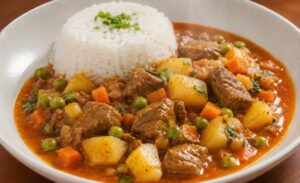
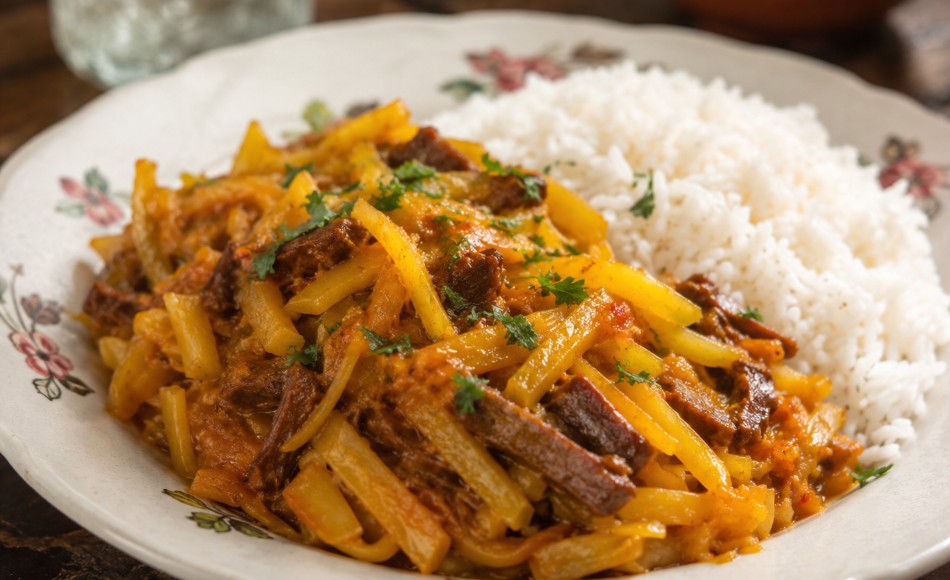
Olluquito con charqui is one of the most representative stews of Peru’s Andean cuisine. It combines thinly sliced olluco with charqui, traditionally cured and air-dried llama or alpaca meat, in a flavorful base of onion, garlic, and Peruvian chile pastes. Both main ingredients have pre-Hispanic roots and reflect the Andean tradition of preserving and making the most of local foods.
The dish is strongly connected to Peru’s highland regions. Although it is now prepared throughout the country, it remains closely associated with the cuisines of Cusco, Pasco, Ayacucho, and Puno. You serve it hot, usually with fluffy white rice, and enjoy the contrast between tender yet firm olluco and savory charqui.
Print
Peruvian Olluquito with Charqui
- Prep Time: 40 minutes
- Cook Time: 45 minutes
- Total Time: 1 hour 25 minutes
- Yield: 6
- Category: Main Course
- Cuisine: Peruvian
Ingredients
- 1 kg fresh olluco, washed and cut into thin strips
- 250 g llama or alpaca charqui
- 200 g red onion, finely chopped (1 large onion)
- 20 g garlic, minced or blended (4 cloves)
- 45 g ají panca paste (3 tablespoons)
- 30 g ají amarillo paste (2 tablespoons)
- 30 ml vegetable oil (2 tablespoons)
- 5 g ground cumin (1 teaspoon)
- 2 g ground black pepper (½ teaspoon)
- 2 g dried oregano (1 teaspoon)
- 500 ml beef stock or hot water (2 cups)
- 8 g salt (1½ teaspoons), or to taste
- 20 g fresh parsley, chopped (4 tablespoons)
- 600 g cooked white rice for serving (3 cups)
Preparation
- Rinse and soak the charqui, rinse it several times under cold water and soak it in cold water overnight, changing the water at least once, to remove excess salt; then drain and cut it into thin strips or small pieces. If the charqui is very tough, boil it for 15 minutes before adding it to the stew.
- Make the flavor base, heat the oil in a pot and cook the onion over medium heat until translucent. Add the garlic, ají panca paste, ají amarillo paste, cumin, black pepper, and oregano. Cook for 6 to 8 minutes, stirring often, until the mixture is thick, dark, and fragrant.
- Add the charqui, stir the hydrated meat into the seasoning base so it absorbs the flavors. Cook for 5 minutes, then add 250 ml of hot stock (1 cup). Partially cover the pot and simmer over low heat for 15 minutes.
- Cook the olluco, add the sliced olluco and the remaining hot stock. Stir gently, cover the pot, and cook over medium-low heat for 20 to 25 minutes. Stir occasionally to prevent sticking, but avoid overmixing so the olluco keeps its shape.
- Adjust and serve, once the olluco is tender and the liquid has formed a light sauce, taste and season carefully, since charqui may still contain salt. Stir in the chopped parsley, let the stew rest for 5 minutes, and serve hot with fluffy white rice.
Chef’s Tips
- Rinse the charqui well and taste the stew before adding salt; this prevents the dish from becoming overly salty.
- Slice the olluco evenly so it cooks at the same rate and gives the stew a balanced texture.
- Do not add too much liquid. Olluco releases moisture as it cooks, and the finished dish should be moist but not soupy.
- Cook over moderate heat so the charqui softens while the olluco stays intact.
- Ají panca brings deep color and richness, while ají amarillo adds mild heat and a distinctive Peruvian aroma.
Traditional Variations
Across Peru, charqui may be replaced with chalona, dried mutton, or with fresh beef, pork, or chicken. However, the version most closely tied to Andean tradition uses llama or alpaca charqui with fresh olluco. Some home cooks add a small amount of evaporated milk at the end to soften the stew, although it is not essential to the traditional recipe.
How to Serve It
Serve olluquito con charqui hot over a bed of fluffy white rice or with the rice on the side. Finish with fresh chopped parsley and offer Peruvian ground chile at the table for anyone who wants more heat.
It is a complete main dish and does not need many additional sides. Chicha morada or a cold barley drink pair especially well with its savory, spiced flavor.
Recommended Side Dishes
- Fluffy white rice
- Peruvian ground chile sauce
- Peruvian onion salad with lime
- Chicha morada
- Cold barley drink
A Little History
Olluco is an Andean tuber cultivated since pre-Hispanic times, while charqui developed as a practical way to preserve meat at high altitude through salting and dehydration. Together, they created a stew deeply connected to Andean food traditions.
The word charqui refers to an ancestral Andean meat-preservation technique, and it is also the origin of the English word “jerky.” Olluquito con charqui still carries that history of highland cooking, long-lasting foods, and family-centered flavor.
Frequently Asked Questions
Charqui is salted and dried meat, an ancestral preservation method used in the Andes. Traditional olluquito con charqui commonly uses llama or alpaca charqui, though dried mutton is also used in some regions. Before cooking, you should rinse and soak it to reduce saltiness and soften its firm texture.
Yes. You can make olluquito with fresh beef, pork, or chicken, and these versions are common in modern Peruvian kitchens. However, olluquito con charqui has a deeper, more concentrated flavor and a stronger Andean identity. For the traditional version, use llama or alpaca charqui whenever possible.
Thin strips allow the olluco to cook quickly and absorb the seasoned sauce more evenly. They also create the dish’s signature texture: tender, lightly moist, and never mashed. Use a sharp knife or a mandoline slicer carefully to make strips that are thin and similar in size.
Olluco should be tender when pierced, while still holding its shape and keeping a slight bite. If you cook it too long, it can release excessive moisture and lose its distinctive texture. Start checking it after 20 minutes and add more stock only if the stew begins drying out too quickly.