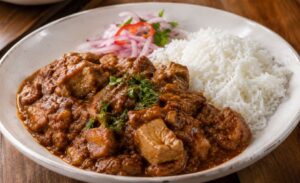

Lomo saltado is one of Peru’s most iconic dishes. It combines Chinese-Cantonese stir-frying techniques with Peruvian ingredients such as ají amarillo, red onion, tomatoes, and potatoes. The beef is cooked over very high heat to stay juicy, while soy sauce and vinegar create a savory, lightly tangy sauce.
It is a classic of Peruvian family lunches, criollo restaurants, and traditional eateries. Its customary presentation combines fluffy white rice and French fries, reflecting the cultural blend that defines Peruvian cuisine.
Print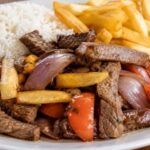
Peruvian Lomo Saltado
- Prep Time: 25 minutes
- Cook Time: 20 minutes
- Total Time: 45 minutes
- Yield: 4
- Category: Main Course
- Cuisine: Peruvian
Ingredients
- 700 g beef tenderloin, cut into thick strips (about 1½ lb)
- 500 g yellow potatoes or russet potatoes (4 medium potatoes)
- 200 g red onion, cut into thick wedges (2 medium onions)
- 300 g tomatoes, cut into thick wedges (3 medium tomatoes)
- 30 g fresh ají amarillo, cut into strips (1 large pepper)
- 20 g garlic paste (4 garlic cloves)
- 60 ml soy sauce (4 tablespoons)
- 30 ml red wine vinegar (2 tablespoons)
- 30 ml vegetable oil (2 tablespoons)
- 15 g chopped fresh cilantro (¼ cup)
- 5 g salt (1 teaspoon)
- 2 g ground black pepper (¼ teaspoon)
- 400 g cooked white rice (4 cups)
Preparation
- Fry the potatoes, peel the potatoes, cut them into medium fries, and fry them in hot oil until golden and crisp. Drain them on paper towels, season with a pinch of salt, and keep them warm.
- Season the beef, cut the tenderloin into thick strips and mix it with the salt, black pepper, and garlic. Heat a large skillet or wok over very high heat until it is thoroughly hot.
- Stir-fry the beef, add the oil and cook the beef in two batches for 1 to 2 minutes per side. Aim for browned edges and a juicy center, then remove it before it overcooks.
- Cook the vegetables, add the onion and ají amarillo to the same skillet. Stir-fry for 1 minute, add the tomatoes, and cook for only 1 more minute so they stay fresh and hold their shape.
- Make the sauce, return the beef to the skillet, add the soy sauce and red wine vinegar, and toss quickly for 1 minute. Stir in the chopped cilantro and taste for seasoning.
- Serve immediately, place fluffy white rice on one side of each plate, spoon over the lomo saltado and its sauce, and finish with the fries. You can toss part of the fries into the stir-fry and serve the rest on the side for extra crunch.
Chef’s tips
- Use a very hot wok or skillet to achieve the signature seared flavor.
- Cook the beef in batches so it browns instead of releasing too much liquid.
- Do not overcook the tomatoes; they should remain juicy but not collapse.
- Add the fries at the end so they do not absorb all the sauce.
- Taste before adding more salt because soy sauce already provides saltiness.
Traditional variations
Some home cooks add a splash of pisco to deglaze the skillet before adding the soy sauce and vinegar. A closely related traditional variation uses chicken instead of beef and is known as pollo saltado, although beef tenderloin remains the dish’s most emblematic version.
How to serve
Serve lomo saltado immediately with fluffy white rice and hot French fries. The sauce should lightly coat the beef and rice without making the plate overly wet.
Serve Peruvian chili sauce at the table, along with chicha morada or Peruvian-style lemonade.
Recommended accompaniments
- Fluffy white rice
- French fries
- Ají amarillo or ají limo sauce
- Chicha morada
- Peruvian lemonade
Food tradition
Lomo saltado reflects the influence of Chinese immigration on Peruvian cooking, especially in the technique of quickly stir-frying ingredients over intense heat. Soy sauce and wok cooking meet deeply Peruvian ingredients including ají amarillo, potatoes, and red onion.
This culinary exchange created one of the most recognizable dishes in Peruvian criollo cuisine and a lasting symbol of chifa-Peruvian food culture.
Frequently Asked Questions
Beef tenderloin is the most traditional choice because it is tender and cooks quickly over high heat. You can also use sirloin, strip steak, or another tender, lean cut suitable for stir-frying. Cut the meat into thick strips and cook it briefly so it remains juicy.
High heat browns the beef quickly while keeping the center juicy. It also helps the onion, tomatoes, and soy sauce develop the signature seared flavor of the dish. When the skillet is not hot enough, the ingredients release water and steam rather than stir-fry.
Yes, part of the fries is often tossed briefly with the sauce before serving. However, many cooks also leave some fries on the side so they stay crisp. This creates the traditional contrast between fries that are lightly sauced and fries that remain golden and crunchy.
It is best cooked and served immediately because the beef, tomatoes, and fries lose texture as they sit. You can cut the ingredients and cook the rice ahead of time, but stir-fry the beef and vegetables just before serving for the best flavor and juiciness.