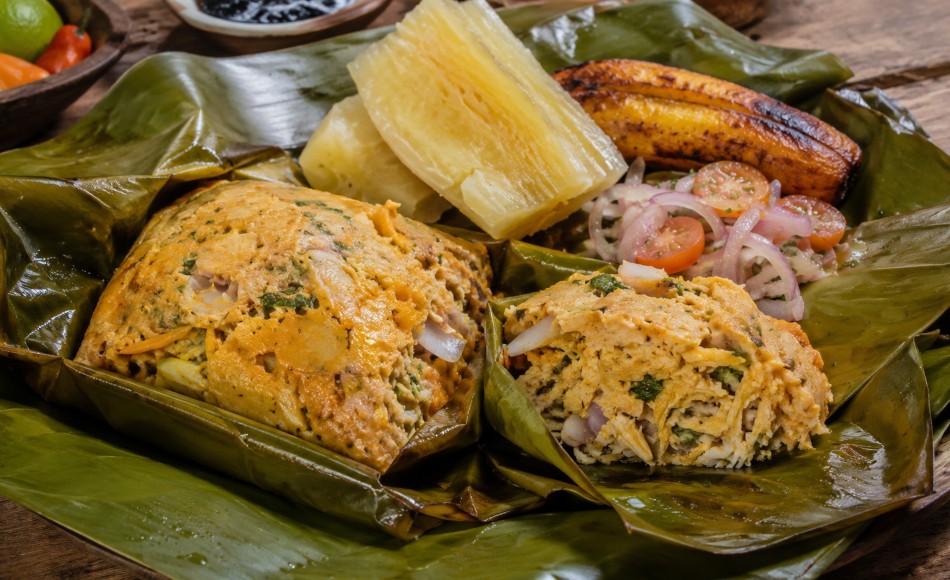
Nina juane is a traditional dish from the Peruvian Amazon, especially linked to the Feast of San Juan, one of the most important celebrations in regions such as Loreto, San Martín, Ucayali, and Madre de Dios. Unlike the classic juane, which is made with rice, nina juane is prepared mainly with beaten eggs and hen or chicken, wrapped in bijao leaves and cooked until it forms a firm, aromatic omelet-like bundle.
Its name is often understood as “fire juane” or “roasted juane,” because it can traditionally be cooked over embers or wood fire, although it is also boiled or baked depending on family custom. It is appreciated for its simplicity, rich flavor, and close connection to festive Amazonian meals.
On San Juan tables, nina juane represents an old and beloved variation of the Amazonian juane. The bijao leaf is not only a wrapper; it also gives the dish the distinctive aroma found in many traditional preparations from Peru’s rainforest.
Print
Peruvian Nina Juane
- Prep Time: 25 minutes
- Cook Time: 35 minutes
- Total Time: 1 hour
- Yield: 4
- Category: Main Course
- Cuisine: Peruvian
Ingredients
- 600 g cooked shredded hen or chicken (3 cups)
- 8 large eggs
- 120 g finely chopped red onion (1 medium onion)
- 20 g minced garlic (4 cloves)
- 30 ml vegetable oil (2 tablespoons)
- 10 g ground turmeric or Peruvian palillo (1 tablespoon)
- 20 g chopped fresh cilantro or sachaculantro (½ cup)
- 8 g salt (1½ teaspoons)
- 2 g ground black pepper (½ teaspoon)
- 4 large bijao leaves, cleaned and softened over heat
- Kitchen twine, bijao strips, or natural fiber for tying
- 1 liter water (4 cups, for cooking the poultry if starting from raw chicken)
Preparation
- Cook the hen or chicken, place the pieces in a pot with the water and a pinch of salt, and cook over medium heat until tender. If you use hen, cook for 45 to 60 minutes; if you use chicken, 25 to 30 minutes will be enough. Remove the pieces, let them cool slightly, and shred them into medium pieces.
- Make the seasoning base, heat the oil in a skillet and sauté the onion with the garlic until soft and fragrant. Add the turmeric or palillo, mix well so it releases its color, and cook for 2 more minutes, making sure the garlic does not burn.
- Mix the nina juane base, beat the eggs in a large bowl until the yolks and whites are fully combined. Add the shredded hen or chicken, the seasoning base, cilantro, salt, and pepper. Mix until the preparation is even, moist, and nicely colored by the palillo.
- Prepare the bijao leaves, wash the leaves and pass them briefly over an open flame or a hot skillet until they soften and become flexible. This keeps them from tearing when folded and helps release their aroma during cooking.
- Shape the bundles, place a portion of the egg and chicken mixture in the center of each bijao leaf. Fold the sides toward the center and close into firm packets, without pressing too tightly so the mixture can set evenly. Tie each packet securely with kitchen twine or strips of bijao leaf.
- Cook the nina juane, place the packets in a pot with gently boiling water and cook for 25 to 30 minutes, until the egg is fully set and firm. You can also cook them over gentle embers, turning them carefully, until the leaf is toasted and the inside is firm.
- Serve hot, remove the packets from the water or fire, let them rest for 5 minutes, and open the leaves carefully. Serve the nina juane hot, keeping the bijao leaf as a base to preserve its traditional aroma.
Chef’s Tips
Use hen if you want a more traditional and deeper flavor; chicken works well when you need a quicker cooking option.
Do not overfill the bijao leaves, because the egg mixture needs enough space to set without spilling.
Beat the eggs only until combined; you do not need to make them foamy, since nina juane should be firm and juicy, not airy.
If you cook the packets over embers, keep the heat gentle so the leaf toasts without burning before the inside sets.
Traditional Variations
In some areas of the Peruvian Amazon, nina juane is made with sachaculantro instead of regular cilantro, giving it a deeper regional flavor.
There are also family versions that add small amounts of cooked rice, although the most representative nina juane is known for being based mainly on eggs.
In certain communities, it is cooked directly over embers, while many households boil it wrapped in bijao leaves to achieve a more even texture.
Traditional Serving Style
Serve nina juane hot, freshly opened, on its own bijao leaf. Its texture should be firm, similar to a compact omelet, but still moist inside thanks to the shredded hen or chicken.
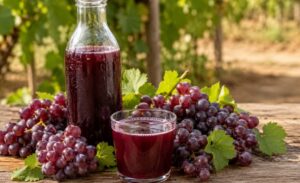
Traditionally, it is served with boiled cassava, roasted plantain, cocona chili sauce, or chonta salad. During the Feast of San Juan, it may be served alongside other Amazonian juanes and regional drinks such as masato, aguajina, or camu camu juice.
Recommended Pairings
- Boiled cassava
- Roasted plantain
- Chonta salad
- Cocona chili sauce
- Plain tacacho
- Masato
- Aguajina
- Camu camu juice
Culinary Curiosity
Nina juane belongs to the larger family of Amazonian juanes, dishes wrapped in bijao leaves and especially eaten during the Feast of San Juan, celebrated every June 24. This celebration is deeply important in the Peruvian Amazon, where families prepare food to share at home, outdoors, or near the rivers.
Unlike rice-based juane, nina juane stands out for its set egg texture and more direct cooking style. It shows how one tradition can have different versions depending on the region, the family, and the cooking method available.
Frequently Asked Questions
Peruvian nina juane is an Amazonian preparation made with beaten eggs, hen or chicken, a palillo-based seasoning, cilantro, and bijao leaves. It is wrapped into a bundle and cooked until the eggs set. It is a traditional juane variation closely connected to the Feast of San Juan in Peru’s rainforest.
The main difference is the base. The best-known traditional juane is made with rice, hen, egg, and olive, while nina juane is made mostly with beaten eggs and shredded hen or chicken. That gives it a texture closer to an omelet wrapped in bijao leaves.
Bijao leaves are essential for the traditional aroma and presentation. If you cannot find them, banana leaves are a practical substitute, although the flavor will not be exactly the same. The leaf is important because it protects the mixture and adds a distinctive herbal fragrance.
It can be prepared both ways, depending on family tradition. Some versions are cooked over gentle embers, which adds a smokier flavor. In many homes, it is boiled while wrapped in bijao leaves because this helps the egg set evenly and keeps the bundle’s shape.