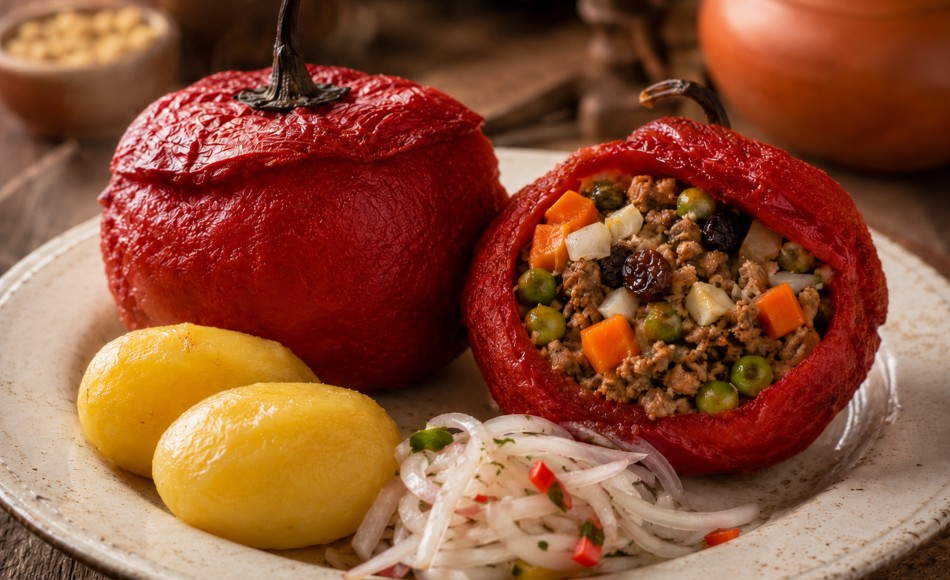
Cusco-style rocoto relleno is a traditional regional version of Peru’s famous stuffed rocoto. You fill cleaned rocoto peppers with a savory mixture of beef, onion, carrot, peas, peanuts, raisins, and hard-boiled egg. Unlike the Arequipa version, which is commonly baked with cheese, the Cusco style is coated in flour and egg before frying, creating a golden outer layer around a moist, flavorful filling.
It is a bold dish in which the rocoto’s natural heat is balanced by sweet and savory ingredients. Serve it as a generous appetizer or main course with boiled potatoes, white chuño, or baked noodles, as is common in many Cusco-style meals.
Print
Cusco Stuffed Rocotos
- Prep Time: 50 minutes
- Cook Time: 45 minutes
- Total Time: 1 hour 35 minutes
- Yield: 8
- Category: Main Course
- Cuisine: Peruvian
Ingredients
- 8 large, firm red rocoto peppers
- 1.5 liters water
- 60 ml white vinegar (4 tablespoons)
- 30 g sugar (2 tablespoons)
- 400 g ground beef or very finely chopped beef
- 180 g red onion, finely chopped (1 large onion)
- 100 g carrot, cut into small cubes (1 medium carrot)
- 100 g cooked green peas (¾ cup)
- 30 g roasted peanuts, finely ground (¼ cup)
- 30 g dark raisins (3 tablespoons)
- 2 hard-boiled eggs, chopped
- 20 g garlic, minced or blended (4 cloves)
- 30 g ají panca paste (2 tablespoons)
- 30 ml vegetable oil (2 tablespoons)
- 2 g ground cumin (½ teaspoon)
- 2 g dried oregano (1 teaspoon)
- 2 g ground black pepper (½ teaspoon)
- 8 g salt (1½ teaspoons), or to taste
- 15 g fresh parsley, chopped (3 tablespoons)
- 4 large eggs for coating
- 100 g all-purpose flour (¾ cup)
- 500 ml vegetable oil for frying (2 cups)
Preparation
- Clean the rocotos, cut a lid from the top of each rocoto and set it aside. Remove the seeds and inner veins with a small spoon, wearing gloves to avoid irritation. Rinse the rocotos inside and out under plenty of cold water.
- Reduce the heat, place the rocotos and their lids in a pot with the water, vinegar, and sugar. Boil for 8 minutes, drain, and repeat the process two more times with fresh water, vinegar, and sugar. Let the rocotos drain upside down until completely cool.
- Make the filling base, heat the oil in a wide skillet and cook the onion until translucent. Add the garlic, ají panca paste, cumin, oregano, and black pepper. Cook for 5 minutes, stirring often, until the mixture is thick and fragrant.
- Cook the filling, add the beef and break up any lumps as it cooks. Cook over medium heat for 8 minutes, until the meat is fully cooked and coated with the seasoning base. Add the carrot, peas, ground peanuts, raisins, chopped hard-boiled egg, and parsley. Season with salt and cook for 3 more minutes, until the filling is moist but not watery.
- Fill the rocotos, divide the filling among the rocotos without packing it too tightly. Place the lids back on top and secure them with wooden toothpicks so they stay in place while frying.
- Prepare the coating, separate the egg whites from the yolks. Beat the whites until thick and foamy, then add the yolks one at a time, folding them in gently until you have a light coating mixture. Place the flour on a wide plate.
- Fry the rocotos, heat the oil over medium heat. Coat each stuffed rocoto in flour, dip it in the egg mixture, and fry for 4 to 5 minutes, turning carefully until golden on all sides. Do not overheat the oil, or the coating may brown before the filling is thoroughly heated.
- Drain and serve, place the fried rocotos on paper towels for 2 minutes. Remove the toothpicks before serving and enjoy them hot with boiled potatoes, white chuño, or baked noodles.
Chef’s Tips
- Wear gloves when cleaning rocotos and avoid touching your eyes or face.
- Replace the water for every boiling round to reduce the pepper’s heat more effectively without removing its flavor.
- Let the filling cool slightly before stuffing the peppers; this makes them easier to handle.
- Do not overfill the rocotos, because the filling can spill out while frying.
- Fry over medium heat so the egg coating cooks evenly and does not absorb excessive oil.
Traditional Variations
In Cusco, some family recipes use beef cut into very small cubes instead of ground beef. The amounts of peanuts, raisins, and peas may also vary depending on household tradition.
The Cusco version differs clearly from the more widely known Arequipa rocoto relleno, which is generally baked with cheese. Cusco-style rocotos are distinguished by their flour-and-egg coating and fried finish.
How to Serve It
Serve Cusco-style stuffed rocotos immediately after frying, while the coating is still golden and the filling is hot. Pair them with boiled yellow potatoes, white chuño, or baked noodles.
For a fuller meal, add a light onion, tomato, and lime salad. Chicha morada, chicha de jora, or warm Andean herbal tea are traditional-style drink options.
Recommended Side Dishes
- Boiled yellow potatoes
- Boiled white chuño
- Baked noodles
- Peruvian onion salad
- Chicha morada
- Chicha de jora
A Cultural Note
Rocoto is an Andean chile from the species Capsicum pubescens, known for its intense heat and dark seeds. Its name comes from the Quechua word ruqutu, and in other Andean countries it is also called locoto.
Although stuffed rocoto is strongly associated with Arequipa, regional Peruvian cuisines have created their own versions. The Cusco preparation shows how the same native chile can take on different techniques and fillings according to local food traditions.
Frequently Asked Questions
Remove all seeds and inner veins, because they hold much of the pepper’s heat. Then boil the rocotos several times in water with vinegar and sugar, replacing the liquid each time. This softens their intensity, although rocotos will always keep some heat and their distinctive flavor.
You can bake it, but doing so changes the traditional character of this version. Cusco-style stuffed rocotos are usually coated in flour and egg before frying. Baking is closer to other Peruvian versions, especially the Arequipa style, which is commonly finished with melted or browned cheese.
You can use ground beef or beef chopped into very small pieces. Chopped beef gives the filling a more rustic, home-style texture, while ground beef makes it more even. Avoid very fatty cuts, because excess fat can make the filling too wet and prevent the coating from adhering properly.
Yes. You can make the filling and clean the rocotos one day ahead. Store them separately in the refrigerator, then fill and fry them when you are ready to serve. For the crispiest, freshest coating, beat the eggs and fry the rocotos just before serving.