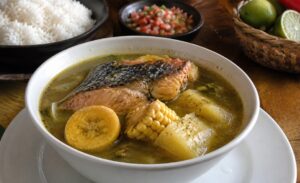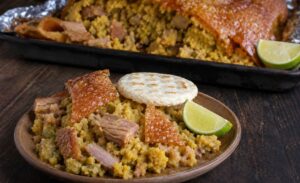
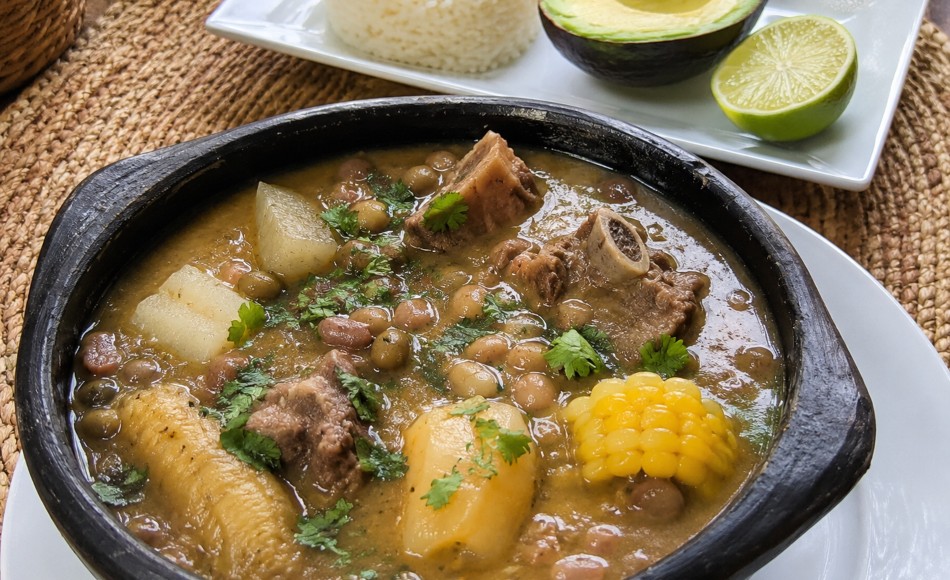
Pigeon pea sancocho is a typical dish of Colombia’s Caribbean region, closely associated with the Atlántico department and the Barranquilla Carnival. Its distinctive ingredient is guandú, also known as pigeon pea or gandul, a legume prized in coastal cooking.
It combines guandú, beef ribs, ñame, and yuca, and is served with chicharrón and queso costeño. It is a thick, hearty soup deeply tied to the culinary identity of the Caribbean coast.
Print
Colombian Pigeon Pea Sancocho
- Prep Time: 15 minutes
- Cook Time: 1 hour 45 minutes
- Total Time: 2 hours
- Yield: 4
- Category: Soup
- Cuisine: Colombian
Ingredients
- ½ pound dried pigeon peas (guandú), soaked the day before
- 1 pound beef ribs or salt-cured beef
- 12 cups water
- 1 ripe (yellow) plantain, peeled and sliced
- 1 pound ñame (yam), peeled and chopped
- 1 pound yuca (cassava), peeled and chopped
- 1 cup hogao
- 1 pound toasted chicharrones (pork cracklings)
- Grated queso costeño, to taste
For the hogao
- 2 large white onions (cebolla cabezona), peeled and finely chopped
- 6 cebollín (green onion) stalks, chopped
- 4 ripe tomatoes, peeled and finely chopped
- 8 ají dulce (sweet chili peppers), chopped
- 2 garlic cloves, ground
- 1 tablespoon vinegar
- ¼ cup oil (or lard)
- Salt, pepper, and cumin to taste
- 1 tablespoon achiote (optional)
Preparation
- Prepare the hogao. Combine the hogao ingredients and sauté them over low heat, stirring, for about 15 minutes, until you have a well-blended sauce. Use 1 cup for the sancocho and set the rest aside.
- Cook the pigeon peas and ribs. Place the soaked pigeon peas, ribs (or salt-cured beef), and the 12 cups of water in a large pot and bring to a boil. From that moment, cook until both are tender.
- Add the plantain, ñame, yuca, and hogao. Add them and cook until the ñame and yuca are tender.
- Finish and serve. A few minutes before serving, add the chicharrones cut into small pieces. Serve hot and sprinkle each bowl with grated queso costeño.
Chef’s Tips
If you can find fresh or frozen pigeon peas, they do not need soaking.
Do not exceed the cooking times: the pigeon peas should be tender without falling apart.
For a thicker sancocho, mash some of the ñame before serving.
Traditional Variations
It is also made with salted beef instead of, or along with, the ribs; before using it, leave it in water overnight and discard the water.
Some versions add pork ribs, ahuyama (squash), and green plantain.
There are also pigeon pea sancochos made with fish.
Traditional Serving Style
Pigeon pea sancocho is served piping hot with white rice or coconut rice and bollo de yuca. It is also accompanied by avocado and ají.
Recommended Side Dishes
- White rice or coconut rice
- Bollo de yuca
- Avocado
- Ají (hot sauce)
- Agua de panela
Frequently Asked Questions
It is a legume also known as pigeon pea, gandul, or frijol de palo. It has a mild flavor and a creamy texture when cooked.
Yes. Fresh or frozen pigeon peas do not need soaking; only dried pigeon peas are soaked the day before.
Beef ribs and salted beef are the most common; some versions add pork.
Ñame is a traditional ingredient of this soup; mashing a little before serving makes the broth thicker.
Yes. Refrigerate it within 2 hours of cooking and eat it within 3 to 4 days; you can also freeze it in airtight containers. Always reheat to 74 °C (165 °F).