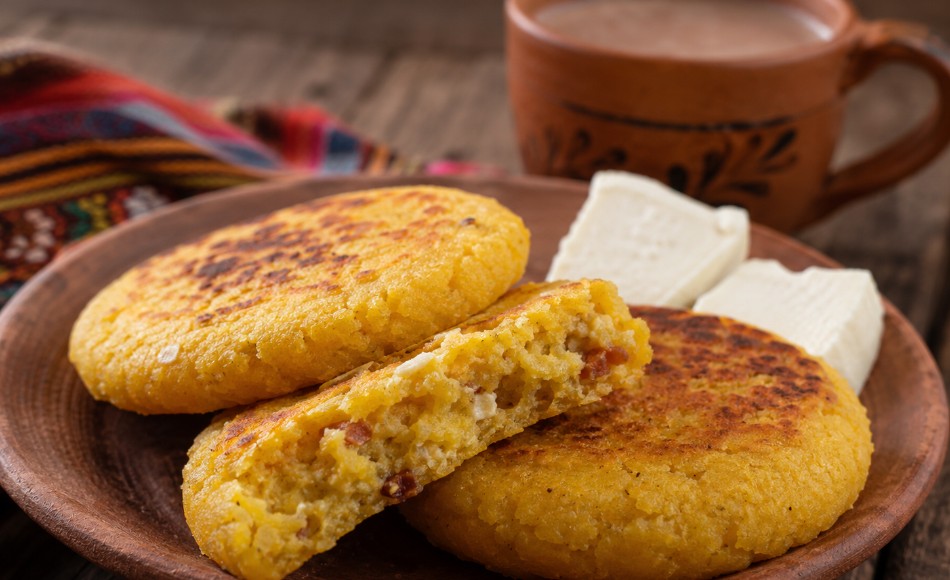
The Colombian peeled corn arepa is a traditional preparation especially associated with Santander and northeastern Colombia. Its name comes from the process of “peeling” the corn, which means cooking the kernels with clean wood ash or food-grade lime to loosen the outer skin before washing, grinding, and turning them into dough. This corn-processing technique is part of older maize-cooking traditions that remain alive in many rural and family kitchens.
The most representative version is usually made with peeled yellow corn, cooked cassava, pork cracklings, and pork lard. It is a flavorful arepa with a firm texture and toasted aroma, commonly enjoyed for breakfast, as a snack, or as part of traditional Santander-style meals with broth, eggs, dried beef, mute soup, or hot drinks.
Print
Colombian Peeled Corn Arepa
- Prep Time: 1 hour
- Cook Time: 2 hours
- Total Time: 3 hours
- Yield: 6
- Category: Main Course
- Cuisine: Colombian
Ingredients
- 500 g dried yellow corn or Colombian porva corn (2 ½ cups)
- 2.5 liters water for peeling the corn (10 cups)
- 80 g clean natural wood ash, sifted (1 cup)
- 1.5 liters clean water to finish cooking the corn (6 cups)
- 300 g peeled cassava or yuca (2 cups, cut into pieces)
- 1 liter water for cooking the cassava (4 cups)
- 150 g crispy pork cracklings, chopped (1 cup)
- 30 g pork lard (2 tablespoons)
- 8 g salt (1 ¼ teaspoons)
- 120 ml warm water to adjust the dough (½ cup)
Preparation
- Peel the corn, rinse the yellow corn and place it in a pot with 2.5 liters of water and the sifted clean wood ash. Cook over medium heat for 45 to 60 minutes, until the outer skin of the kernels starts to loosen when rubbed between your fingers. Turn off the heat and let the corn rest in the hot water for 30 minutes.
- Wash the corn thoroughly, drain the corn and rub it with your hands under plenty of clean water to remove all the ash and loosened skins. Change the water several times until it runs clear. This washing step is essential for a clean, smooth dough with good flavor.
- Finish cooking the corn, place the peeled corn in a pot with 1.5 liters of clean water and cook until the kernels are tender but not falling apart. They should break easily when pressed. Drain well and let the corn cool slightly before grinding.
- Cook the cassava, place the cassava in a pot with 1 liter of water and cook until soft. Remove the tough center fiber if present, drain, and mash it lightly while still warm so it blends more easily with the corn.
- Grind the dough, grind the peeled corn together with the cooked cassava and chopped pork cracklings until you get a compact, rustic, aromatic dough. Add the pork lard and salt, then knead with your hands until everything is evenly mixed. Add the warm water little by little until the dough is soft, firm, and free of deep cracks.
- Shape the arepas, divide the dough into 6 equal portions, roll them into balls, and flatten them into arepas about 1 cm thick. Smooth the edges with damp hands so they do not break while cooking.
- Griddle the arepas, heat a clay griddle, comal, or heavy skillet over medium heat and cook the arepas on both sides until golden, firm, and lightly charred in spots. Turn them several times so they cook evenly and become crisp on the outside while staying soft inside.
Chef’s tips
Use only ash from natural untreated wood, with no industrial charcoal, chemicals, paint, or fuel residue. If you do not have a safe source, use a very small amount of food-grade lime and wash the corn just as carefully.
Do not overcook the corn before grinding it; if it becomes too soft, the dough loses texture and the arepas can turn heavy.
The pork cracklings should be crisp so they add flavor and fat to the dough without making it watery.
Knead patiently. The dough is ready when you can flatten a portion without large cracks forming around the edges.
Traditional variations
In some parts of Santander, the arepa is made with more ground pork cracklings for a richer and fattier flavor.
Some family versions use a little more cooked cassava to make the dough softer.
In rural preparations, the corn is traditionally peeled with ash water; in modern kitchens, food-grade lime may be used in controlled amounts, always followed by thorough washing.
Traditional way to serve
Serve the peeled corn arepa hot, right off the griddle or comal. It should be golden on the outside, fragrant with toasted corn, and firm enough to eat on its own or as a side dish.
In Santander, it is often served with beef rib broth, scrambled eggs with tomato and scallions, dried beef, mute soup, fresh cheese, or butter. For drinks, it pairs well with hot chocolate, coffee with milk, aguapanela, or masato.
Recommended pairings
- Beef rib broth
- Colombian-style scrambled eggs
- Dried beef
- Santander mute soup
- Fresh farmer’s cheese
- Butter
- Hot chocolate
- Aguapanela
- Coffee with milk
Food fact
Peeling corn with ash or lime does more than remove the outer skin of the kernel; it also changes the texture of the dough and gives it a deeper flavor. This technique, related to nixtamalization, shows the historical importance of corn in Colombia’s traditional kitchens and throughout the Americas.
Frequently Asked Questions
Peeled corn means corn whose outer skin has been loosened and removed through cooking with clean wood ash or food-grade lime. After that, the corn is thoroughly washed, cooked again if needed, and ground into dough. This process creates a softer texture and a distinctive flavor.
They are closely related. In Colombia, one of the most representative versions of peeled corn arepa is the Santander-style arepa, usually made with peeled corn, cooked cassava, pork cracklings, and pork lard. However, simpler peeled corn arepas also exist in other regions.
You can make a quick version, but it will not have the same flavor or texture. Traditional peeled corn arepa depends on whole corn that is cooked, peeled, washed, and ground. That process gives the arepa its rustic character, aroma, and special consistency.
The washing removes ash residue, loosened skins, and any excessive alkaline taste. The water should run clear before grinding the corn. If the corn is not washed well, the dough can taste bitter, rough, or too strong.
The dough is ready when you can form a ball, flatten it, and shape a firm arepa without deep cracks. It should feel moist but not sticky. If it breaks too much, add a little warm water; if it is too soft, knead it longer until it gains structure.