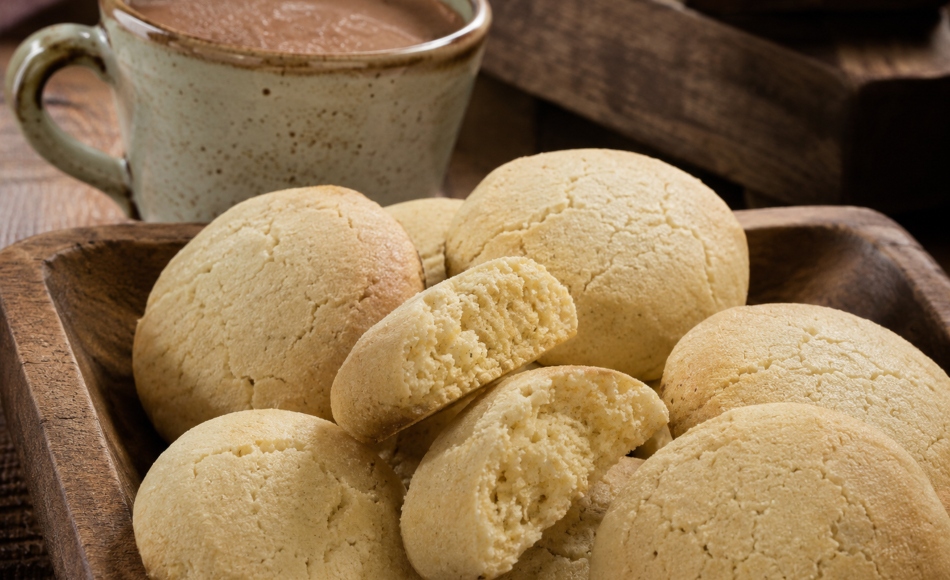
Panderos, also called panderitos in some Colombian regions, are traditional dry cookies with a delicate, crumbly texture. You make them mainly with cassava starch, butter, sugar, and anise, creating a cookie that is similar to a shortbread or polvorón but has its own place in Colombian baking.
They are perfect for afternoon coffee, family gatherings, and Colombian snack time. A good pandero should crumble gently when you bite into it, without becoming hard or damp. Panderos are recognized as a cassava-flour variation within Colombia’s traditional crumbly-cookie heritage.
Print
Colombian Panderos Cookies
- Prep Time: 33 minutes
- Cook Time: 25 minutes
- Total Time: 58 minutes
- Yield: 24
- Category: Dessert
- Cuisine: Colombian
Ingredients
- 300 g cassava starch (2 ½ cups)
- 150 g all-purpose flour (1 ¼ cups)
- 180 g granulated sugar (¾ cup plus 2 tablespoons)
- 180 g unsalted butter, softened (¾ cup)
- 2 large eggs
- 5 g ground anise seeds (1 teaspoon)
- 5 g baking powder (1 teaspoon)
- 2 g salt (¼ teaspoon)
- 30 ml whole milk (2 tablespoons), only if needed
Preparation
- Preheat the oven to 170 °C / 340 °F and line a baking sheet with parchment paper.
- Cream the butter, beat the butter with the sugar until the mixture becomes smooth and lighter in color. Add the eggs one at a time and keep mixing until fully combined.
- Make the dough, add the cassava starch, flour, ground anise, baking powder, and salt. Mix with your hands until you have a soft, compact dough. Add the milk gradually only when the dough crumbles too much when pressed.
- Let the dough rest for 15 minutes so the starch can absorb moisture and become easier to shape.
- Shape the panderos, divide the dough into portions of about 25 g each and roll them into balls. Flatten them slightly into discs about 5 cm / 2 inches wide and arrange them on the baking sheet, leaving space between them.
- Bake for 15 to 18 minutes, until the bottoms are only lightly golden and the tops remain pale. Do not overbake them because they should stay delicate and crumbly.
- Let the cookies cool completely on a wire rack before serving. They will develop their dry, fragile texture as they cool.
Chef’s tips
- Use softened butter rather than melted butter for a more delicate texture.
- Do not overmix the dough; work it only until it comes together.
- Grind the anise seeds before using them so the aroma spreads evenly.
- Remove the cookies while they are still pale because they become firmer as they cool.
Traditional variations
Some family recipes use a stronger anise flavor and shape the cookies into slightly elongated pieces. You may also find panderos topped with a light sprinkling of sugar before baking, although the simple cassava-starch version remains the most characteristic.
How to serve
Serve panderos at room temperature on a tray or in a bread basket with other Colombian baked goods. They are especially good with coffee and milk, hot chocolate, or a warm panela drink.
Recommended accompaniments
- Coffee with milk
- Colombian hot chocolate
- Hot panela drink
- Cold or warm milk
- Fresh farmer’s cheese
A culinary curiosity
Panderos belong to Colombia’s tradition of cookies made with starches, sugar or panela, and dairy fats. Cassava starch gives them a lighter, more fragile texture than a standard wheat-flour cookie.
Frequently Asked Questions
Panderos are usually made with cassava starch or cassava flour, while polvorosas generally combine wheat flour and cornstarch. Both are crumbly, but panderos tend to feel lighter and have a more noticeable anise flavor.
It is not ideal. A small amount of wheat flour helps the dough hold together so you can shape the cookies without breaking them. Using only cassava starch may make the dough too fragile before baking.
They may turn hard when you add too much flour, overwork the dough, or bake them too long. Remove them when the bottoms are only lightly golden and let them cool completely before judging their final texture.
Let them cool completely, then keep them in an airtight container in a cool, dry place for up to 7 days. Avoid refrigeration because humidity can affect their delicate, crumbly texture.