Fabes con almejas is one of the best-loved stews of Asturian cuisine, a coastal cousin of the classic fabada asturiana that trades the chorizo-and-blood-sausage compango for clams pulled straight from the Cantabrian Sea. The result is a rich, saffron-gold broth where the region's prized white beans meet the shellfish of its rocky coastline.
The dish is a staple in fishing towns like Villaviciosa, Tazones, and Ribadesella, where it turns up as a Sunday family meal and on the menus of the cider houses (sidrerías) that welcome visitors year-round. For many Asturians, it captures the meeting point between two pillars of the region's food identity: the fabe bean grown in inland valleys and the seafood harvested along the coast.
Print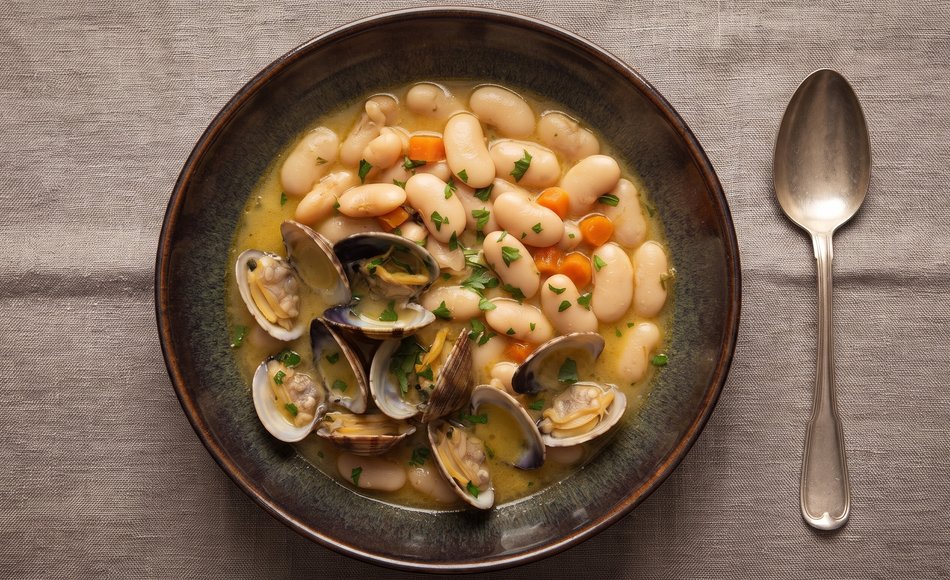
Fabes con Almejas (Asturian White Beans with Clams)
- Prep Time: 25 minutes
- Cook Time: 1 hour 55 minutes
- Total Time: 14 hours 25 minutes
- Yield: 4 servings
- Category: Main Course
- Cuisine: Asturian (Spain)
Ingredients
- 500 g of dried fabes asturianas (large white beans) (2 ½ cups)
- 1 kg of fresh clams (about 2.2 lb, roughly 40 medium clams)
- 1 medium white onion, peeled and left whole
- 6 garlic cloves
- 1 bay leaf
- 1 pinch of saffron threads (a generous pinch)
- 120 ml of extra virgin olive oil (½ cup)
- 100 ml of dry white wine (⅓ cup) (optional)
- 2 tablespoons of fresh parsley, chopped
- 1.5 liters of cold water for cooking the beans (6 cups)
- Salt, to taste
- Cold water and salt for soaking the beans and purging the clams
Preparation
- Soak the beans, place the fabes in a large bowl, cover with plenty of cold water, and let them soak for at least 12 hours or overnight until they double in size.
- Simmer the beans gently, drain them and put them in a pot with the cold water, the whole onion, 2 whole garlic cloves, the bay leaf, and a splash of olive oil; bring to a boil and cook over very low heat for 1½ to 2 hours without stirring with a spoon, shaking the pot by its handles and adding a splash of cold water each time it comes back to a boil so the beans stay whole and creamy.
- Purge the clams, soak them in cold salted water for at least 1 hour so they release any sand, then rinse them well under running water and set aside.
- Make the saffron paste, finely chop the remaining 4 garlic cloves and crush them in a mortar with the saffron threads and a little of the bean broth until you get a smooth paste.
- Cook the clams, heat the remaining olive oil in a skillet, sauté the chopped garlic for a few seconds without browning, add the white wine and let it reduce slightly; add the clams, cover, and cook over high heat until they open, discarding any that stay closed.
- Combine both preparations, once the beans are tender, remove the onion and bay leaf, stir in the garlic and saffron paste, and let it simmer gently for 5 minutes so the broth takes on color and flavor.
- Add the clams and serve, stir the clams into the pot along with their strained cooking liquid, mix gently so the beans don't break, sprinkle with fresh parsley, and let it rest for 5 minutes before serving hot.
Kitchen Tips
- Never boil the beans hard or stir them with a spoon; the rough movement breaks the skins and ruins the stew's creamy texture.
- If you have time, cook the beans a day ahead and give the dish a final simmer with the clams right before serving, since this stew tastes even better the next day.
- Choose good-sized, very fresh clams, and discard any that are open before cooking or that don't open after cooking.
- Always save a little of the bean cooking broth; it comes in handy for thinning the stew if it turns out too thick at the end.
Traditional variations
- In some coastal areas, the beans are cooked with andaricas (Asturian velvet crab) instead of clams, keeping the same fabe-and-saffron base but swapping the shellfish.
- Some cooks add a handful of cockles alongside the clams to deepen the briny flavor of the broth.
Traditional Serving
Serve fabes con almejas piping hot in individual clay bowls, making sure each portion gets a fair share of clams bathed in plenty of the golden broth.
Always serve with bread for dipping into the broth, since soaking up every last drop is part of the experience.
Recommended sides
- Crusty homemade bread
- Natural Asturian cider (sidra)
- A simple green salad
Origin and Tradition
The fabe asturiana bean at the heart of this dish has held Protected Geographical Indication status since 1999, meaning only the large white bean grown in Asturias's valleys can carry that name. Its thin skin and ability to turn creamy without falling apart make it the variety of choice for stews like this one.
While fabada asturiana with chorizo and blood sausage is the version best known abroad, fabes con almejas is just as traditional in the coastal councils, where shellfish was always closer at hand than the cured meats of an inland pig slaughter.
Frequently Asked Questions
Because the rough movement breaks the bean skins and ruins the stew's creamy texture; it's better to shake the pot by its handles instead.
You should discard them, since clams that stay closed after cooking shouldn't be eaten.
Yes, you can cook the beans a day ahead and give the dish a final simmer with the clams right before serving, since the stew tastes even better the next day.
You can thin it out by adding a little of the reserved bean cooking broth.
No, the dry white wine is an optional ingredient used when cooking the clams to add flavor.