Catalan-style spinach is one of the most recognizable vegetable dishes in Catalan cuisine, built on sautéed spinach leaves combined with raisins, pine nuts, and garlic gently browned in olive oil. That sweet-and-savory combination, unusual in other parts of Spain, is what sets this dish apart from any ordinary sautéed spinach.
While it's cooked year-round today as a side dish or light meal, it was traditionally tied to Lent, when many families avoided meat and turned to hearty, flavorful vegetable dishes instead. Over time it became a staple of Catalan home cooking, just as common on family tables as on the menus of traditional restaurants.
Print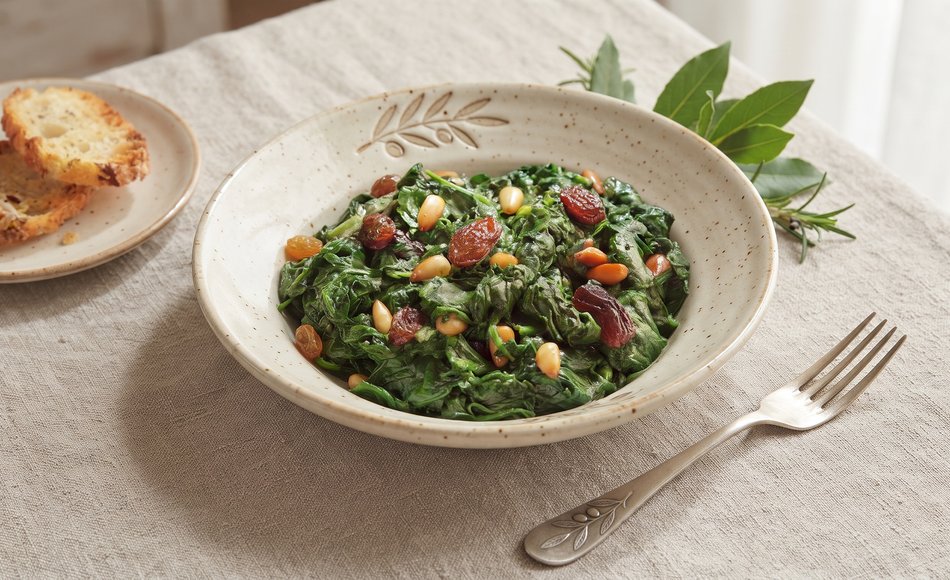
Catalan-Style Spinach with Raisins and Pine Nuts
- Prep Time: 15 minutes
- Cook Time: 15 minutes
- Total Time: 45 minutes
- Yield: 4 servings
- Category: Side Dish
- Cuisine: Spanish
Ingredients
- 1 kg of fresh spinach (2 large bunches)
- 50 g of golden raisins (3 tablespoons)
- 40 g of pine nuts (4 tablespoons)
- 4 cloves of garlic, thinly sliced
- 60 ml of extra virgin olive oil (4 tablespoons)
- 2 slices of day-old rustic bread, for the croutons
- Salt, to taste
- Warm water for soaking the raisins
Preparation
- Soak the raisins, place them in a bowl of warm water for 15-20 minutes until they plump up and soften; meanwhile, wash the spinach leaf by leaf and drain it thoroughly.
- Make the croutons, cut the bread into small cubes and fry them in a pan with a little olive oil over medium heat until golden and crisp; remove them and set them aside on paper towels.
- Sauté the garlic and pine nuts, in the same pan with the remaining oil, brown the sliced garlic over medium heat until it just starts to color, then add the pine nuts, stirring constantly so they don't burn.
- Cook the spinach, add the drained spinach in batches, letting it wilt down in its own moisture, and stir in the drained raisins; cook, stirring, for 5-7 minutes until the spinach is tender.
- Season and serve, adjust the salt and pepper to taste, add the croutons right before serving so they stay crunchy, and serve hot.
Kitchen Tips
- Use small-leaf fresh spinach if you can find it: it has less bitterness and a nicer texture than large-leaf varieties.
- Gently squeeze the cooked spinach if you prefer a drier result with more concentrated flavor.
- Swap the golden raisins for regular dark raisins if you want a slightly deeper, less delicate sweetness.
- Add the croutons right before serving so they stay crunchy instead of softening in the spinach's steam.
Traditional variations
- Some households add small pieces of sautéed serrano ham along with the garlic for a heartier version outside of Lent.
- In the older, more austere variation traditionally eaten during Lent, the dish is made with just olive oil, garlic, raisins, and pine nuts, with no meat at all.
Serving Suggestions
Serve the spinach hot, right off the pan, so the croutons stay crisp.
It's commonly plated as a side for grilled meats, pan-seared fish, or alongside a fried egg with a runny yolk.
Recommended sides
- Rustic country bread for soaking up the olive oil
- Fried eggs with a runny yolk
- Grilled meats or pan-seared fish
Origin and Tradition
The pairing of spinach with raisins and pine nuts has roots in medieval Mediterranean cooking, shaped heavily by Moorish influence, which introduced the taste for mixing sweet and savory flavors in vegetable dishes. Old Catalan cookbooks, such as the 14th-century Llibre de Sent Soví, already record vegetable preparations combining nuts and dried fruit in a similar way.
For centuries, this dish was especially popular during Lent, when the Church forbade eating meat on several days of the week and Catalan families turned to hearty vegetable preparations like this one so they wouldn't have to sacrifice flavor or a filling meal.
Frequently Asked Questions
Soak the raisins in warm water for 15-20 minutes, until they plump up and soften.
Add the croutons right before serving so they stay crunchy instead of softening in the spinach's steam.
Cook it, stirring, for 5-7 minutes along with the drained raisins, until the spinach is tender.
Yes, in the older, more austere variation traditionally eaten during Lent, the dish is made with just olive oil, garlic, raisins, and pine nuts, with no meat at all.
It can be served with rustic country bread for soaking up the olive oil, fried eggs with a runny yolk, or grilled meats and pan-seared fish.