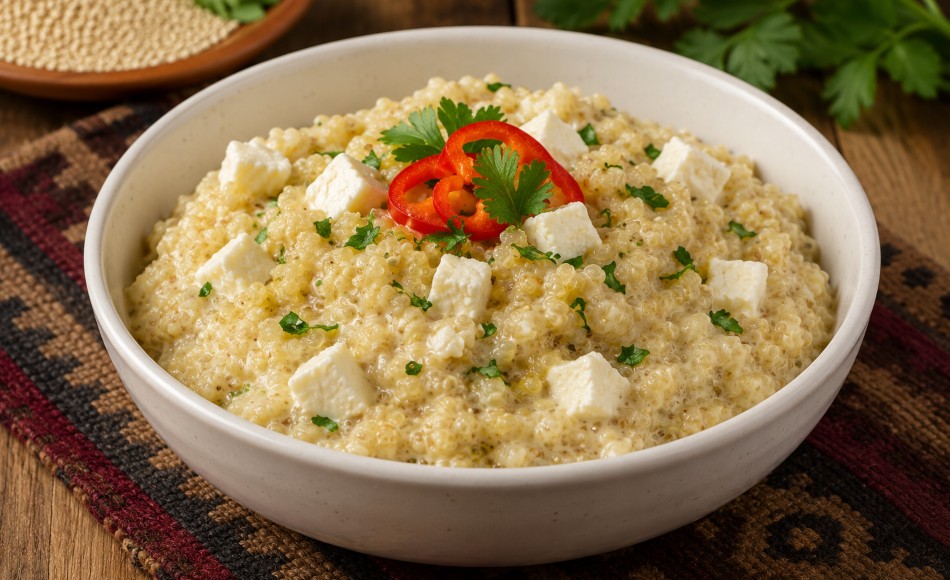
Quinoa pesque is a thick, creamy dish from Peru’s highland plateau, especially associated with Puno. You make it by cooking quinoa until tender, then working it with milk, butter, fresh cheese, and, in many traditional versions, anise seeds.
It is a simple, nourishing dish closely connected to breakfasts and home cooking in southern Peru’s Andes. In Puno markets and homes, it is commonly served hot with cheese on top or with an onion and ají amarillo topping.
Print
Peruvian Quinoa Pesque
- Prep Time: 15 minutes
- Cook Time: 35 minutes
- Total Time: 50 minutes
- Yield: 4
- Category: Main Course
- Cuisine: Peruvian
Ingredients
- 300 g white quinoa (1½ cups)
- 1.2 liters water (5 cups)
- 240 ml evaporated milk (1 cup)
- 250 g crumbled fresh white cheese (2 cups)
- 40 g butter (3 tablespoons)
- 2 g anise seeds (1 teaspoon)
- 8 g salt (1½ teaspoons)
For the onion topping
- 150 g red onion, finely chopped (1 medium onion)
- 20 g ají amarillo paste (1½ tablespoons)
- 10 g garlic, minced or blended (2 cloves)
- 15 ml vegetable oil (1 tablespoon)
- 2 g salt (½ teaspoon)
Preparation
- Rinse the quinoa, wash it several times under cold water, gently rubbing the grains between your hands until the water runs almost clear. This helps remove saponins and prevents bitterness.
- Cook the quinoa, place it in a pot with the water, anise seeds, and salt. Cook over medium heat for 20 to 25 minutes, until the grains are tender and their small spirals have opened. Very little liquid should remain in the pot.
- Create the pesque texture, reduce the heat and press part of the quinoa against the sides of the pot with a wooden spoon. Add the evaporated milk and butter, then stir constantly for 5 to 7 minutes until thick, creamy, and lightly silky.
- Add the cheese, stir in 180 g of crumbled fresh cheese (about 1½ cups) and mix gently until heated through without fully melting away. Taste and adjust the salt; the pesque should be creamy, not dry or soupy.
- Make the onion topping, heat the oil in a skillet and cook the onion until translucent. Add the garlic, ají amarillo paste, and salt. Cook for 5 minutes, until the onion is soft and the seasoning is fragrant.
- Serve hot, spoon the pesque into deep bowls, top with the remaining fresh cheese, and finish with a spoonful of the onion and ají amarillo topping. Serve immediately while it is creamy and warm.
Chef’s Tips
- Rinse the quinoa thoroughly before cooking; it is essential for a clean, mild flavor.
- Do not blend the quinoa. The traditional texture comes from gently pressing some of the cooked grains with a wooden spoon.
- Add the milk only after the quinoa is cooked so it keeps its flavor and does not stick to the pot.
- Use mild fresh cheese and add it near the end so it keeps some of its shape.
- If the pesque thickens too much as it rests, stir in a little hot milk before serving.
Traditional Variations
In Puno, pesque may be served simply with fresh cheese on top or with an onion and ají amarillo topping. Some families use fresh milk instead of evaporated milk, while others add beaten egg near the end for a more substantial dish.
Related versions also appear in Arequipa and Cusco, although the Puno style is one of the Peruvian preparations most closely associated with quinoa pesque.
How to Serve It
Serve quinoa pesque hot in a deep bowl. Traditionally, you can top it with crumbled fresh cheese and an onion-and-ají amarillo topping.
It is especially popular for breakfast or as a light meal. Pair it with warm milk, muña tea, or Peruvian brewed coffee.
Recommended Side Dishes
- Crumbled fresh cheese
- Onion and ají amarillo topping
- Muña tea
- Peruvian brewed coffee
- Warm milk
Origin and Tradition
Pesque belongs to the culinary culture of the Andean plateau shared by Peru and Bolivia. In Peru, it is especially connected to Puno, where people enjoy it in homes, markets, and early-morning breakfast stalls.
Its quinoa base reflects the historical importance of this Andean grain in highland food traditions. The combination of quinoa, milk, butter, and cheese turns everyday ingredients into a warm, simple dish with strong cultural meaning.
Frequently Asked Questions
Pesque should be thick, creamy, and lightly silky, similar to a very soft risotto or a savory porridge. The quinoa needs to be fully cooked and partially mashed, while some individual grains should still remain noticeable. It should never be dry, but it should not be as thin as soup either.
Yes. Fresh milk is traditional in many Puno-style preparations and gives the dish a milder flavor. Use the same amount and add it gradually near the end of cooking. Keep the heat low and stir continuously so the milk does not curdle or stick to the bottom.
Anise seeds appear in many traditional versions and provide a delicate aroma, but some family recipes leave them out. You can omit them if needed, although adding them brings the flavor closer to classic highland-style pesque.
Yes. Keep it covered in the refrigerator for up to 2 days. To reheat, place it in a pot over low heat and add a little milk or hot water, stirring until creamy again. Add fresh cheese only when you are ready to serve.