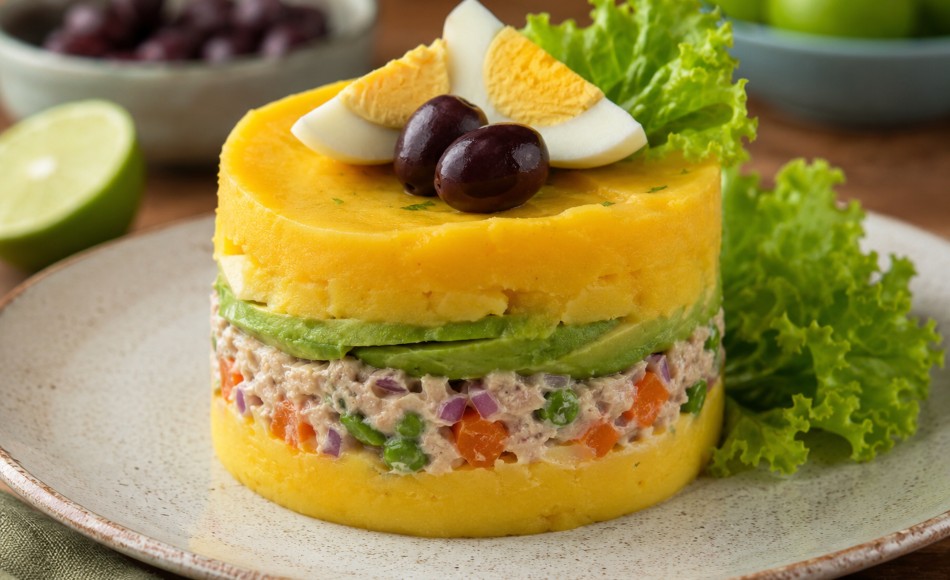
Peruvian tuna causa is one of the most popular versions of causa, a chilled dish made with yellow potatoes, ají amarillo, lime juice, and a flavorful filling. Its soft texture, vibrant color, and contrast between seasoned potato and tuna make it a classic starter for family meals, restaurants, and celebrations in Lima.
Causa is especially common at gatherings, lunch tables, and warm-weather meals. While it can be filled with shredded chicken, seafood, or vegetables, tuna causa remains one of the most practical and widely recognized everyday versions in Peruvian cooking.
Print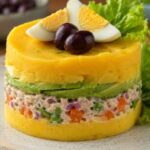
Peruvian Tuna Causa
- Prep Time: 35 minutes
- Cook Time: 30 minutes
- Total Time: 1 hour 5 minutes
- Yield: 6 servings
- Category: Main Course
- Cuisine: Peruvian
Description
Traditional Peruvian dish of layers of potato and tuna, structured for home cooking and with precise quantities.
Ingredients
- 1 kg yellow potatoes
- 90 ml freshly squeezed lime juice (6 tablespoons)
- 80 g ají amarillo paste (⅓ cup)
- 60 ml vegetable oil (¼ cup)
- 8 g salt (1½ teaspoons)
- 300 g canned tuna, drained (2 large cans)
- 180 g mayonnaise (¾ cup)
- 100 g red onion, finely chopped (¾ medium onion)
- 120 g cooked carrot, cut into small cubes (1 medium carrot)
- 100 g cooked peas (¾ cup)
- 200 g ripe avocado, thinly sliced (1 large avocado)
- 2 hard-boiled eggs, sliced
- 8 black olives
- 6 washed lettuce leaves
Preparation
- Cook and mash the potatoes, wash the potatoes and cook them in their skins until very tender, about 25 to 30 minutes. Peel them while still warm, then pass them through a potato ricer or mash them until smooth and free of lumps.
- Season the potato mixture, add the lime juice, ají amarillo paste, vegetable oil, and salt. Mix with clean hands or a spatula until the potato dough is soft, workable, and evenly yellow. Taste and adjust the salt or lime juice when needed.
- Make the tuna filling, combine the drained tuna with mayonnaise, red onion, cooked carrot, and peas. Mix until creamy, but keep some texture in the tuna so the filling does not become pasty.
- Assemble the causa, press half of the potato mixture into a rectangular mold or cooking ring to form an even base. Arrange the avocado slices on top, spread over the tuna filling, and cover with the remaining potato mixture.
- Decorate and serve, smooth the surface with a spatula, carefully unmold the causa, and decorate with egg slices, black olives, and lettuce leaves. Refrigerate for 20 minutes before serving so it holds its shape.
Chef’s Tips
- Use Peruvian yellow potatoes whenever possible, since their flavor and dry, creamy texture are essential for traditional causa.
- Mix the potato mixture while it is still warm so it absorbs the lime juice, oil, and ají amarillo evenly.
- Drain the tuna thoroughly before mixing it to prevent the filling from making the causa watery.
- Do not add too much lime juice; the potato should retain its naturally mellow, slightly sweet flavor.
- Chill the causa only long enough to firm it up. Excessive chilling can make the potato layer dry and dense.
Traditional Variations
In Peru, causa is also filled with shredded chicken, seafood, crab meat, or vegetables. Some versions include a layer of hard-boiled egg inside the filling or use corn kernels instead of peas. The defining feature remains the yellow potato base seasoned with lime juice and ají amarillo.
Serving Style
Serve causa chilled, cut into neat squares or unmolded in individual rounds, over a bed of lettuce. Traditional garnishes include sliced egg, black olives, and avocado. Pair it with cold chicha morada, Peruvian limeade, or a chilled passion fruit drink.
Recommended Accompaniments
- Fresh green salad
- Cold chicha morada
- Peruvian limeade
- Ají amarillo sauce on the side
- Crackers or toasted bread
A Little History
Causa is closely connected to Lima’s culinary tradition and Peru’s native potato culture. Its name is often linked to the phrase “por la causa,” used during independence-era fundraising efforts, when potato dishes were reportedly sold to support the cause.
Beyond the stories about its name, causa represents the importance of yellow potatoes and ají amarillo in Peruvian culinary identity. Its layered, filled form became one of Lima’s most recognizable cold starters.
Frequently Asked Questions
Yellow potatoes are the traditional choice for causa because they have a dry, creamy texture that is easy to mash and shape. They also provide a naturally mild sweetness and golden color. When they are unavailable, choose a starchy potato that makes a firm, non-watery mash rather than a waxy potato.
Yes. You can prepare tuna causa several hours ahead and keep it covered in the refrigerator. It is best assembled on the same day so the potato mixture stays soft and the filling remains fresh. Add the egg, olive, and avocado garnish shortly before serving for the best appearance.
Use fully cooked potatoes and mash them while warm, without adding too much liquid. Press each layer gently as you assemble the causa, then chill it for at least 20 minutes before slicing. A straight-sided mold or cooking ring also helps the layers stay neat and stable.
Causa is served chilled or cool, not hot. It should not be ice-cold, because excessive cold firms up the potato mixture and dulls the flavor of the ají amarillo and lime. Take it out of the refrigerator a few minutes before serving for the best texture.