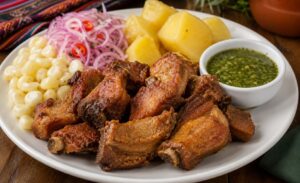

Tacacho with cecina is one of the most iconic dishes of the Peruvian Amazon. It is made with green plantains, either roasted or fried, then mashed with pork lard and small pieces of crispy pork, and served with fried or grilled pork cecina. Its flavor combines the smoky character of the meat with the compact, savory texture of the tacacho.
It is especially representative of regions such as San Martín, Loreto, Ucayali, and Madre de Dios, where it is eaten as a hearty breakfast, a family lunch, at food fairs, and during regional celebrations. In the Peruvian rainforest, tacacho with cecina is not just a popular dish; it is a direct expression of everyday Amazonian cooking.
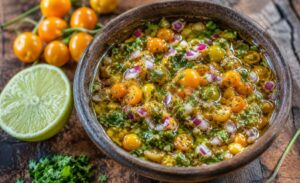
The traditional version focuses on regional ingredients: green plantain, pork lard, smoked cecina, and often crispy pork pieces. It is served hot, usually with cocona chili sauce or chonta salad, keeping the preparation simple, bold, and deeply connected to Peru’s Amazonian identity.
Print
Peruvian Tacacho with Cecina
- Prep Time: 20 minutes
- Cook Time: 30 minutes
- Total Time: 50 minutes
- Yield: 4
- Category: Main Course
- Cuisine: Peruvian
Ingredients
- 1.2 kg green plantains (4 large plantains)
- 120 g pork lard (½ cup)
- 150 g chopped crispy pork pieces or chicharrón (1 cup)
- 600 g Amazonian pork cecina (4 portions)
- 45 ml vegetable oil or pork lard (3 tablespoons, for frying the cecina)
- 8 g salt (1½ teaspoons)
- 300 ml hot water (1¼ cups, optional, to soften the cecina if very dry)
- 100 g cocona chili sauce for serving (½ cup)
Preparation
- Prepare the plantains, peel the green plantains and cut them into large pieces. You can roast them over embers or on a grill until soft and lightly browned, or fry them in hot pork lard over medium heat until cooked through without burning on the outside.
- Mash the tacacho, place the hot plantains in a large mortar, batán, or sturdy bowl, and mash them while they are still soft. Add the pork lard gradually, add the salt, and keep mashing until you get a rustic, compact, slightly moist dough.
- Add the crispy pork, mix the chopped chicharrón into the plantain dough until evenly distributed. Shape the mixture into medium balls with your hands, pressing enough for them to hold their shape without becoming too hard.
- Prepare the cecina, check whether the cecina is very dry or too salty. If needed, soak it in hot water for 10 minutes, then drain and dry it well. Cut the meat into medium portions, following the grain so it does not fall apart while frying.
- Fry the cecina, heat the oil or pork lard in a wide skillet over medium heat. Fry the cecina portions for 3 to 5 minutes per side, until hot, golden, and slightly crisp around the edges, but still juicy in the center.
- Serve the dish, place one or two tacacho balls on each plate and serve with a portion of fried cecina. Serve immediately with cocona chili sauce, chonta salad, or boiled cassava, keeping the traditional Amazonian presentation.
Practical Tips
Use firm green plantains, not semi-ripe ones, because traditional tacacho should have a compact texture and a savory, not sweet, flavor.
Mash the plantains while they are hot; if they cool too much, it will be harder to form a smooth, even dough.
Pork lard gives the most traditional flavor, although some home cooks use part of the rendered fat from the chicharrón.
Do not add salt to the cecina before frying, because it is already cured and salted.
For a more aromatic tacacho, roast the plantains instead of frying them, since contact with embers gives a more rustic flavor.
Traditional Variations
In San Martín, tacacho is commonly made with roasted plantain and served with fried or grilled cecina, accompanied by cocona chili sauce.
In some areas of the Peruvian Amazon, more chicharrón is added to the mashed plantain to make the tacacho richer and heartier.
There are also versions where the cecina is grilled instead of fried, especially at outdoor meals or traditional food stalls.
Traditional Serving Style
Serve tacacho with cecina hot, with the tacacho freshly mashed and the cecina browned right before serving. The classic presentation places the plantain balls next to the cecina, with cocona chili sauce on the side.
In the Peruvian Amazon, it may also be served with chonta salad, boiled cassava, or roasted plantain. For drinks, it pairs very well with aguajina, camu camu juice, cocona juice, or masato, depending on regional custom.
Recommended Pairings
- Cocona chili sauce
- Chonta salad
- Boiled cassava
- Roasted plantain
- White rice
- Aguajina
- Camu camu juice
- Masato
Culinary Curiosity
Tacacho with cecina is one of the dishes that best represents the strength of Peruvian Amazonian cuisine. Its name is associated with the act of “tacar,” or pounding the cooked plantain until it becomes a compact mass, a home-style technique still used in markets, restaurants, and rainforest households.
The combination of green plantain and smoked cecina follows a traditional logic: pairing an abundant, energy-giving food with cured meat that could be preserved more easily in warm climates. That is why, more than just a recipe, it is a dish connected to work, travel, celebrations, and everyday Amazonian life.
Frequently Asked Questions
Peruvian tacacho with cecina is a traditional Amazonian dish made with roasted or fried green plantain mashed with pork lard and crispy pork pieces, served with fried or grilled pork cecina. It is one of the most representative dishes of Peru’s rainforest and is eaten for breakfast, lunch, and regional celebrations.
Green plantain is used, firm and unripe. Ripe plantain is not recommended because it would add sweetness and a softer texture, which is different from traditional tacacho. Green plantain creates a compact, rustic, sturdy dough that pairs well with cecina.
Cecina can be fried or grilled, depending on family and regional custom. Frying it in pork lard or oil helps brown it quickly and gives it slightly crisp edges. Grilling adds a smokier, more rustic flavor, which is highly appreciated in outdoor Amazonian cooking.
Many traditional versions include chopped chicharrón mixed into the mashed plantain because it adds flavor, fat, and texture. However, in some homes, a simpler tacacho is made only with green plantain, pork lard, and salt. The chicharrón version is one of the most recognized and flavorful.
The most traditional accompaniment is cocona chili sauce, a fresh and tangy sauce typical of the Peruvian Amazon. It is also served with chonta salad, boiled cassava, roasted plantain, or white rice. Common drinks include aguajina, camu camu juice, cocona juice, and masato.