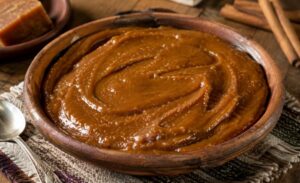
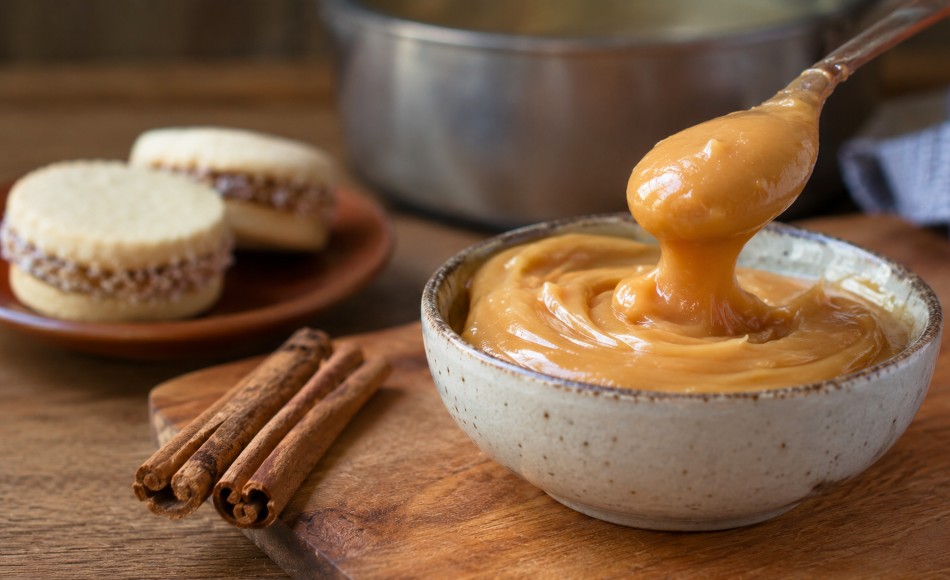
Peruvian manjar blanco is one of the most beloved foundations of traditional Peruvian baking. It is made by slowly cooking milk and sugar until they become a thick, glossy, caramel-flavored cream with a smooth texture. It is closely related to dulce de leche, but in Peru it has its own identity because of its classic use in alfajores, jelly rolls, cakes, mille-feuille-style pastries, and homemade desserts.
In many Peruvian families, manjar blanco is associated with celebrations, afternoon snacks, neighborhood bakeries, and traditional sweets. It is not difficult to make, but it does require patience. The key is to cook it slowly, stir consistently, and stop at the right point so it stays creamy instead of becoming dry or grainy.
Print
Peruvian Manjar Blanco
- Prep Time: 5 minutes
- Cook Time: 1 hour 10 minutes
- Total Time: 1 hour 15 minutes
- Yield: 12
- Category: Dessert
- Cuisine: Peruvian
Ingredients
- 1 liter whole milk (4 cups)
- 250 g white sugar (1¼ cups)
- 2 g baking soda (½ teaspoon)
- 5 ml vanilla extract (1 teaspoon)
- 1 cinnamon stick
Preparation
- Prepare the base, place the milk, sugar, cinnamon stick, and baking soda in a heavy-bottomed pot. Mix well before turning on the heat so the sugar starts dissolving evenly.
- Cook it slowly, warm the pot over medium heat until the milk heats up and small bubbles begin to appear around the edges. Lower the heat and cook uncovered, stirring often with a wooden spoon to prevent the mixture from sticking to the bottom.
- Thicken the manjar, continue cooking for 50 to 70 minutes, depending on the heat level and the type of pot you use. Stir more constantly once the mixture begins to turn light caramel in color and develop a creamy texture, because at this stage it can stick easily.
- Check the consistency, remove the cinnamon stick when the manjar is thick, glossy, and briefly exposes the bottom of the pot when you drag the spoon through it. Keep in mind that it will thicken more as it cools, so avoid overcooking it.
- Flavor and cool, turn off the heat, add the vanilla, and mix well. Transfer the manjar blanco to a clean container, let it cool at room temperature, and refrigerate it if you are not using it right away.
Chef’s Tips
Use a heavy-bottomed pot to prevent the milk from scorching during the long cooking time.
Do not raise the heat too much to speed up the process. Manjar blanco needs slow cooking to develop good color and flavor without becoming grainy.
Stir more frequently once the mixture reduces, because the thicker it gets, the faster it can stick to the bottom.
For an extra-smooth texture, you can strain the manjar while it is still warm before storing it.
Traditional Variations
In some Peruvian homes, manjar blanco is made with a mixture of evaporated milk and fresh milk for a richer flavor and creamier texture.
There is also a quick homemade version made with cooked sweetened condensed milk, commonly used for filling desserts, although the traditional method starts with milk and sugar.
For alfajores, many families cook the manjar slightly thicker so it holds its shape and does not spill out when the cookies are filled.
Traditional Serving Style
Peruvian manjar blanco is mainly used as a filling for alfajores, jelly rolls, cakes, milhojas, sweet pastry horns, and other traditional desserts. It can also be served on its own in small portions as a spoon dessert.
Traditionally, it pairs well with Peruvian drip coffee, tea, hot chocolate, or a mild herbal infusion. On family dessert tables, it often appears inside powdered sugar-dusted alfajores alongside other classic Peruvian sweets.
Recommended Pairings
- Peruvian alfajores
- Jelly roll or pionono
- Milhojas
- Sweet pastry horns
- Peruvian drip coffee
- Tea or herbal infusions
Did You Know?
In Peru, the name “manjar blanco” remains strongly connected to traditional pastry, especially alfajores. Although it shares ingredients and technique with other Latin American milk caramel sweets, its role in Peruvian baking gives it a distinct place in criollo cuisine.
Patience is part of its identity. Before quick versions with sweetened condensed milk became common, manjar was made in a pot by slowly stirring milk until it reached the perfect creamy point.
Frequently Asked Questions
They are very similar because both are made by cooking milk with sugar until caramelized. In Peru, the traditional name is manjar blanco, and it is especially associated with fillings for alfajores, cakes, and criollo sweets.
Baking soda helps balance the acidity of the milk and encourages the caramel color during cooking. Use only a small amount, because too much can affect the flavor and make the manjar darker than needed.
It is ready when it has a light caramel color, a thick and glossy texture, and the bottom of the pot briefly shows when you drag a spoon through it. Remember that it will firm up more as it cools.
You can keep it refrigerated in a clean, tightly sealed jar for 7 to 10 days. Always use a clean spoon to prevent contamination and keep the flavor in good condition.
Yes. In fact, that is one of its most traditional uses in Peru. For alfajores, it is best to cook it a little thicker so the filling stays firm and does not spill out when the cookie layers are pressed together.