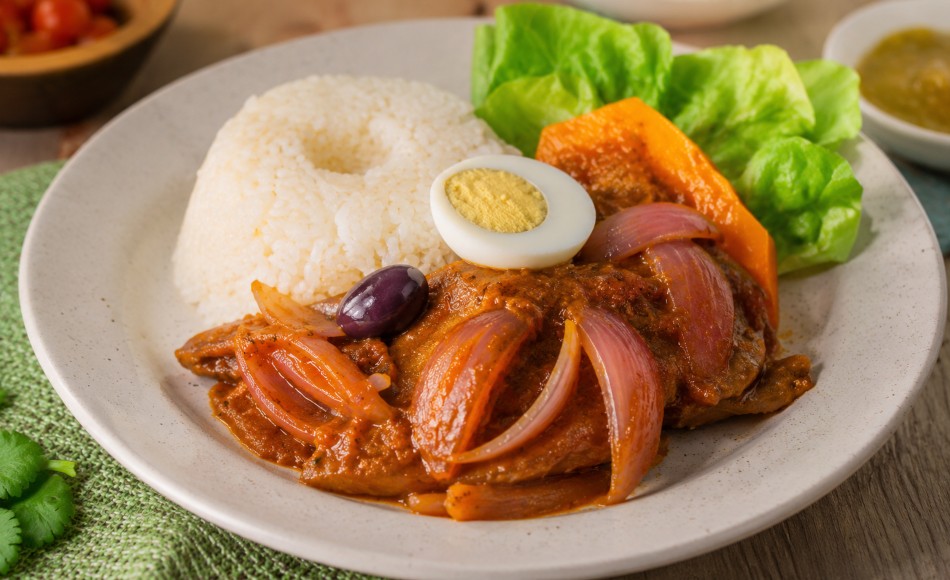
Peruvian fish escabeche is a classic dish from Peru’s Creole cooking tradition, especially associated with Lima. It consists of fried fish covered with a tangy sauce of red onions, ají amarillo, vinegar, and spices, then allowed to rest so it absorbs the full flavor of the marinade.
It is usually served chilled or cool with sweet potato, hard-boiled egg, black olives, and lettuce. Its flavor balances the sweetness of onion, the brightness of vinegar, and the aromatic warmth of yellow chili, making it a traditional favorite for family lunches and celebrations.
Print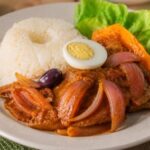
Peruvian Fish Escabeche
- Prep Time: 25 minutes
- Cook Time: 25 minutes
- Total Time: 50 minutes
- Yield: 6
- Category: Main Course
- Cuisine: Peruvian
Ingredients
- 800 g firm white fish fillet, skinless and boneless
- 120 g all-purpose flour (1 cup)
- 8 g salt (1½ teaspoons)
- 2 g ground black pepper (½ teaspoon)
- 100 ml vegetable oil for frying (⅓ cup + 1 tablespoon)
- 300 g red onion, cut into thick slices (2 medium onions)
- 120 g ají amarillo paste (½ cup)
- 80 ml red wine vinegar (⅓ cup)
- 120 ml water (½ cup)
- 30 ml additional vegetable oil (2 tablespoons)
- 8 g garlic paste or finely grated garlic (2 large cloves)
- 4 g ground cumin (1 teaspoon)
- 4 g dried oregano (1½ teaspoons)
- 2 bay leaves
- 20 g fresh cilantro, chopped (½ cup)
- 300 g cooked and peeled sweet potato (2 medium sweet potatoes)
- 3 hard-boiled eggs
- 10 black olives
- 8 washed lettuce leaves
Preparation
- Season and fry the fish, cut the fish fillets into medium portions, season them with 4 g of salt and the black pepper, and lightly coat them with flour. Heat the 100 ml oil in a skillet and fry the fish on both sides until golden and cooked through. Transfer it to paper towels.
- Make the seasoning base, heat the remaining 30 ml oil in a wide pot and sauté the garlic with the ají amarillo paste for 2 minutes. Add the cumin, oregano, and bay leaves, then stir until the mixture becomes fragrant.
- Cook the onions, add the red onion, vinegar, water, and remaining 4 g salt. Cook over medium heat for 5 to 7 minutes, until the onions are tender and glossy but still hold a little texture. Add the chopped cilantro and stir gently.
- Assemble the escabeche, arrange the fried fish in a wide serving dish and pour the hot onion sauce over it. Make sure every piece is covered with some sauce and onions. Let it rest for at least 30 minutes so the flavors can blend.
- Serve the dish, arrange lettuce leaves on individual plates and place a portion of fish escabeche on top. Serve with sweet potato slices, hard-boiled egg, and black olives. Enjoy chilled or cool.
Chef’s Tips
- Use firm fish such as bonito, mackerel, corvina, grouper, or flounder so it holds together during frying.
- Do not overcook the onions; they should be tender but retain a slight bite.
- Let the escabeche rest for at least 30 minutes, although its flavor becomes even better after 2 hours in the refrigerator.
- Add the cilantro at the end so it stays fresh and aromatic.
- Keep both fish and sauce covered while chilling to prevent them from drying out.
Traditional Variations
In Peru, escabeche is also made with chicken, pork, or vegetables such as eggplant. However, fish escabeche with fried fish, red onion, ají amarillo, vinegar, sweet potato, and olives remains one of the best-known versions of Peruvian Creole cuisine.
Serving Style
Serve fish escabeche over lettuce leaves, with plenty of onion sauce spooned over the fish. Add cooked sweet potato, quartered hard-boiled egg, and black olives for a traditional presentation. Pair it with chilled chicha morada, Peruvian limeade, or a passion fruit drink.
Recommended Accompaniments
- Cooked sweet potato
- Hard-boiled egg
- Black olives
- Lettuce leaves
- Cold chicha morada
Origin and Tradition
Peruvian escabeche reflects old preservation techniques based on vinegar, oil, and spices. Over time, Peruvian cooking incorporated local ingredients such as ají amarillo, red onion, and sweet potato, creating a distinctive Creole version with its own character.
In Peruvian homes, this dish is often made ahead because resting allows the fish to absorb the tangy and aromatic flavor of the sauce. For that reason, it is frequently served at family gatherings, celebrations, and traditional Creole meals.
Frequently Asked Questions
You can use bonito, mackerel, corvina, grouper, flounder, or any firm white fish that holds up well to frying. The fish should become golden without falling apart when it receives the hot onion sauce. Avoid very delicate fish, since it can break while handling or serving the dish.
Fish escabeche is traditionally served chilled or cool. The onion sauce is poured hot over the fish so it can absorb the flavors, but the dish is then allowed to rest. You can refrigerate it for a few hours and take it out 10 to 15 minutes before serving so its aroma returns.
Store it in an airtight container in the refrigerator and enjoy it within 2 days. Since it contains cooked fish, vinegar, and onion, it keeps well when chilled, but its texture is best during the first 24 hours after preparation.
You can bake the fish, but the result will be less traditional. Frying creates a golden surface that stands up better to the tangy sauce and gives the dish its characteristic texture. If you bake it, brush the fish with oil and cook it until firm, taking care not to dry it out.