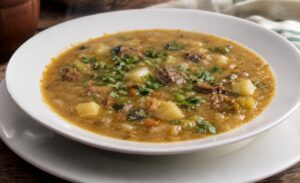

Hiro de zapallo, also called locro de zapallo, is a creamy, budget-friendly stew from the Peruvian highlands and jungle, made with squash that slowly breaks down in an onion, garlic, and ají panca base, along with potato, corn, and fava beans.
It’s one of the most traditional dishes in Peruvian home cooking, valued for making the most of simple, year-round ingredients. The milk and cheese stirred in at the end give it a soft, comforting texture.
Print
Peruvian Hiro de Zapallo
- Prep Time: 20 minutes
- Cook Time: 1 hour 10 minutes
- Total Time: 1 hour 30 minutes
- Yield: 6 servings
- Category: Main Course
- Cuisine: Peruvian
Description
Peruvian preparation featuring zapallo y leche, adapted for a home kitchen with clear measurements.
Ingredients
- 30 ml vegetable oil
- 150 g onion, chopped
- 15 g minced garlic
- 30 g ground aji panca
- 300 g potatoes, cut into chunks
- 150 g corn kernels
- 100 g fava beans or caigua, cut into pieces
- 800 g squash, cut into chunks
- 200 ml evaporated milk
- 100 g fresh cheese, cubed
- 10 g chopped huacatay
- Salt to taste
- 2 fried eggs, for serving
Preparation
- Build the seasoning base, heat the oil and cook the onion, garlic, and ají panca over medium heat until the base is well concentrated.
- Cook the potatoes and vegetables, add the potatoes, corn, and fava beans to the base. Cover with water and cook for 15 minutes, until the potatoes start to soften.
- Add the squash, stir in the squash chunks and cook for 20 more minutes, stirring occasionally, until it partially breaks down and thickens the stew.
- Finish and serve, add the evaporated milk and cheese, cook for 5 minutes over low heat, stir in the huacatay, and adjust the salt. Serve topped with a fried egg.
Chef’s Tips
- Let the squash partially break down; that’s what naturally thickens the stew.
- Add the milk over low heat so it doesn’t curdle.
- Huacatay is key to the final flavor; add it at the end to keep its aroma.
Traditional Variations
Some regions swap the fava beans for chunks of caigua, adding a slightly different flavor. It’s also common to serve it with fried liver instead of egg, especially in Arequipa.
Some families stir in cooked rice to make it heartier as a stand-alone meal.
How to Serve
Serve hot, in a deep bowl, topped with a fried egg or fried liver. It’s a common homestyle dish at family lunches in the highlands and southern coast of Peru.
Recommended Pairings
- Fried egg or fried liver
- Plain white rice
- Homemade ground chile sauce
Did You Know?
Squash is one of the oldest ingredients in Andean cooking, grown in Peru since pre-Hispanic times. Hiro de zapallo is considered a “make-the-most-of-it” dish, meant to feed a family with simple, inexpensive ingredients.
Frequently Asked Questions
It's an Andean Peruvian stew made from squash, potatoes, and grains like corn or fava beans, cooked in a broth seasoned with local herbs.
Hiro stands out for combining squash with Andean grains and a long simmer that melds the flavors together, unlike simpler boiled squash preparations.
Yes, it's naturally a vegetarian recipe in its traditional form, since it's based on vegetables, grains, and squash without needing meat.