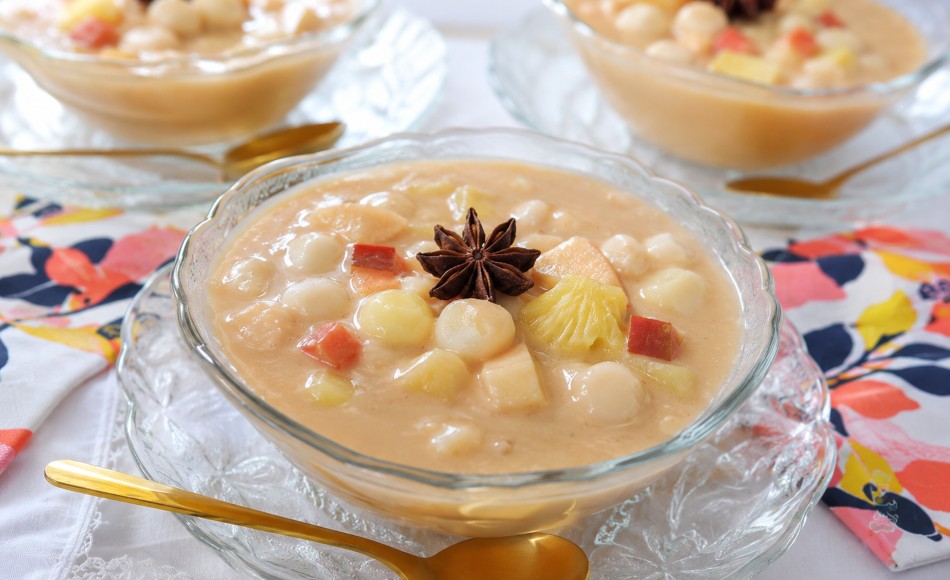
On cold days, traditional champuceras once walked through the streets of Lima selling a warm, thick, aromatic mixture of hominy, fruit, and spices. Peruvian champús—also spelled champuz—belongs to Lima’s historic dessert tradition and is eaten with a spoon, placing it somewhere between a hot beverage and a light fruit pudding.
The most representative Lima version is guanabana champús. It combines cooked hominy with pineapple, apple, quince, and guanabana, flavored with cinnamon, cloves, anise, and orange peel. Historical descriptions of Lima’s cuisine also list these fruits and the use of corn flour or semolina to create its characteristic consistency.
Although Peru has several regional versions, Lima-style champús is traditionally served hot, particularly during winter and the Christmas season. Its street trade was closely associated with the champucera, a vendor who preserved and passed down her family recipe through generations.
Print
Peruvian Champús
- Prep Time: 25 minutes
- Cook Time: 1 hour 45 minutes
- Total Time: 10 hours 10 minutes
- Yield: 10
- Category: Dessert
- Cuisine: Peruvian
Ingredients
- 250 g dried peeled hominy corn (1 ½ cups)
- 2.5 liters water (10 cups)
- 2 cinnamon sticks
- 5 whole cloves
- 3 g anise seeds (1 teaspoon)
- 3 strips orange peel, with the white pith removed
- 400 g chancaca or dark panela, chopped
- 300 g peeled pineapple, cut into small cubes (2 cups)
- 200 g peeled apple, cut into cubes (1 large apple)
- 200 g peeled quince, cut into cubes (1 large quince)
- 500 g seeded guanabana pulp (about 3 cups)
- 60 g yellow corn flour (½ cup)
- 180 ml cold water (¾ cup), for dissolving the flour
- 60 ml orange juice (¼ cup)
- 2 g ground cinnamon (1 teaspoon)
Preparation
- Soak and cook the hominy, place the dried hominy in a large bowl, cover it generously with water, and soak it for 8 hours or overnight. Drain, rinse, and transfer it to a large pot with 2.5 liters of water. Cook over medium heat for 60 to 90 minutes, until the kernels open and become very tender, adding more hot water if needed.
- Flavor the cooking liquid, add the cinnamon sticks, cloves, anise seeds, and orange peel to the pot. Stir in the chopped chancaca and cook for 10 minutes, stirring until it dissolves completely and the liquid develops a deep color and pronounced spiced aroma.
- Cook the firm fruit, add the pineapple and quince, which require more time to soften, and cook over medium heat for 10 minutes. Add the apple and continue cooking for another 5 minutes. The fruit should be tender while retaining small, visible pieces.
- Thicken the champús, whisk the corn flour with 180 ml of cold water until completely smooth. Remove the cinnamon sticks, cloves, and orange peel from the pot. Slowly pour in the corn flour mixture while stirring constantly, then cook over low heat for 8 to 10 minutes, until thick but still pourable.
- Add the guanabana, carefully remove every seed from the pulp and add it to the pot with the orange juice. Stir gently and cook for 3 to 4 minutes. Avoid boiling it for too long so the fruit retains its fresh aroma and some of its natural texture.
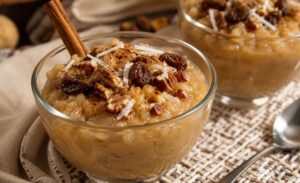
- Adjust and serve, check the consistency and add a little hot water if the champús is too thick. Let it rest for 5 minutes, then serve it hot in small bowls or dessert dishes, finishing each portion with a light dusting of ground cinnamon.
Helpful Cooking Tips
- Soak the hominy overnight so it cooks more evenly and quickly.
- Carefully remove every guanabana seed before adding the pulp.
- Dissolve the corn flour in cold water only; hot water will cause it to form lumps.
- Stir frequently after adding the flour because the mixture can easily stick to the bottom of the pot.
- Aim for the consistency of a loose pudding. Champús will continue to thicken as it rests and cools.
- Add the guanabana near the end to preserve its fresh, lightly tart flavor.
Traditional Variations
Two old Lima preparations are commonly distinguished: sour or guanabana champús and milk champús. The milk version was traditionally made with hominy, wheat flour, corn flour, sugar, milk, and cinnamon, resulting in a creamier preparation.
Some family versions of guanabana champús use pear instead of apple, reduce the variety of fruit, or substitute brown sugar for chancaca. Older recipes may use fermented corn flour, which gives the dessert a subtly tart flavor.
Northern Peruvian champús is generally simpler and combines crushed hominy, chancaca, pineapple, and orange peel. In areas such as Chiclayo, it is traditionally paired with cachangas, a type of fried dough associated with Lambayeque’s culinary heritage.
Traditional Serving Style
Serve champús hot in small bowls or deep dessert dishes, making sure each serving contains hominy and several pieces of fruit. Sprinkle a small amount of ground cinnamon over the top immediately before serving.
Because of its thickness, it is eaten with a spoon as a warm dessert. In Lima, it was traditionally associated with cold afternoons and evenings. On Peru’s northern coast, it may be served with freshly fried cachangas. It does not require an additional drink, although unsweetened Peruvian-style brewed coffee balances its sweetness nicely.
Recommended Pairings
- Warm cachangas, especially with northern-style champús
- Picarones
- Traditional sweet bread
- Unsweetened Peruvian-style brewed coffee
- Champús can also be enjoyed by itself as a warm dessert.
A Culinary Curiosity
The champucera was a recognizable figure in old Lima’s street life. She sold hot champús in public squares and streets, announcing it through traditional vendor calls. The preparation was particularly associated with Afro-Peruvian women who preserved family recipes and cooking methods across generations.
Champús is not unique to Peru; traditional versions are also found in Ecuador and Colombia. Each country, however, developed a distinct preparation. Colombian champús is generally served cold and contains lulo, while the Lima version is hot, thicker, and made with fruits such as guanabana, quince, and apple.
Frequently Asked Questions
It can be considered either a thick beverage or a spoon dessert. Lima-style champús has a consistency similar to a loose pudding because of the cooked hominy and corn flour. It is traditionally served hot in bowls and eaten with a spoon, with hominy kernels and pieces of fruit included in every serving.
Peruvian champús, particularly the Lima version, is served hot and commonly includes hominy, guanabana, pineapple, apple, quince, and spices. Colombian champús is generally served cold and contains corn, pineapple, and lulo. Although both use corn, fruit, and panela, their consistency, serving temperature, and flavor profiles are different.
Yes. Replace the dried hominy with approximately 600 g of cooked hominy. Skip the soaking step and begin by simmering it for 15 minutes with 1.5 liters of water and the spices. Make sure the kernels are very tender before adding the chancaca and fruit.
Corn flour and the starch from the hominy continue absorbing liquid as the mixture rests. If it becomes overly thick, gradually add hot water while stirring until it is thick but pourable again. Wait several minutes before adding any additional flour because its full thickening effect is not immediate.
Store it in a covered container in the refrigerator for up to 3 days. Add a little water when reheating because it will have thickened. Warm it over low heat and stir constantly to prevent sticking. Freezing is not recommended because the fruit may lose its texture.