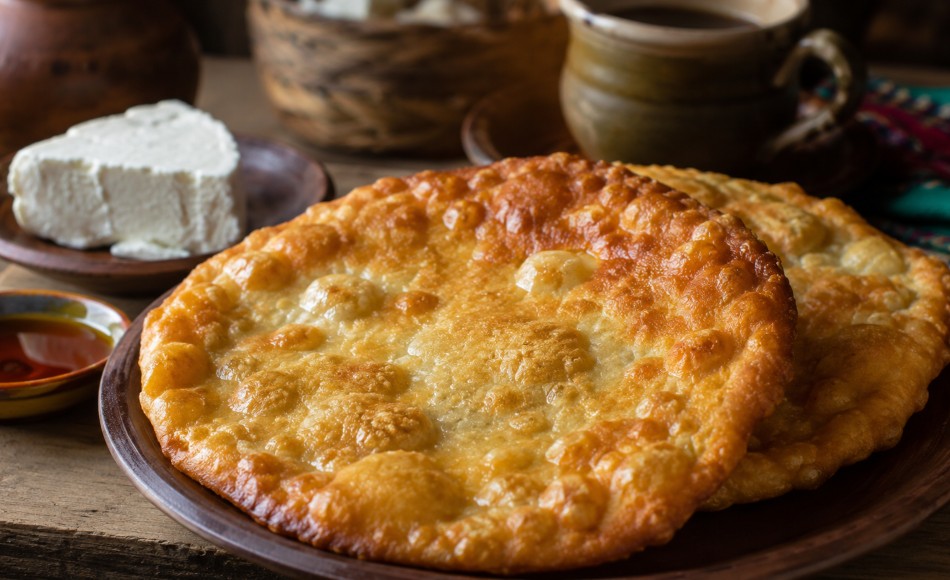
Peruvian cachanga is a traditional fried flatbread made with a simple dough of flour, water, salt, and, in many homemade versions, a little sugar or anise. The dough is stretched into thin rounds and fried until golden, slightly puffed in places, lightly crisp on the outside, and soft when you bite into it.
It is a popular preparation in markets, fairs, breakfasts, afternoon snacks, and street food stalls across Peru. Its charm lies in its simplicity: just a few ingredients, a well-rested dough, and hot oil that turns a humble mixture into a tasty fried bread, perfect on its own or with sweet and savory accompaniments.
Print
Peruvian Cachanga
- Prep Time: 40 minutes
- Cook Time: 15 minutes
- Total Time: 55 minutes
- Yield: 8
- Category: Dessert
- Cuisine: Peruvian
Ingredients
- 500 g all-purpose flour (4 cups)
- 250 ml warm water (1 cup)
- 30 g white sugar (2 tablespoons)
- 8 g salt (1½ teaspoons)
- 10 ml vegetable oil for the dough (2 teaspoons)
- 5 g anise seeds, optional but traditional in some homes (1 teaspoon)
- 750 ml vegetable oil for frying (3 cups)
Preparation
- Prepare the dough, place the flour in a large bowl and mix it with the salt, sugar, and anise seeds if using. Add the warm water gradually along with the oil and bring everything together with your hands until you have a smooth, firm, workable dough.
- Knead and rest, knead the dough for 6 to 8 minutes, until it becomes smooth and elastic but not sticky. Cover it with a clean cloth and let it rest for 30 minutes so it becomes easier to stretch.
- Shape the cachangas, divide the dough into 8 equal portions. Stretch each portion with your hands or a rolling pin into thin rounds about 18 to 20 cm wide. Do not leave them too thick, because traditional cachanga should fry quickly and stay light.
- Fry until golden, heat the oil in a deep skillet over medium-high heat. Fry each dough round separately, pressing gently with a slotted spoon if you want it to puff in some areas. Cook for 1 to 2 minutes per side, until golden and covered with small bubbles on the surface.
- Drain and serve, remove the cachanga from the oil and place it on paper towels. Serve it hot or warm, while the edges are still crisp and the center is soft.
Chef’s Tips
Use warm water, not boiling water. It helps create a softer dough that is easier to stretch.
Resting the dough matters. If you try to stretch it right after mixing, it may shrink back and turn out too thick.
Do not fry in cold oil, or the cachanga will absorb too much grease. The oil should be hot, but not smoking.
Stretch the dough evenly so it browns properly and does not stay raw in the center.
Traditional Variations
In some areas of Peru, cachanga is made slightly sweet, with more sugar and anise, ideal for serving with syrup, chancaca honey, or coffee.
There is also a savory version, made simply with flour, water, salt, and a little fat, often served with fresh cheese, olives, or a simple stew.
In fair and market preparations, some cachangas are made larger and thinner, while at home they are usually smaller and eaten freshly fried.
Traditional Serving Style
Peruvian cachanga is served hot, right out of the skillet. It can be eaten plain, dusted with sugar, served with chancaca syrup, or paired with fresh cheese, depending on family or regional custom.
For breakfast or afternoon snacks, it goes very well with Peruvian drip coffee, emoliente, tea, hot chocolate, or an herbal infusion. In its savory version, it can accompany tamales, cheese, olives, or a simple criollo stew.
Recommended Pairings
- Peruvian drip coffee
- Emoliente
- Hot chocolate
- Fresh cheese
- Chancaca syrup
- Powdered or granulated sugar
- Olives
- Peruvian tamal
Did You Know?
Cachanga belongs to the family of popular fried dough preparations found in different parts of Peru. Although its ingredients are very basic, each family often has its own way of making it: sweeter, saltier, with anise, thinner, or thicker.
Its traditional value lies precisely in that simplicity. It is an affordable, quick, filling recipe closely connected to breakfast, afternoon snacks, and Peruvian street food.
Frequently Asked Questions
It can be sweet or savory, depending on the region and family custom. The most basic version contains flour, water, and salt, but many homemade preparations add a little sugar and anise for aroma and a lightly sweet flavor.
It may turn hard if the dough is not hydrated enough, if it did not rest long enough, or if you rolled it too thick. For a good texture, make a soft dough, let it rest, and fry it in hot oil until golden without drying it out.
Yes. You can prepare the dough a few hours ahead and keep it covered so it does not dry out. If you refrigerate it, let it return to room temperature before stretching, because cold dough may shrink and be harder to handle.
Cachanga is a type of Peruvian fried bread, but it is recognized by its flat, round, thin shape, its popular preparation, and its traditional role in breakfasts, fairs, and afternoon snacks. It usually does not contain yeast, which gives it a different texture from risen bread.