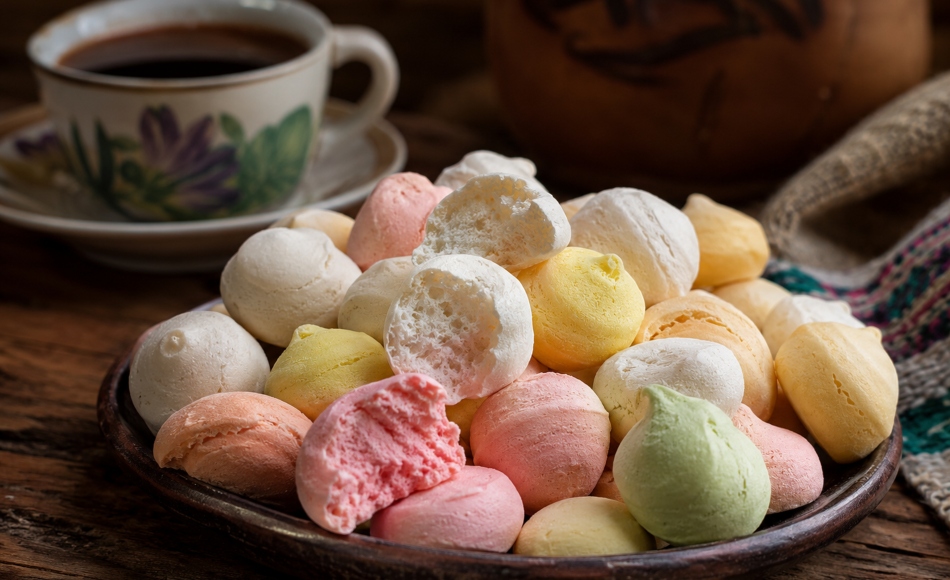
Sugar colaciones are small traditional candies from Nariño, Colombia, especially associated with Pasto, Sandoná, and family celebrations in the country’s southern Andes. You make them with whipped sugar candy and anise, creating a crisp shell with a light center that gently dissolves as you eat it.
They are commonly served at Christmas novenas, weddings, fairs, and family gatherings. Their handmade preparation depends on cooking and whipping the sugar syrup carefully, a technique preserved through generations of Nariño confectioners.
Print
Nariño Sugar Colaciones
- Prep Time: 25 minutes
- Cook Time: 20 minutes
- Total Time: 4 hours 15 minutes
- Yield: 60
- Category: Dessert
- Cuisine: Colombian
Ingredients
- 500 g granulated white sugar (2 ½ cups)
- 120 ml water (½ cup)
- 5 g anise seeds (1 teaspoon)
- 2 g pastel gel food coloring (¼ teaspoon), for colored colaciones
Preparation
- Make the anise syrup, place the sugar, water, and anise seeds in a heavy-bottomed saucepan. Cook over medium heat while stirring only until the sugar has fully dissolved.
- Once the syrup starts boiling, stop stirring and cook until it reaches 145 to 150 °C / 293 to 302 °F. The syrup should turn into a clear, slightly thick candy syrup; a candy thermometer gives you the most reliable result.
- Flavor and color the candy, remove the saucepan from the heat and add the food coloring when you want pink, yellow, or green colaciones. Stir quickly so the color distributes evenly before the candy cools too much.
- Whip the mixture, pour the hot candy into a heatproof mixing bowl and beat it with an electric mixer at medium speed. Continue until it loses its shine, turns lighter in color, and becomes thick, opaque, and easy to shape. This usually takes 10 to 15 minutes.
- Shape the colaciones, transfer the mixture to a piping bag fitted with a small round tip, or use two teaspoons. Pipe or spoon small 2 cm / ¾-inch buttons onto a parchment-lined baking sheet.
- Let them rest at room temperature for 3 to 4 hours, until completely dry and firm. Store them in an airtight container once the outside no longer feels moist.
Chef’s tips
- Use a heavy-bottomed saucepan so the sugar heats evenly.
- Do not stir the syrup after it starts boiling because it may crystallize.
- Set up your baking sheet and piping bag before whipping, since the mixture firms up quickly.
- Use anise seeds to preserve the traditional Nariño flavor.
- Avoid making colaciones on very humid days because sugar can absorb moisture and lose its crisp texture.
Traditional variations
Colaciones are often served plain white or in soft pastel colors, especially pink, yellow, and green. The traditional base remains the same: anise-flavored sugar candy whipped until it becomes pale, airy, and brittle.
How to serve
Serve colaciones in a candy dish, on a small tray, or in individual treat bags for sharing. In Nariño, they are traditionally offered during novenas, weddings, family celebrations, and religious festivities.
Recommended accompaniments
- Colombian black coffee
- Hot chocolate
- Herbal tea
- Dulce de leche
- Guava paste
A culinary curiosity
In Nariño, colaciones are more than small sweets: they represent handmade confectionery, hospitality, and community gatherings. Their anise aroma and soft pastel colors make them especially recognizable within the traditional sweets of southern Colombia.
Frequently Asked Questions
Sugar colaciones are small candies made from whipped sugar syrup and anise. They have a crisp outer layer, a light center, and a delicate brittle texture. In Colombia, they are especially associated with Nariño, where they are part of the traditional confectionery served at celebrations, novenas, and family gatherings.
Their opaque appearance develops while you whip the hot candy. As air enters the mixture and the sugar cools gradually, it changes from transparent to pale and thick. That transformation creates the porous, delicate texture that makes traditional colaciones distinctive.
Yes. White colaciones are fully traditional and retain the characteristic anise flavor. Food coloring is only used for festive pastel-colored versions and does not change the texture or play an essential role in the recipe.
Keep them completely cool and dry in an airtight container away from humidity. They keep well for 10 to 14 days at room temperature. Do not refrigerate them because condensation can make them sticky and reduce their crisp texture.