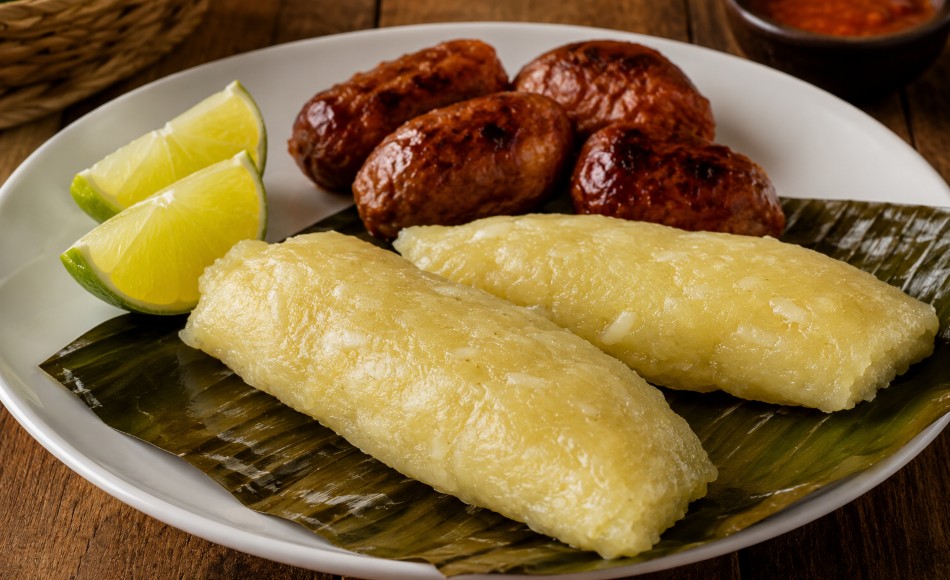
Colombian cassava bollo is a traditional preparation from Colombia’s Caribbean coast made with grated or ground cassava, wrapped in banana leaves, bijao leaves, or corn husks, and cooked until firm, tender, and slightly elastic. It is a much-loved side dish for breakfasts, coastal meals, and family tables, where it is often served with cheese, suero costeño, fried fish, stewed meat, or pork cracklings.
Unlike corn-based bollos, cassava bollo has a moister, more compact texture and the mild, slightly sweet flavor of cassava. Its preparation reflects everyday Caribbean cooking, where leaf-wrapped foods are practical, homemade, and deeply connected to local ingredients.
Although some versions are plain while others include cheese or coconut depending on family tradition, the most representative cassava bollo keeps a simple base: fresh cassava, salt, a little optional fat, and aromatic leaves for wrapping.
Print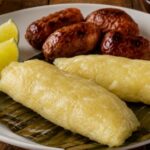
Colombian Cassava Bollo
- Prep Time: 35 minutes
- Cook Time: 1 hour
- Total Time: 1 hour 35 minutes
- Yield: 12
- Category: Main Course
- Cuisine: Colombian
Ingredients
- 1 kg fresh cassava, peeled
- 10 g salt (2 teaspoons)
- 30 g butter or pork lard (2 tablespoons), optional
- 80 ml coconut milk or water (⅓ cup), only if the dough needs it
- 12 banana leaves, bijao leaves, or corn husks, cleaned and softened over heat
- Kitchen string or strips of leaf for tying
Preparation
- Prepare the cassava, peel the cassava, remove the tough center fiber, and wash it well. Grate it on the fine side of a grater or grind it until you get a moist, even dough. If the cassava releases too much liquid, squeeze it lightly with a clean cloth, but do not make it dry.
- Season the dough, place the grated cassava in a large bowl and add the salt. Add the butter or lard if using, and mix until you get a compact, moist dough that is easy to shape. If it is too dry, add the coconut milk or water little by little, only until it becomes smooth again.
- Prepare the leaves, pass the banana leaves, bijao leaves, or corn husks over heat or through hot water so they become flexible and do not tear when wrapped. Wipe them clean and cut medium pieces, large enough to cover each portion of dough.
- Shape the bollos, take portions of dough and shape them into cylinders or long rolls. Place each portion on a leaf, wrap firmly, and fold the ends to protect the dough well. Tie with kitchen string or strips of leaf so they do not open during cooking.
- Cook the bollos, arrange them in a pot with hot water or in a steamer. Cook for 45 minutes to 1 hour, until the dough is firm, cooked through, and pulls away easily from the leaf. If cooking them in water, make sure the packets are well sealed.
- Let them rest and serve, remove the bollos from the pot and let them rest for about 10 minutes before opening. Serve them hot or warm with suero costeño, fresh cheese, fried fish, or your preferred main dish.
Practical Tips
Use fresh, firm cassava with no dark spots, because the quality of the cassava defines the final texture of the bollo.
Do not squeeze the grated cassava too much; it needs to keep some moisture so the bollo does not turn dry or crumbly.
If you add coconut milk, use it moderately so the dough stays compact and easy to wrap.
Soften the leaves well before assembling the bollos, since this prevents tearing and improves the aroma during cooking.
Cassava bollo should be firm but not hard; if it cooks too long or the dough is too dry, it can lose its tenderness.
Traditional Variations
In some coastal homes, cassava bollo is made only with cassava and salt, keeping a neutral flavor that pairs well with savory meals.
There are also versions with grated queso costeño, which add a salty contrast and a more flavorful texture.
In certain areas, a little grated coconut or coconut milk is added, especially when a more aromatic and slightly sweet bollo is desired.
Traditional Serving Style
Cassava bollo is served hot or warm, opened directly on the leaf in which it was cooked. Traditionally, it accompanies coastal meals such as fried fish, stewed meat, pork cracklings, butifarra, or eggs.
It is also enjoyed with suero costeño, fresh cheese, butter, Colombian coffee, hot chocolate, or aguapanela. Its mild flavor allows it to work as a side for savory dishes as well as simple breakfasts.
Recommended Pairings
- Suero costeño
- Queso costeño
- Fresh cheese
- Fried fish
- Stewed meat
- Pork cracklings
- Butifarra
- Colombian coffee
- Hot aguapanela
Fun Food Fact
Cassava bollo belongs to the large family of traditional leaf-wrapped foods from Colombia’s Caribbean coast. In this region, cassava plays a fundamental role alongside corn, plantain, and yam, and appears in everyday preparations that accompany meats, fish, and breakfasts.
Its simplicity is exactly what makes it important: with only a few ingredients, it becomes a sturdy, easy-to-carry food that can complete hearty meals. That is why it is common in markets, popular food stalls, and coastal family tables.
Frequently Asked Questions
Cassava bollo is a traditional Colombian leaf-wrapped preparation made with grated or ground cassava, salt, and banana leaves, bijao leaves, or corn husks. It is cooked in water or steamed until firm and tender. It is typical of the Caribbean coast and served as a side dish.
The simplest version is made only with cassava and salt, but many families add grated queso costeño for more flavor. Both versions are traditional. Cheese adds a pleasant salty contrast, especially when served for breakfast or as a snack.
Yes, you can use good-quality frozen cassava. Thaw it completely, drain it well, and grind or process it until you get an even dough. The texture may vary slightly compared with fresh cassava, but it works for a homemade preparation.
Cassava bollo usually cooks for 45 minutes to 1 hour. It is ready when the dough feels firm, holds its shape, and pulls away easily from the leaf. The time can vary depending on the thickness of each bollo and the cooking method.
Yes, you can freeze them after they are cooked and completely cooled. Keep them well wrapped to preserve moisture. To reheat them, steam them or warm them in hot water without removing the leaf until they are tender and hot inside.