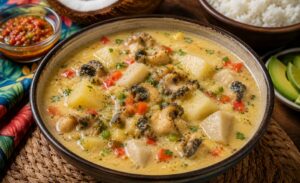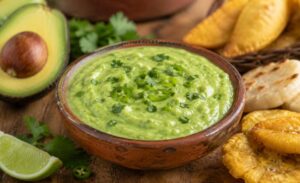

Colombian stewed piangua is a traditional dish from the country’s Pacific coast, especially connected to coastal communities, mangroves, and riverside kitchens where this shellfish is part of local food culture. Piangua is a dark-shelled bivalve that lives in Pacific mangroves, and its gathering is traditionally linked to the work of many women in the region.
In Pacific Colombian cooking, piangua is often prepared with coconut milk, a seasoned vegetable base, garlic, onion, annatto, and local herbs. The result is a creamy, aromatic stew with a deep seafood flavor, usually served with white rice, coconut rice, fried green plantains, or boiled plantain.
Print
Colombian Stewed Piangua
- Prep Time: 20 minutes
- Cook Time: 30 minutes
- Total Time: 50 minutes
- Yield: 4
- Category: Main Course
- Cuisine: Colombian
Ingredients
- 600 g cleaned and cooked piangua meat
- 400 ml thick coconut milk (1⅔ cups)
- 160 g chopped ripe tomato (2 medium tomatoes)
- 120 g chopped yellow onion (1 medium onion)
- 100 g chopped scallions (2 medium stalks)
- 80 g chopped red bell pepper (½ large bell pepper)
- 30 g chopped sweet peppers (2 small peppers)
- 20 g crushed garlic (4 cloves)
- 30 ml vegetable oil or annatto oil (2 tablespoons)
- 10 g chopped culantro or Colombian Pacific herb chillangua (¼ cup)
- 8 g chopped fresh cilantro (3 tablespoons)
- 5 g ground annatto or achiote (1 teaspoon)
- 3 g ground cumin (½ teaspoon)
- 8 g salt (1½ teaspoons)
- 2 g ground black pepper (½ teaspoon)
- 30 ml lime juice (2 tablespoons)
Preparation
- Season the piangua, mix the cleaned piangua meat with the lime juice, half of the salt, the black pepper, and half of the garlic. Let it rest for 10 minutes so it absorbs flavor while keeping its natural texture.
- Make the seasoning base, heat the oil in a wide skillet or pot and sauté the yellow onion, scallions, red bell pepper, sweet peppers, and remaining garlic for 5 minutes. Add the tomato, annatto, and cumin, then cook for 7 to 8 minutes, until the tomato breaks down and the mixture becomes juicy and fragrant.
- Add the piangua, place the piangua meat in the seasoning base and stir gently so it absorbs the flavors. Cook for 5 minutes over medium heat, stirring occasionally, until the seafood aroma blends with the vegetables.
- Simmer with coconut milk, pour in the coconut milk, lower the heat, and cook for 12 to 15 minutes, until the sauce thickens slightly and coats the piangua well. Avoid boiling too hard so the coconut milk stays creamy.
- Finish the stew, add the culantro or chillangua and the fresh cilantro. Taste and adjust the salt, then cook for 2 more minutes. The stew should be creamy, glossy, and concentrated enough to spoon over rice.
Practical Cooking Tips
Use fresh or properly preserved piangua, always cleaned and previously cooked if you buy it as shellfish meat.
Do not overcook the piangua, because it can become tough and lose its pleasant texture.
Cook the coconut milk over low heat so the sauce stays smooth and creamy.
If you can find chillangua or culantro, use it; it gives the stew a flavor closely associated with Colombian Pacific cooking.
Traditional Variations
In some Pacific Colombian kitchens, piangua stew is prepared with extra coconut milk, creating a richer and more generous sauce.
Local herbs such as chillangua, poleo, or wild basil may be used depending on the region and family tradition.
Some home cooks serve the stew with boiled green plantain or cassava to make the meal more filling, although the most direct version focuses on the piangua and its coconut sauce.
Traditional Serving Style
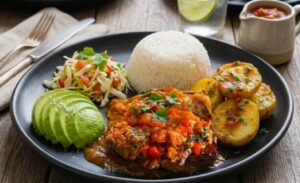
Serve stewed piangua hot, with plenty of coconut sauce and fresh herbs. The most traditional way is to spoon it over white rice or coconut rice, accompanied by fried green plantains, boiled plantain, or cassava.
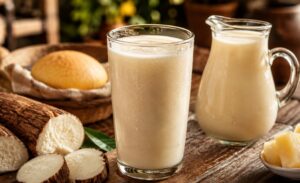
For drinks, it pairs well with fresh lemonade, borojó juice, lulada, lulo juice, or cold panela water with lime.
Recommended Side Dishes
- White rice
- Coconut rice
- Fried green plantains
- Boiled green plantain
- Boiled cassava
- Fresh salad
- Lime wedges
Culinary Fun Fact
Piangua is important not only for its flavor but also for its connection to the economy and culture of many Colombian Pacific communities. Gathering it in mangroves is a traditional practice that requires experience, knowledge of the land, and a close relationship with the natural cycles of the region.
That is why dishes like stewed piangua represent more than a recipe: they are part of the culinary memory of Colombia’s Pacific coast and of family kitchens that have preserved coconut-based stews, seasoned bases, and local herbs.
Frequently Asked Questions
Piangua is a dark-shelled bivalve that lives in Pacific mangroves. In Colombia, it is highly valued in traditional Pacific coast cooking and is used in stews, rice dishes, tamales, and coconut-based preparations.
Yes, in the traditional Colombian Pacific version, coconut milk is one of the main ingredients. It adds creaminess, softens the strong seafood flavor, and blends with the seasoning base, annatto, and herbs to create a very aromatic sauce.
Cook it only as long as needed. If the piangua is already cooked, it only needs a few minutes in the seasoning base and a short simmer with coconut milk. Too much cooking can make the meat tough and less juicy.
It is served with white rice, coconut rice, fried green plantains, cassava, or boiled plantain. These sides are traditional because they balance the seafood flavor and help you enjoy all the coconut sauce.
Yes, frozen piangua can be used if it is clean and good quality. Thaw it in the refrigerator, drain it well, and avoid overcooking it. For the best texture, add it once the seasoning base is ready and the sauce has started to form.