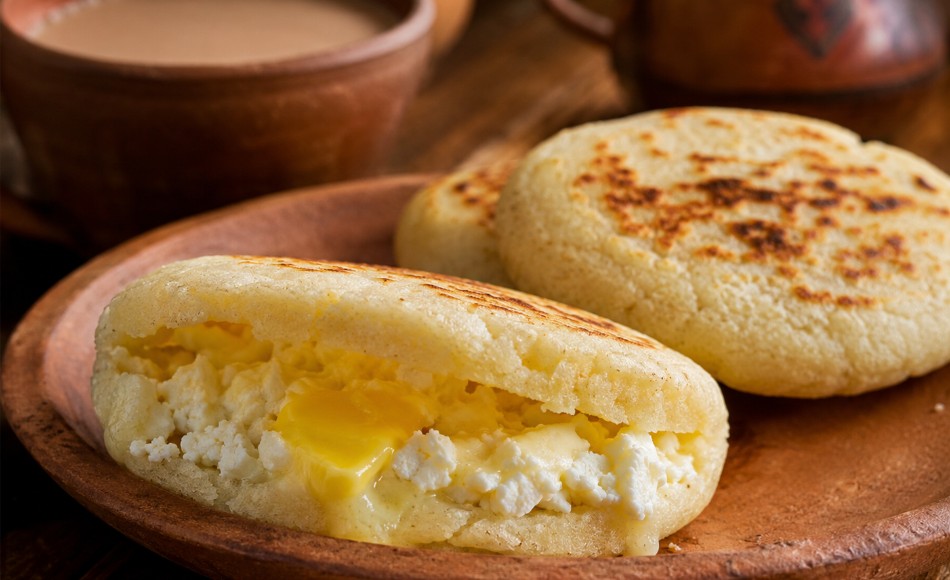
The Ocañera arepa is a traditional preparation from Ocaña, in Norte de Santander, Colombia. It is known for being made with soaked, cooked, and ground white corn, and for its two-stage cooking method: first on a griddle or heavy pan, then over stronger heat until it puffs up and forms a crisp outer layer.
In Ocaña and nearby areas, this arepa is part of everyday eating and regional food identity. The most traditional version is served hot, opened on one side, and filled with butter and grated fresh cheese, a simple but deeply representative combination from northeastern Colombian cooking.
Print
Colombian Ocañera Arepa
- Prep Time: 30 minutes
- Cook Time: 1 hour 20 minutes
- Total Time: 13 hours 50 minutes
- Yield: 4
- Category: Main Course
- Cuisine: Colombian
Ingredients
- 500 g dried white corn
- 2 liters water for soaking (8 cups)
- 1.5 liters water for cooking (6 cups)
- Salt to taste (optional)
- 120 ml warm water to adjust the dough (½ cup)
- 60 g butter (4 tablespoons)
- 200 g grated fresh farmer’s cheese or fresh curd cheese (2 cups)
Preparation
- Soak the corn, rinse the white corn and leave it in 2 liters of water for 12 hours. The next day, drain and rinse it again to remove impurities and help the kernels cook evenly.
- Cook the corn, place the soaked corn in a pot with 1.5 liters of water and cook over medium heat until tender but not falling apart. The kernels should break easily when pressed between your fingers. Drain well and let the corn cool slightly.
- Make the dough, grind the cooked corn until you get a moist, rustic dough. Knead with your hands for several minutes; add salt to taste if you like, although traditional ocañera arepas are usually made without salt in the dough. If the dough cracks too much, add the warm water little by little until it becomes soft, compact, and easy to shape.
- Shape the arepas, divide the dough into 4 equal portions, roll them into balls, and flatten them into thick arepas, about 1.5 cm thick. They should feel firm, with smooth edges, so they can puff properly during the second cooking stage.
- Cook the arepas, heat a griddle, clay griddle, or heavy skillet over medium heat and cook the arepas on both sides until dry, golden, and lightly toasted. Then transfer them to a grill, rack, or stronger heat for a few minutes, turning carefully, until they puff and the surface becomes crisp.
- Fill and serve, open each hot arepa from one side without cutting it all the way through. Spread butter inside and add grated fresh cheese or curd cheese. Serve immediately, while the cheese softens with the heat of the arepa.
Practical cooking tips
Use dried white corn instead of precooked corn flour for a more traditional texture and deeper corn flavor.
Do not grind the corn into a liquid paste; the dough should stay compact, moist, and slightly rustic.
The second cooking stage is essential because the strong heat helps the arepa puff and develop its signature outer layer.
Fill the arepa as soon as it comes off the heat so the butter melts and the cheese warms through.
Traditional variations
In Ocaña, this arepa is also served with shredded beef, cheese, and Ocaña-style onions, although the butter and cheese version is one of the most recognized traditional ways to enjoy it.
Some families prepare the dough with home-cooked white corn, while others use peeled or freshly ground corn dough, depending on family tradition and local availability.
Traditional way to serve
The Ocañera arepa is served hot, opened on one side, and filled with butter and cheese. It is best eaten freshly made, when the crust is crisp and the inside is still moist.
It can be enjoyed for breakfast, as an afternoon snack, or as a traditional quick meal. In Colombia, it is often served with coffee with milk, hot chocolate, or aguapanela, depending on the time of day and household tradition.
Recommended pairings
- Colombian coffee with milk
- Hot chocolate
- Aguapanela
- Shredded beef
- Ocaña-style onions
- Fresh farmer’s cheese
Food fact
The Ocañera arepa is especially known for its double cooking method, which intensifies the aroma of the corn and helps create a toasted outer layer. That firmer, crisp surface is one of the details that sets it apart from many other Colombian arepas.
Frequently Asked Questions
Its main difference is the cooked and ground white corn dough, along with the two-stage cooking method. It is first cooked on a griddle until golden, then exposed to stronger heat so it puffs. This makes it easy to open and fill with butter and cheese while keeping the outside crisp and the inside soft.
You can make a faster version with precooked corn flour, but the traditional preparation is best made with soaked, cooked, and ground white corn. That method gives the arepa a more authentic flavor, a rustic texture, and a crust closer to the one prepared in its home region.
Fresh farmer’s cheese, fresh curd cheese, or a mild grated white cheese works best. The cheese should soften with the heat without melting completely. A mild, milky flavor and moderate saltiness balance the butter and the natural flavor of the corn.
This can happen if the dough is too dry, if the arepa has cracks, or if the second cooking stage is not hot enough. Knead the dough well, shape firm disks, cook them first on a griddle, and then move them to stronger heat so steam forms inside and helps the arepa puff.