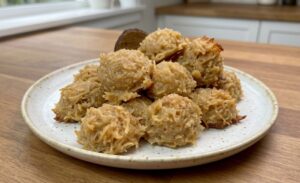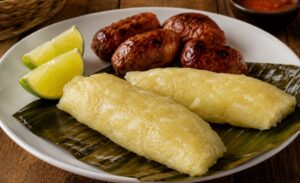

Colombian ripe plantain wraps, known as envueltos de plátano maduro, are especially associated with Tolima, where they may also be called estacas or plantain bollos. You make them with very ripe plantains, panela, butter, and pre-cooked cornmeal, wrap them in banana leaves, and bake them until they are soft, sweet, and lightly firm.
In Tolima, they are often served alongside roasted meats, especially lechona. They also work beautifully as a breakfast item or afternoon snack. This recipe reflects the practical countryside tradition of turning deeply ripe plantains into a comforting, flavorful dish.
Print
Colombian Ripe Plantain Wraps
- Prep Time: 25 minutes
- Cook Time: 1 hour 20 minutes
- Total Time: 1 hour 45 minutes
- Yield: 8
- Category: Main Course
- Cuisine: Colombian
Ingredients
- 4 very ripe plantains, about 1.2 kg
- 80 g pre-cooked cornmeal for arepas (½ cup)
- 90 ml warm water (6 tablespoons)
- 75 g grated panela (⅓ cup)
- 115 g unsalted butter, melted (½ cup)
- 8 banana leaves, about 30 cm long
- 5 g salt (1 teaspoon)
Preparation
- Wash the banana leaves with hot water, dry them well, and pass them briefly over low heat or a hot skillet until they become flexible. Cut them into pieces about 30 cm long and set them aside.
- Make the mixture, peel the very ripe plantains and mash them until you have a smooth puree with no large pieces. Add the cornmeal, warm water, grated panela, melted butter, and salt. Mix until you have a thick, moist, even mixture.
- Let the mixture rest for 30 to 40 minutes so the cornmeal absorbs moisture and the dough becomes firmer.
- Wrap the envueltos, place about 120 g of mixture, or roughly 4 heaping tablespoons, in the center of each banana leaf. Fold the sides and ends inward to make tightly closed rectangular packages.
- Arrange the envueltos on a baking sheet and bake at 180 °C / 350 °F for 1 hour and 20 minutes, until they feel firm and the leaves have a toasted aroma.
- Let them rest for 10 minutes before opening. Serve them warm, directly in the banana leaf.
Chef’s tips
- Use plantains with very dark skins; they should be soft and naturally sweet.
- Grate the panela finely so it blends evenly into the mixture.
- Do not add too much water because the plantains already provide a large amount of moisture.
- Seal the banana leaf packages well so the mixture does not dry out while baking.
Traditional variations
In Tolima and other Colombian regions, you can find versions made with grated cheese or chopped fried pork belly. You may also hear names such as estacas, plantain bollos, or tungos de plátano maduro. These vary by region in size, wrapping style, and sweetness, while the ripe plantain, panela, and butter version remains the best-known base preparation.
How to serve
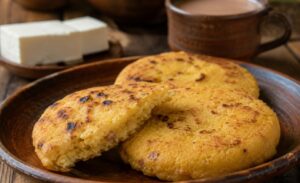
Serve ripe plantain wraps hot or warm, leaving them partly wrapped in the banana leaf. In Tolima, they are a traditional side for lechona, roast pork, grilled meat, or baked pork dishes. For a simple snack, serve them with Colombian black coffee or hot chocolate.
Recommended accompaniments
- Tolima-style lechona
- Roasted pork
- Grilled meat
- Fresh farmer’s cheese
- Colombian black coffee
- Hot chocolate
A culinary curiosity
Ripe plantain wraps show how Colombian regional cooking transforms simple, abundant ingredients into memorable foods. The banana leaf acts as more than a wrapper: it protects the mixture during baking and adds a gentle vegetal aroma.
Across Colombia, similar preparations may be called envueltos, bollos, estacas, or tungos. Although recipes differ from place to place, Tolima is especially connected with ripe plantain wraps served alongside lechona.
Frequently Asked Questions
Use very ripe plantains with heavily spotted yellow skins or nearly black skins. At this stage, they are sweeter, softer, and easier to mash into a smooth mixture. Green or barely ripe plantains will not provide the same flavor or create the soft texture expected in traditional ripe plantain wraps.
Pre-cooked cornmeal absorbs moisture from the plantains and helps the mixture hold its shape. You can reduce the quantity slightly when your plantains are less watery, but removing it entirely can make the filling too soft and difficult to wrap securely in the banana leaves.
The Tolima-style version is traditionally wrapped in banana leaves and baked. Other Colombian plantain bollos may be steamed or boiled, so the cooking method varies according to the region and the specific local name used for the preparation.
Keep them in an airtight container in the refrigerator for up to 3 days. Reheat them in a low oven, still inside their leaves, for 10 to 15 minutes. You can also steam them gently to restore some moisture while keeping the plantain filling soft.