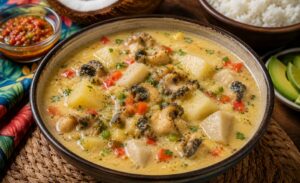

Pipian tamale is one of the most traditional dishes from the Cauca region of Colombia, especially associated with the city of Popayán. Unlike larger Colombian tamales filled with several kinds of meat, this tamale is known for its small size, soft corn dough, and pipian filling, a thick and flavorful mixture made with yellow potatoes, peanuts, scallions, garlic, and achiote.
In Popayán, pipian tamale is part of a deeply rooted culinary tradition. It is commonly served as an appetizer, snack, or typical dish during celebrations, family gatherings, and religious festivities. It holds a special place in Payanese cuisine, where many recipes preserve old techniques and very regional flavors.
One of the most traditional ways to enjoy it is with ají de maní, a thick peanut-based hot sauce that enhances the flavor of the filling. Because of its size, aroma, and delicate texture, pipian tamale represents a very distinctive version of the Colombian tamale: simple in appearance, but rich in cultural identity.
Print
Colombian Pipian Tamale
- Prep Time: 1 hour
- Cook Time: 1 hour 30 minutes
- Total Time: 2 hours 30 minutes
- Yield: 12
- Category: Main Course
- Cuisine: Colombian
Ingredients
- 500 g yellow corn dough or cooked ground peeled corn
- 600 g Colombian yellow potatoes, peeled and chopped (4 cups)
- 150 g toasted ground peanuts (1 cup)
- 200 g chopped scallions (2 cups)
- 80 g chopped white onion (½ medium onion)
- 15 g crushed garlic (3 cloves)
- 30 ml achiote oil (2 tablespoons)
- 500 ml vegetable or chicken broth (2 cups)
- 8 g salt (1 ½ teaspoons), adjust to taste
- 3 g ground cumin (½ teaspoon)
- 2 g ground black pepper (½ teaspoon)
- 12 banana leaves, cleaned and softened over heat
- Kitchen string for tying
Preparation
- Prepare the pipian filling, cook the yellow potatoes in salted water until very tender and beginning to fall apart. Drain them partially and mash them into a thick mixture, leaving a few small pieces for a more traditional texture.
- Make the stew, heat the achiote oil in a pot and sauté the scallions, white onion, and garlic until soft and aromatic. Add the cumin, black pepper, and salt, then stir in the ground peanuts so they release their flavor without burning.
- Combine the filling, add the mashed yellow potatoes to the peanut stew and mix until you have a thick, moist, well-seasoned pipian. Cook over low heat for a few minutes, adding a little broth if the mixture becomes too dry. The filling should be firm but easy to spread.
- Prepare the dough, place the corn dough in a large bowl and add warm broth little by little, mixing until the texture is soft, moist, and easy to handle. Adjust the salt and make sure the dough is neither runny nor crumbly.
- Prepare the banana leaves, pass the banana leaves over an open flame or through hot water so they become flexible. Wipe them clean and cut them into medium pieces, large enough to wrap small tamales securely.
- Assemble the tamales, place a portion of dough in the center of each leaf and spread it slightly. Add a generous spoonful of pipian filling in the center, cover with a little more dough if you prefer a more enclosed tamale, and fold the leaf into a small compact packet.
- Cook the tamales, tie each tamale with kitchen string and arrange them in a pot lined with banana leaves. Add hot water until it reaches about halfway up the tamales and cook covered over medium-low heat for 1 hour and 30 minutes, checking that the pot does not run dry.
- Let them rest and serve, remove the tamales from the pot and let them rest for 10 minutes before opening. The dough should be soft and firm, while the pipian filling should remain creamy, aromatic, and well integrated.
Chef’s Tips
Use Colombian yellow potatoes whenever possible, because they provide the most characteristic flavor and texture for Cauca-style pipian.
Do not over-toast the peanuts if you prepare them at home; they should be aromatic, but not bitter.
The filling should be thick and moist. If it is too dry, the tamale loses tenderness; if it is too loose, it may fall apart when wrapped.
Soften the banana leaves well so they do not tear when folded and so they add aroma during cooking.
Prepare the peanut hot sauce ahead of time so its flavors blend better before serving.
Traditional Variations
In some Popayán households, pipian is made with a higher proportion of peanuts, giving it a stronger flavor and creamier texture.
There are also family versions where the dough is spread thinner and the filling becomes the main focus.
In certain traditional preparations, the tamale is served with a thicker or spicier ají de maní, depending on family custom.
Traditional Serving Style
Pipian tamale is served hot, usually in small portions and opened directly on the banana leaf. Traditionally, it is accompanied by ají de maní, which is spooned over the tamale or served on the side so each person can add it to taste.
It can be served as an appetizer, snack, or part of a typical Cauca-style meal. In Popayán, it is often enjoyed with hot drinks such as Colombian coffee or hot chocolate, although it may also be paired with aguapanela.
Recommended Pairings
- Ají de maní
- Colombian coffee
- Hot chocolate
- Hot aguapanela
- Fresh bread
Food Tradition
Pipian tamale is one of the most representative dishes of Payanese cuisine, a culinary tradition known for careful techniques, local ingredients, and the preservation of family recipes.
Its connection to Popayán is so strong that it often appears in food fairs, religious celebrations, and cultural events in the city. Although it is smaller than many other Colombian tamales, its cultural importance is great because it brings together essential Cauca flavors: corn, yellow potatoes, peanuts, achiote, and chili sauce.
Frequently Asked Questions
Pipian is a traditional filling made mainly with Colombian yellow potatoes, ground peanuts, scallions, garlic, and achiote. It has a thick, creamy texture and gives pipian tamale its most distinctive flavor. In Cauca, pipian is also used in other traditional dishes.
The most representative version of pipian tamale does not contain meat, because its main filling is made with yellow potatoes and peanuts. Its flavor comes from the stew, achiote, peanuts, and corn dough. Family variations may exist, but the traditional Popayán version is simple and vegetable-based.
The most traditional accompaniment is ají de maní, a thick peanut-based hot sauce made with peanuts, chili, onion, and seasonings. It can also be served with coffee, hot chocolate, or aguapanela, especially when eaten as a snack or part of a typical Cauca meal.
Pipian tamale usually cooks for about 1 hour and 30 minutes over medium-low heat. Since it is smaller than other Colombian tamales and does not contain raw meat, its cooking time is shorter. The dough should be firm, tender, and fully cooked.
Yes, you can freeze them after they are cooked and completely cooled. Keep them well wrapped to preserve moisture. To reheat them, use steam or hot water without removing the banana leaf, until the dough becomes tender again and the filling is heated through.