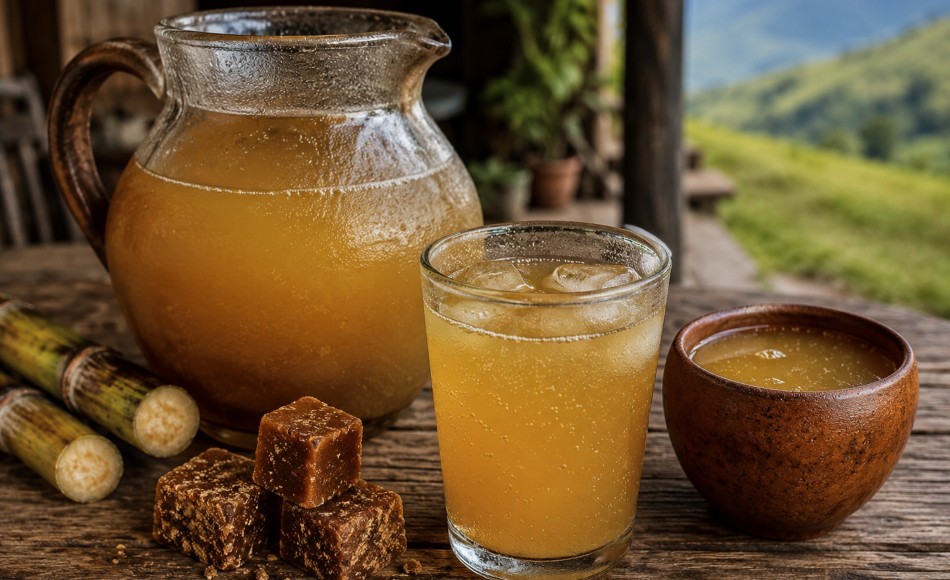
Colombian guarapo is a traditional drink made with sugarcane syrup or panela dissolved in water and allowed to ferment. In rural and sugarcane-growing areas, it has long been enjoyed by farming communities, families and workers as a refreshing drink or, after a longer rest, as a tangy fermented beverage with noticeable alcohol content.
In Colombia, guarapo can also refer to freshly pressed sugarcane juice. However, one of the most representative rural versions is made with panela or sugarcane syrup, then fermented in clay jars or large containers. Many traditional households use “cunchos,” the fermented sediment from an earlier batch, to start a new one.
Print
Colombian Guarapo
- Prep Time: 15 minutes
- Cook Time: 10 minutes
- Total Time: 26 hours 25 minutes
- Yield: 8
- Category: Beverage
- Cuisine: Colombian
Ingredients
- 2 liters water (8 cups)
- 500 g grated or chopped panela (about 2 ½ cups)
- 100 ml fermented guarapo starter, known as cunchos (⅓ cup)
- 5 g fresh baker’s yeast (1 heaping teaspoon), only if you do not have cunchos
Preparation
- Make the panela water, place the water and panela in a large pot. Cook over medium heat for 8 to 10 minutes, stirring until the panela dissolves completely. You only need a smooth, lightly sweetened drink; do not reduce it heavily.
- Cool the base, let the panela water rest until it reaches room temperature. It must be completely cool before you add the cunchos or yeast, since heat can prevent fermentation from starting properly.
- Start the fermentation, transfer the panela water to a very clean clay jar, glass jar or stainless-steel container. Add the cunchos and stir with a clean spoon. If you do not have cunchos, dissolve the fresh yeast in 2 tablespoons of cooled panela water, then add it to the container.
- Let the guarapo ferment, cover the container with a clean cloth or place the lid on top without sealing it tightly. Leave it at room temperature for 24 to 48 hours. After 24 hours, it will be sweeter and lightly tangy; after 48 hours, it will taste stronger, less sweet and more fermented.
- Chill and serve, once it reaches your preferred flavor, refrigerate the guarapo for at least 2 hours. Serve it cold in small glasses, clay mugs or traditional gourds. Keep it refrigerated and drink it within 3 days.
Chef’s Tips
- Choose high-quality panela with a rich sugarcane aroma for the most authentic result.
- Wash and dry the fermentation container carefully before using it; cleanliness is essential for good flavor.
- Do not tightly seal the container while it ferments, since gas naturally forms.
- Taste the drink every 12 hours after the first day to stop fermentation at your preferred level of sweetness and tanginess.
- Discard the drink if you notice mold, a rotten odor or a slimy texture.
Traditional Variations
In sugarcane-growing regions, guarapo may be made directly from freshly pressed cane juice produced in a trapiche mill. It may also be prepared with sugarcane syrup or panela dissolved in water. Some families save cunchos from one batch to start the next, creating a distinctive household flavor over time.
On Colombia’s Pacific coast, fermented sugarcane juice is also used as the base for viche before artisanal distillation.
Traditional Serving Style
Serve guarapo very cold in small glasses, gourds or clay mugs. In rural settings, it is often enjoyed after a day of work, during family gatherings or as a cooling drink on hot days.
Pair it with simple Colombian snacks, especially cheese breads, empanadas or corn-based foods.
Recommended Pairings
- Colombian empanadas
- Corn arepas
- Almojábanas
- Pandebonos
- Buñuelos
- Colombian farmer’s cheese
History and Tradition
The word guarapo refers to pressed sugarcane juice and also to the fermented drink made from it. In Colombia, it is closely tied to sugarcane cultivation, panela production and rural food traditions.
Fermentation changes panela’s initial sweetness into a tangier drink with gentle bubbles and variable alcohol content. The final flavor can differ according to weather, fermentation time, container material and the starter used.
Frequently Asked Questions
Let it ferment at room temperature for 24 to 48 hours. After 24 hours, it will remain sweeter with mild tanginess. After 48 hours, it becomes drier, more acidic and stronger. In warm climates, check it sooner because fermentation may develop more quickly.
Yes. Once fermented, guarapo can naturally develop alcohol. The amount depends on fermentation time, temperature, the quantity of panela and the starter culture used. It is not suitable for children, pregnant people or anyone who needs to avoid alcohol.
What are guarapo cunchos?
Yes. You can make the panela water, chill it and serve it as a sweet sugarcane drink. However, it will not have the tangy flavor, light effervescence or traditional fermented character of Colombian guarapo.