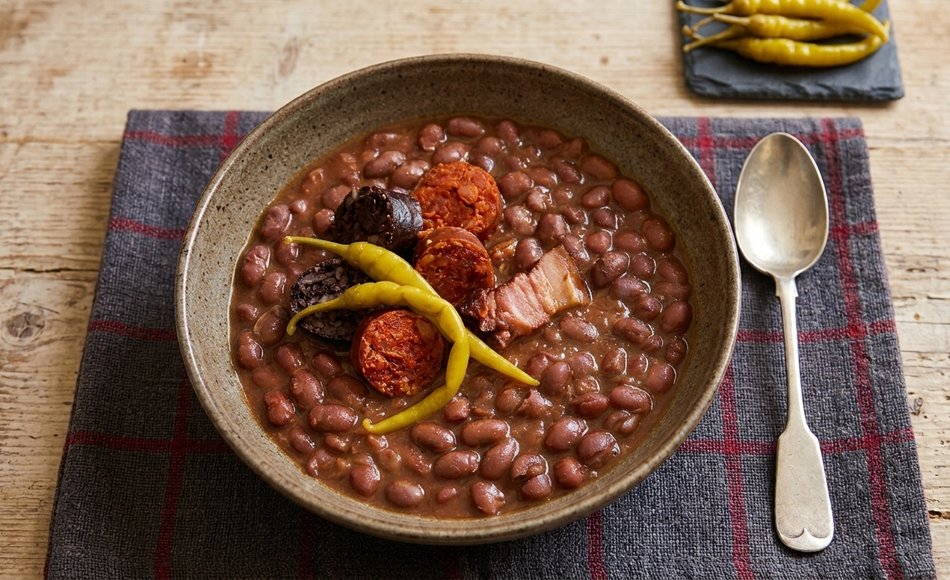
Cocido montañés is one of the most iconic hearty stews of Cantabria, the region in northern Spain historically known as "La Montaña" (The Mountain Range). It's a filling dish built on white beans, cabbage, and compango, the mix of chorizo, blood sausage, pork fat, and pork ribs that gives it its signature flavor, designed to stand up to the cold winters along Spain's northern coast.
It's often compared to Asturian fabada, but cocido montañés has its own identity: it includes cabbage, which fabada doesn't have, and uses smaller white beans instead of the larger fabes used in the Asturian dish. It's a common cold-weather meal, a staple on family tables across Cantabria and on the menus of cider houses and traditional eateries throughout the region, where it's typically served as a single main course.
Print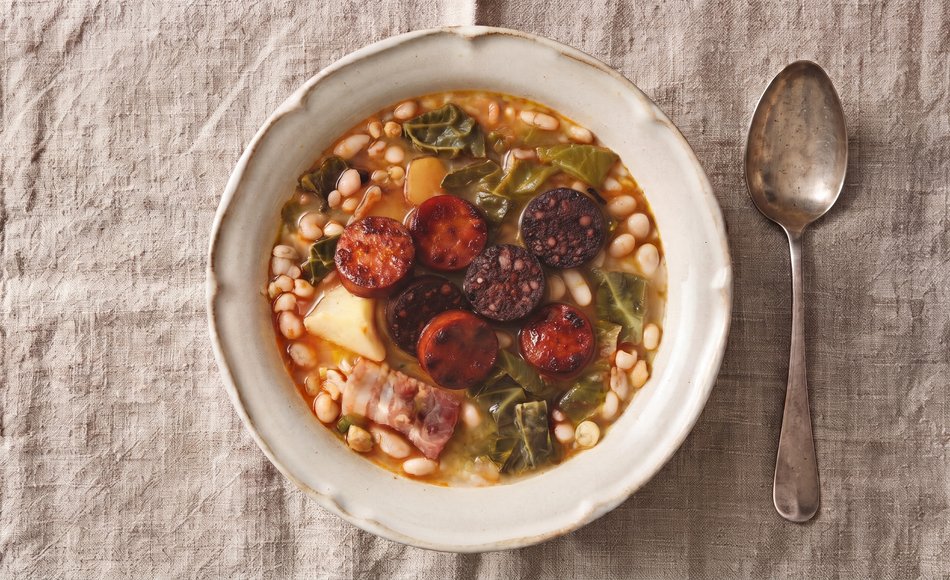
Cantabrian Cocido Montañés
- Prep Time: 30 minutes
- Cook Time: 2 hours 30 minutes
- Total Time: 11 hours
- Yield: 6 servings
- Category: Main Course
- Cuisine: Cantabrian (Spanish)
Ingredients
- 500 g of dried white beans (about 2 cups)
- 1 kg of Savoy or green cabbage (berza) (1 medium head)
- 300 g of potatoes, peeled and cut into large chunks (2 medium potatoes)
- 200 g of cured chorizo (2 chorizo links)
- 200 g of morcilla (Spanish blood sausage with rice) (2 links)
- 150 g of fresh pork fat (tocino) (1 piece)
- 400 g of pork ribs, salted or fresh (1 small rack)
- 50 g of unto (Spanish cured pork fat) (1 small piece) (optional)
- 150 g of white onion, chopped (1 medium onion)
- 3 garlic cloves, chopped
- 1 tablespoon of sweet paprika
- 2 bay leaves
- 60 ml of extra virgin olive oil (4 tablespoons)
- Salt, to taste
- Cold water for soaking and cooking the beans
Preparation
- Soak the beans, the night before, place them in a large bowl covered with cold water; soaking for at least 8 hours helps them soften and cook evenly the next day.
- Start the pot, drain the soaked beans and add them to a large pot with the pork ribs, pork fat, and unto, cover with plenty of cold water, and bring to a boil; once boiling, skim off any foam that rises to the surface and add the bay leaves.
- Simmer gently, lower the heat, partially cover the pot, and let the beans cook gently for about an hour and a half, adding a splash of cold water now and then (a technique known as "scaring" the beans) so the skins stay intact and the beans turn out whole and creamy.
- Add the cabbage and potatoes, wash and chop the cabbage, add it to the pot along with the peeled potatoes cut into large chunks, and continue cooking for 30-40 more minutes until the vegetables are tender.
- Stir in the chorizo and blood sausage, add these in the last 20-25 minutes of cooking so they release their flavor into the broth without falling apart or losing their texture.
- Make the sofrito, in a separate pan, heat the olive oil and sauté the chopped onion and garlic until golden, remove from the heat, and stir in the sweet paprika quickly so it doesn't burn.
- Stir in the sofrito and adjust the seasoning, add the sofrito to the pot, season with salt to taste, let it simmer 5 more minutes so the flavors come together, and remove the bay leaf before serving.
- Rest and serve, turn off the heat, let the stew rest covered for 10 minutes, then portion out the meats and divide them among the plates along with the beans, cabbage, and piping hot broth.
Cooking Tricks
- Soak the beans the night before and change the water before cooking so they turn out gentler on digestion and easier to cook evenly.
- Watch the salt carefully, since the chorizo, blood sausage, and pork fat already season the broth quite a bit.
- If you can find unto (Spanish cured pork fat), add it — it's what gives an authentic cocido montañés its deep, traditional flavor.
- Cocido montañés often tastes even better the next day, once the flavors have had time to settle.
Traditional variations
- In some parts of Cantabria, white cabbage is used instead of berza, without this being considered a different recipe.
- Some families use sweet blood sausage (made with sugar and cinnamon) instead of the traditional rice-based morcilla.
- In inland towns, it's common to add a piece of pig's ear or trotter to the compango for a richer, more gelatinous broth.
Traditional Serving
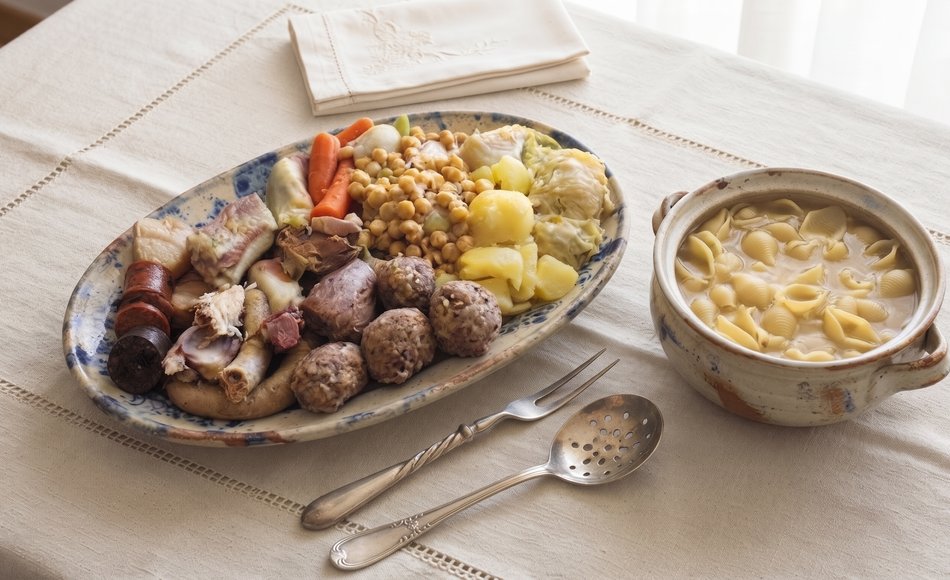
Cocido montañés is served piping hot, straight from the pot, in a deep bowl that brings together the beans, cabbage, potatoes, and sliced meats along with the broth.
Unlike Madrid-style cocido, in Cantabria it isn't usually split into separate courses — it's served all together as a single hearty dish, the way it's enjoyed in the region's cider houses and traditional eateries.
Recommended sides
- Rustic country bread
- A young local red wine
- Pickled guindilla peppers
A Bit of History
Cantabria was known for centuries as "La Montaña," which is where this stew gets its name — it doesn't refer to one specific mountain, but to the whole region. The dish began as food for farmers and fishermen, meant to provide the energy needed for long winter days working the land or the sea.
While it shares its spirit with Asturian fabada and Madrid-style cocido, cocido montañés is clearly different from both: it doesn't include chickpeas like the Madrid version, and unlike fabada, it's built around cabbage, which gives it its own flavor and texture and makes it a genuine symbol of Cantabrian cooking.
Frequently Asked Questions
Unto is the Spanish cured pork fat added along with the pork ribs and pork fat when you start the pot of beans; it's optional, but it gives an authentic cocido montañés its deep, traditional flavor.
The beans are covered with cold water the night before and soaked for at least 8 hours, so they soften and cook evenly the next day.
They're stirred in during the last 20-25 minutes of cooking, so they release their flavor into the broth without falling apart or losing their texture.
It means adding a splash of cold water now and then while the beans simmer gently, so the skins stay intact and the beans turn out whole and creamy.
After turning off the heat, the stew should rest covered for 10 minutes before portioning out the meats and serving them with the beans, cabbage, and piping hot broth.