Fideuà is one of the most iconic dishes of Valencian cuisine: hollow noodles cooked in a paella pan with seafood and fish, built on a richly reduced fish stock. It looks like paella at first glance, but fideuà has its own identity, and in the Valencia region — especially around Gandía and the Alicante coast — it's a regular fixture at weekend and family gatherings by the sea.
It's grown popular enough to appear on menus across all of Spain, always served with alioli, a detail that clearly sets it apart from a traditional seafood paella.
Print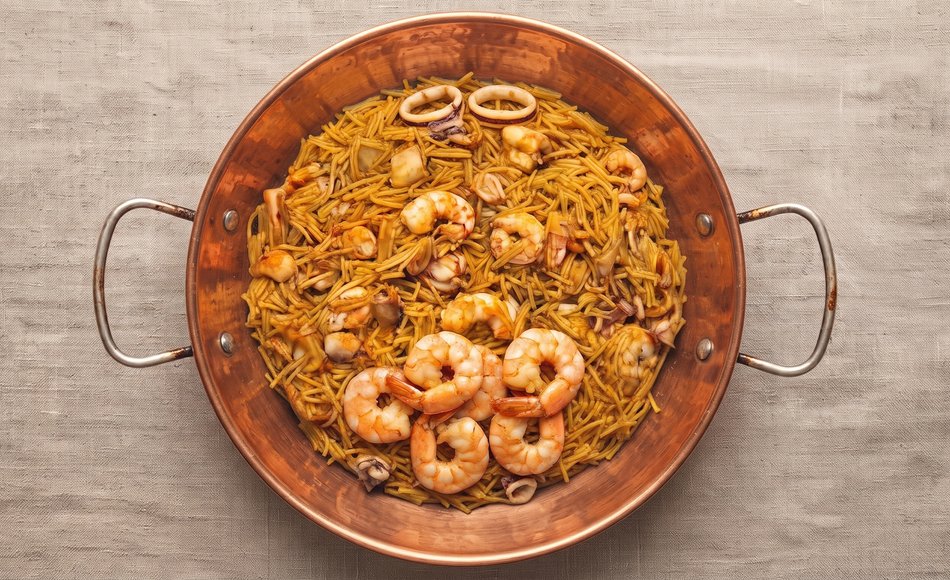
Fideuà (Spanish Seafood Noodle Paella)
- Prep Time: 20 minutes
- Cook Time: 30 minutes
- Total Time: 55 minutes
- Yield: 4 servings
- Category: Main Course
- Cuisine: Spanish (Valencian)
Ingredients
- 400 g of hollow no. 2 fideuà noodles (about 3 cups)
- 500 g of fresh shell-on shrimp (about 20 medium shrimp)
- 400 g of monkfish, cut into chunks (or another firm white fish)
- 300 g of cuttlefish or squid, cut into rings (2 medium cuttlefish)
- 1 liter of fish stock (fumet) (4 cups)
- about 400 g / 14 oz of ripe tomatoes, grated (2 large tomatoes)
- 150 g of onion, finely chopped (1 medium onion)
- 150 g of red bell pepper, chopped (1 medium pepper)
- 4 cloves of garlic, minced
- 100 ml of extra virgin olive oil (1/2 cup)
- 1 teaspoon of sweet paprika
- 1 pinch of saffron threads (or yellow food coloring)
- Salt, to taste
- Homemade alioli (garlic mayonnaise), for serving, to taste (optional)
Preparation
- Build the sofrito, heat the olive oil in a wide paella pan over medium heat, add the chopped onion, red pepper, and garlic, and cook for about 8 minutes until soft and translucent.
- Add the tomato, stir the grated tomato into the sofrito and cook over medium-low heat for 10 minutes, stirring occasionally, until it loses its water and turns a deep reddish color.
- Sear the fish and seafood, push the sofrito to one side of the pan, raise the heat, and sear the shrimp for about a minute per side until they change color; remove and set aside. Repeat with the monkfish and cuttlefish for 2-3 minutes.
- Toast the noodles, mix the sofrito back with the seared seafood, add the noodles, paprika, and saffron, and stir for about two minutes so the noodles soak up the flavor and turn lightly golden.
- Pour in the stock and cook, add the hot fish stock over the noodles, spread everything evenly across the pan, adjust the salt, and return the shrimp to the top; cook over medium-high heat without stirring for 10 minutes.
- Finish the socarrat and rest, lower the heat for the last 3-4 minutes so the noodles at the bottom crisp into a golden crust (socarrat), then remove from the heat and let rest 5 minutes before serving with alioli.
Kitchen Tips
- Use hollow no. 2 fideuà noodles — they soak up the broth better and give the dish its signature texture.
- Don't stir the noodles once the stock goes in; that's what lets the socarrat form on the bottom of the pan.
- Make a good homemade fumet with the shrimp shells and heads — it's the backbone of the dish's flavor.
- If you don't have saffron, yellow food coloring is a common, budget-friendly substitute used in many Valencian kitchens.
Traditional variations
- Fideuà de Gandía, the original version from the town where the dish was created, always served with alioli.
- Black fideuà, made with squid or cuttlefish ink for its distinctive dark color.
- Monkfish fideuà, built around monkfish alone rather than a mix of seafood.
- Oven-finished fideuà, baked for the final few minutes instead of over the stovetop for a more even socarrat.
Recommended Presentation
Fideuà is traditionally served straight from the same paella pan it was cooked in, placed at the center of the table so everyone can help themselves. It's always served with alioli, which each diner spoons over their hot noodles to taste.
Recommended sides
- Homemade alioli
- Rustic country bread
- A chilled Valencian white wine or a crisp rosé
A Bit of History
Fideuà was born in Gandía, in Spain's Valencia region, during the 1930s, aboard a fishing boat. Local tradition says the boat's cook, nicknamed "Borrego," swapped the rice in a paella for noodles because the captain ate so much rice that there was never enough left for the crew; noodles swell less than rice, so the dish stretched further for everyone aboard. Over time the recipe spread to restaurants along the Valencian coast, and today it's one of the most recognized dishes of Valencian cuisine across all of Spain.
Frequently Asked Questions
Because stirring prevents the socarrat from forming, the golden, crispy crust that develops on the bottom of the pan during the final minutes of cooking.
You can substitute it with yellow food coloring, a common, budget-friendly substitute used in many Valencian kitchens.
It's served straight from the same paella pan it was cooked in and is always accompanied by alioli, which each diner spoons over their hot noodles to taste.
Hollow no. 2 fideuà noodles, since they soak up the broth better and give the dish its signature texture.
It should rest 5 minutes after being removed from the heat, once the socarrat has formed, before serving it with alioli.