Rioja-style caparrones are the signature legume stew of La Rioja, Spain, built around a native thin-skinned red bean that gives the dish its name. The beans simmer slowly alongside chorizo, morcilla, pancetta, and salt pork, producing a thick, flavorful broth that turns this recipe into a hearty one-pot meal capable of feeding an entire family through the cold months.
The stew has been part of Rioja's culinary identity for generations, and towns like Anguiano, in the Najerilla valley, treat it as a point of local pride, even dedicating an annual cooking competition to the dish. It's a common sight on set menus at bars and restaurants across the region throughout autumn and winter.
Print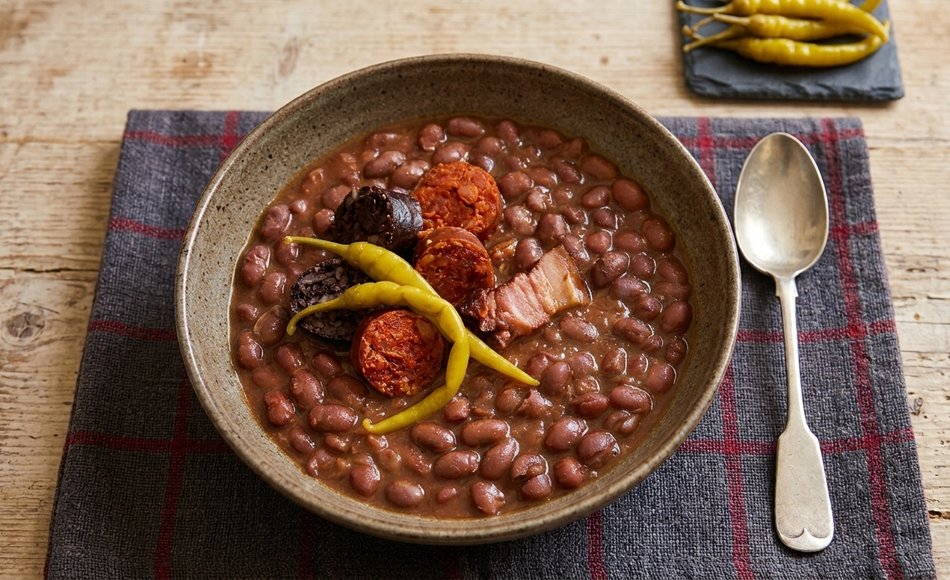
Rioja-Style Caparrones (Spanish Red Bean Stew)
- Prep Time: 20 minutes
- Cook Time: 3 hours
- Total Time: 11 hours 20 minutes
- Yield: 6 servings
- Category: Main Course
- Cuisine: Spanish (La Rioja)
Ingredients
- 500 g of dried caparrones (small Rioja red beans) (2 1/2 cups)
- 2.5 liters of cold water (10 cups)
- 200 g of Rioja-style chorizo sausage (2 medium links)
- 150 g of Rioja-style morcilla (blood sausage) (1 medium link)
- 150 g of fresh pork belly (pancetta) (1 piece)
- 100 g of streaky salt pork (1 piece)
- 200 g of whole peeled white onion (1 medium onion)
- 1 whole head of garlic
- 1 dried choricero pepper (or 1 tablespoon of its flesh)
- 1 bay leaf
- 30 ml of extra virgin olive oil (2 tablespoons)
- Salt, to taste
- Hot water for soaking the choricero pepper
- Bread, for serving (optional)
Preparation
- Soak the beans, place the dried caparrones in a large bowl, cover them with cold water, and let them soak overnight, at least 8 hours, so they hydrate fully before cooking.
- Set up the pot, drain the beans and transfer them to a large pot, ideally a clay one, cover with cold water, and add the whole peeled onion, the head of garlic, the bay leaf, and a drizzle of olive oil.
- Simmer gently, bring the pot to a boil, skim off any foam that rises to the surface, lower the heat to a gentle simmer, and cook the beans covered for about an hour and a half, shaking the pot by the handles from time to time instead of stirring with a spoon, so the skins don't break.
- Add the meats, stir in the chorizo, pancetta, and salt pork, and keep simmering for another hour, checking occasionally that the water still covers the beans and topping up with hot water if needed.
- Stir in the morcilla and choricero pepper, add the morcilla sausage and the flesh of the choricero pepper, soaked in hot water and scraped out, during the last 25 to 30 minutes of cooking, so they release their color and flavor without falling apart.
- Adjust the seasoning, taste the broth, add more salt if needed, and remove the whole garlic head before serving; let the stew rest off the heat for about 10 minutes so the flavors settle.
- Serve hot, ladle the caparrones along with the sliced chorizo, morcilla, pancetta, and salt pork into deep, hot bowls, accompanied by crusty bread.
Practical tips
- Don't stir the beans with a spoon while they cook; shake the pot by its handles instead so the skins stay intact.
- Always start cooking with cold water; if you need to top up during cooking, use hot water rather than cold so you don't shock the beans mid-simmer.
- If you can find DOP-certified caparrón de Anguiano beans, keep in mind their skin is thinner and they may need slightly less cooking time.
- The stew tastes even better the next day; refrigerate leftovers and reheat gently before serving.
Traditional variations
- Some Rioja households add pork snout or trotter to the pot for a richer, more gelatinous broth.
- In Anguiano, regarded as the birthplace of the caparrón bean, the stew is made with the certified native variety, prized for its thin skin and delicate flavor.
Serving suggestions
Serve Rioja-style caparrones as a one-pot main course, piping hot, straight from a clay pot or in individual deep bowls.
Divide the sliced meats evenly so each diner gets a share of chorizo, morcilla, pancetta, and salt pork alongside the beans and broth.
Recommended sides
- Rustic country bread
- A glass of Rioja red wine
- Pickled Ibarra chili peppers (guindillas)
A bit of history
The caparrón is a small red bean prized throughout La Rioja for its thin skin and its ability to soak up flavor while holding its shape through a long simmer.
The town of Anguiano, in the Najerilla valley, is considered the birthplace of this bean and hosts an annual cook-off dedicated to the dish, where local teams compete to prepare the best pot of caparrones.
Frequently Asked Questions
They should soak overnight, at least 8 hours, in a large bowl covered with cold water so they hydrate fully.
Because the skins would break; instead, shake the pot by its handles.
They are added during the last 25 to 30 minutes of cooking, so they release their color and flavor without falling apart.
Use hot water, never cold, so you don't shock the beans mid-simmer.
Recommended sides are rustic country bread, a glass of Rioja red wine, and pickled Ibarra chili peppers.