Panellets are small marzipan-style sweets from Catalonia, made from a paste of ground almonds, sugar, and mashed potato, shaped into bite-sized balls and traditionally coated in toasted pine nuts. They're one of the most iconic treats in Catalan pastry-making, and they show up everywhere around November 1st, All Saints' Day.
Their tradition is tied closely to La Castanyada, the Catalan festival held on the night of October 31st, when families gather to eat roasted chestnuts, baked sweet potatoes, and sip moscatel or other sweet wine while enjoying freshly baked panellets. While the pine nut version is the most recognized and generally considered the original recipe, Catalan bakeries also sell coconut, chocolate, coffee, and egg-yolk panellets, each finished with its own distinctive coating.
Print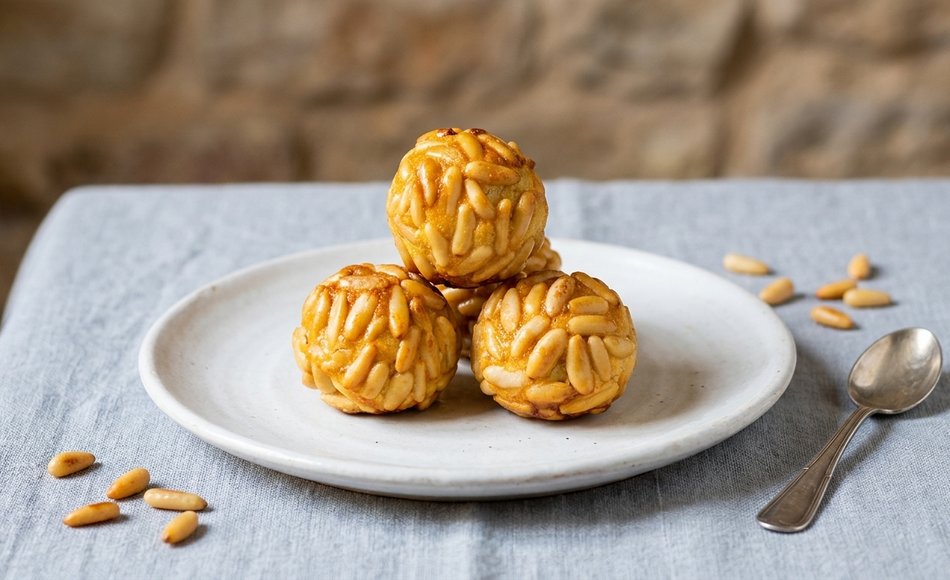
Panellets (Catalan Marzipan Sweets)
- Prep Time: 30 minutes
- Cook Time: 10 minutes
- Total Time: 1 hour 40 minutes
- Yield: 24 servings
- Category: Dessert
- Cuisine: Spanish (Catalan)
Ingredients
- 250 g of ground almonds (almond flour) (2 cups)
- 250 g of granulated sugar (1 1/4 cups)
- 150 g of boiled, mashed potato (1 medium potato)
- Zest of 1 lemon
- 2 medium eggs, yolks and whites separated
- 200 g of pine nuts (1 1/4 cups)
- 1 tablespoon of water (optional)
Preparation
- Make the almond paste, mix the ground almonds, sugar, mashed potato, and lemon zest in a bowl, and work the mixture with your hands until you get a smooth, slightly sticky dough; if it feels too dry, add the tablespoon of water to help it come together.
- Let the dough rest, work one egg yolk into the almond paste until fully combined, cover the bowl with a clean towel, and let it rest at room temperature for one hour so the dough firms up and becomes easier to shape.
- Shape the balls, pinch off walnut-sized pieces of dough, roll them into balls with lightly dampened hands, and arrange them with space between each on a baking sheet lined with parchment paper.
- Coat with pine nuts, brush each ball with lightly beaten egg white and press it into a plate of pine nuts, rolling it around until fully covered, then press gently so the pine nuts stick.
- Bake the panellets, preheat the oven to 400°F (200°C) and bake for 8 to 10 minutes, until the pine nuts turn golden brown and the tops are evenly toasted; let them cool completely before serving.
Kitchen Tips
- If you can't find potato, swap it for boiled, mashed sweet potato — a traditional variation used in some Catalan households.
- Let the dough rest properly before shaping: fresh-mixed paste is too soft and tends to fall apart in the oven.
- Watch the oven closely during the last few minutes — pine nuts brown fast and burn easily.
- Store panellets in an airtight container at room temperature for 4 to 5 days, or freeze them unbaked to prep ahead of time.
Traditional variations
- Coconut panellets, made with the same almond paste rolled in shredded coconut instead of pine nuts.
- Chocolate panellets, with cocoa mixed into the dough or dipped in melted chocolate.
- Coffee panellets, flavored with instant coffee or coffee extract worked directly into the paste.
- Egg yolk panellets, topped with a sweetened egg yolk glaze lightly browned under the broiler or with a kitchen torch.
How to Enjoy This Recipe
Panellets are traditionally served at room temperature, whether fresh out of the oven or the next day, arranged on a platter alongside other All Saints' Day sweets. In Catalonia, they're commonly paired with roasted chestnuts and baked sweet potatoes as part of the same La Castanyada ritual.
Recommended sides
- Roasted chestnuts
- Baked sweet potato
- Moscatel or other sweet wine
- Cava, for more festive gatherings
History and Tradition
The word "panellet" comes from Catalan and literally means "small bread," a nod to its tiny, roll-like shape. Its origins trace back to medieval religious customs in which bread and sweets were handed out to the poor on All Saints' Day, a practice that eventually evolved into these bite-sized marzipan treats.
While panellets are most closely identified with Catalonia today, they're also enjoyed across the Balearic Islands, the Valencian Community, and Aragon, where each region keeps its own small variations on the recipe and coatings.
Frequently Asked Questions
You can swap it for boiled, mashed sweet potato, a traditional variation used in some Catalan households.
Resting at room temperature lets the dough firm up and become easier to shape.
Bake them for 8 to 10 minutes at 400°F (200°C), until the pine nuts turn golden brown and the tops are evenly toasted.
Store them in an airtight container at room temperature for 4 to 5 days, or freeze them unbaked to prep ahead of time.
Coconut, chocolate, coffee, and egg-yolk panellets are also common, each finished with its own distinctive coating.