
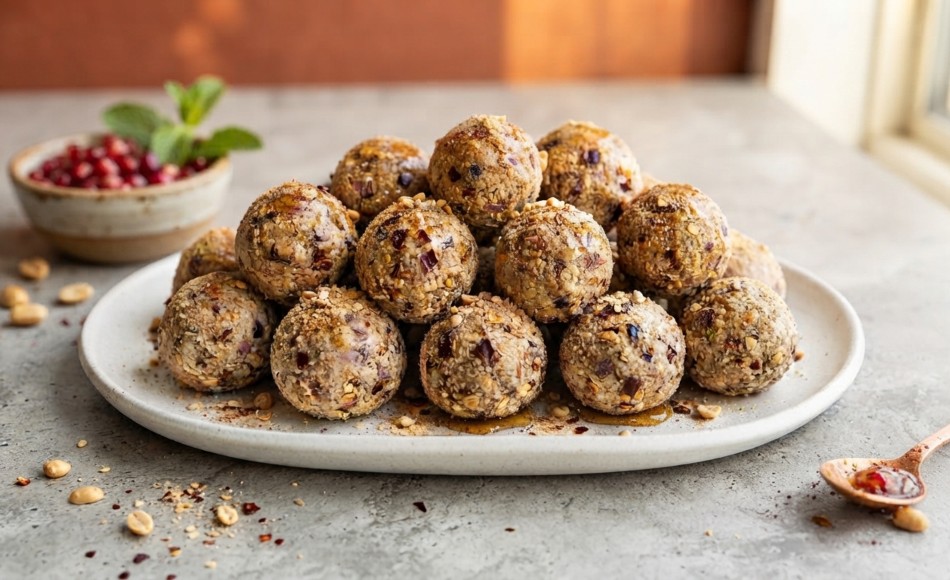
Bolanchao is a traditional sweet from northern Argentina made from the pulp of the mistol (Ziziphus mistol), a small wild fruit native to the Gran Chaco. Its name comes from Quechua, the indigenous language still widely spoken across Santiago del Estero, and refers to the little balls the fruit paste is shaped into before being coated in toasted carob flour and baked.
The sweet has deep roots in the criollo and indigenous cooking of the Chaco region, where wild fruit from the native forest — known locally as “el monte” — has long been central to the local diet. Bolanchao is traditionally made during the mistol harvest in late summer, when families gather the ripe fruit to prepare a treat that, thanks to baking, can be kept and enjoyed well beyond the fruit’s short season.
Print
Argentine Bolanchao Balls
- Prep Time: 35 minutes
- Cook Time: 20 minutes
- Total Time: 55 minutes
- Yield: 20 pieces
- Category: Dessert
- Cuisine: Argentine (Gran Chaco / Santiago del Estero)
Ingredients
- 500 g of ripe mistol fruit pulp, seeds removed (about 3 cups)
- 150 g of toasted algarroba (carob) flour, for coating (about 1 cup)
Preparation
- Clean and grind the mistol, wash the ripe fruit, remove the small stems, and separate the pulp from the seeds; grind the pulp in a mortar or food processor until you get a moist, grainy paste — the fruit’s own moisture is enough, so there’s no need to add water.
- Shape the balls, take small portions of the paste in your hands and press them into firm, even, bite-sized balls.
- Coat with toasted algarroba flour, roll each ball in the toasted algarroba (carob) flour until fully covered on all sides, then arrange them on a baking sheet.
- Bake until golden, bake the balls at medium heat until evenly golden brown, then remove from the oven and let them cool completely before serving.
Kitchen Tricks
- Choose mistol that’s very ripe, almost overripe, since it releases more natural sweetness and grinds more easily.
- Shape the balls right after grinding, while the paste is still warm and pliable, so they hold together well.
- Store baked bolanchao in an airtight container at room temperature; thanks to their low moisture content, they keep well for several days.
- If your mistol is very dry, moisten the pulp with just a few drops of water before grinding — don’t overdo it, or you’ll lose the traditional texture.
Traditional variations
- In some families of northern Argentina, toasted algarroba flour is replaced with toasted breadcrumbs when carob flour isn’t available, while the rest of the method stays the same.
- Bolanchao is also known as “balanchao” or “gualanchao” in different towns across Santiago del Estero and Chaco province — different names for the same traditional sweet.
How to Enjoy This Recipe
Bolanchao is traditionally enjoyed on its own, as a homemade sweet or after-dinner treat, the way it’s been made for generations in rural kitchens of northern Argentina. It’s often paired with a mate or a cup of coffee, especially on summer afternoons when mistol is at its ripest.
Recommended sides
- Mate (Argentine yerba mate)
- Coffee
Origin and Tradition
The name bolanchao comes from Quechua, the indigenous language most widely spoken in Santiago del Estero, a province with a strong indigenous heritage within Argentina. The sweet is part of the ancestral gastronomy of the Gran Chaco, a region where forest fruits like mistol and algarroba were, for centuries, central to the diet of native peoples and, later, criollo families.
Beyond being a dessert, bolanchao historically served as a preservation method: by baking the mistol pulp, the wild fruit — available for only a few weeks a year — could be stored and eaten during leaner months, when other food was hard to come by in the Chaco forest.
Frequently Asked Questions
Bolanchao (Argentine Mistol Fruit Balls) is a traditional recipe made with simple ingredients and a homemade cooking method that preserves its authentic flavor.
Following the recipe step by step, the total time will depend on how many servings you make and the cooking times listed.
It goes well with classic accompaniments and typical beverages, depending on the occasion and family tradition.
In most cases yes: stored in a sealed container in the refrigerator, it stays good for the next day, as long as its freshness is checked before serving.
Yes, small variations are fine based on personal preference, as long as the key ingredients that define its traditional flavor are kept.