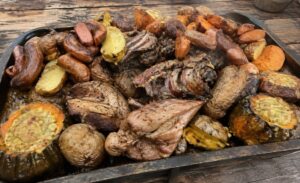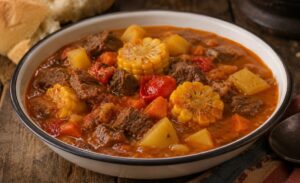
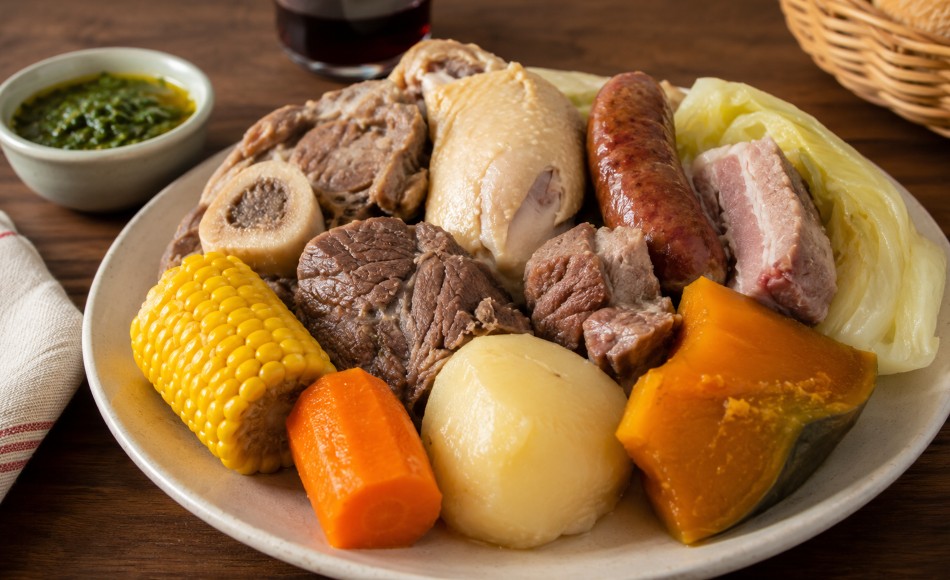
Puchero criollo is one of the most traditional dishes in Argentine home cooking: bone-in meats and vegetables are slow-cooked together in a single pot with plenty of broth, until everything turns tender.
Unlike locro, which is thick and heavily seasoned, puchero is lighter and served by separating the broth from the vegetables and meat, which are dressed with oil and vinegar.
Print
Argentine Boiled Beef and Vegetable Stew
- Prep Time: 20 minutes
- Cook Time: 2 hours
- Total Time: 2 hours 20 minutes
- Yield: 8 servings
- Category: Main Course
- Cuisine: Argentine
Description
Traditional Creole recipe made with assorted meats and vegetables, adapted into an easy-to-follow home version with exact proportions.
Ingredients
- 1 kg of bone-in beef shank or flank (about 2.2 lb)
- 1 hen or chicken, in pieces (optional)
- 1 chorizo colorado or blood sausage (optional)
- 3 ears of corn, sliced
- 4 potatoes, peeled
- 1 pumpkin or squash, in large pieces
- 2 carrots, peeled
- 1 onion, whole
- 2 tomatoes
- Salt, to taste
- Olive oil and vinegar, for dressing, to taste (optional)
Preparation
- Cook the beef, place the beef shank or flank in a large pot with plenty of water and salt, and bring to a boil. Skim the surface to remove impurities.
- Add hen and chorizo, stir in the hen or chicken and the chorizo colorado or blood sausage if using, and cook over medium heat for about an hour.
- Add the hard vegetables, stir in the whole onion, tomatoes, and carrots, and keep cooking for another 30 minutes.
- Add potato, squash, and corn, stir in the potatoes, squash pieces, and corn, and cook until all the vegetables are tender, about 30 more minutes.
- Check for doneness, confirm the meat pulls apart easily and the vegetables are soft when pierced with a fork.
- Separate and serve, remove the meats and vegetables from the broth, and serve the broth separately as a first course if desired. Dress the vegetables with olive oil and vinegar before serving.
Tips for getting it right
- Skimming the broth at the start of cooking helps achieve a cleaner, clearer result.
- Choose bone-in cuts, like shank, since they add flavor and body to the broth during the slow cook.
- Unlike locro, puchero doesn’t include legumes and shouldn’t come out thick: the final result should be a clear broth with the vegetables and meats served separately.
- The strained broth can be used as the base for a light soup the next day.
Traditional variations
- Some families add rice or pasta to the strained broth, turning it into a separate soup before the main course.
- The choice of meats varies by region: besides shank, cuts like oxtail, chuck with bone, or beef shin are also used.
How to serve
Puchero criollo is served in two courses: first the broth, then the drained meats and vegetables, dressed with olive oil and vinegar.
It’s a classic winter dish in Argentine homes, perfect for sharing with family.
Recommended sides
- Salsa criolla
- Crusty bread
- Olive oil and vinegar
Did you know?
Unlike many Spanish-style pucheros and other Argentine stews like locro, traditional puchero criollo doesn’t include legumes, which makes it lighter.
The main difference from locro is texture: locro is thick and heavily seasoned, while puchero is served with the broth separate, lighter and less spiced.
Frequently Asked Questions
Locro is a thick, heavily seasoned stew made from corn, beans, and squash, while puchero is lighter, cooked in plenty of broth, and served with the broth separated from the meats and vegetables.
No, unlike many Spanish-style pucheros and other Argentine stews, traditional puchero criollo doesn't include legumes among its ingredients.
Skimming the surface during the first minutes of cooking helps remove impurities and achieve a cleaner, clearer broth.
It's served in two courses: first the broth as a starter, then the drained meats and vegetables, dressed with olive oil and vinegar.