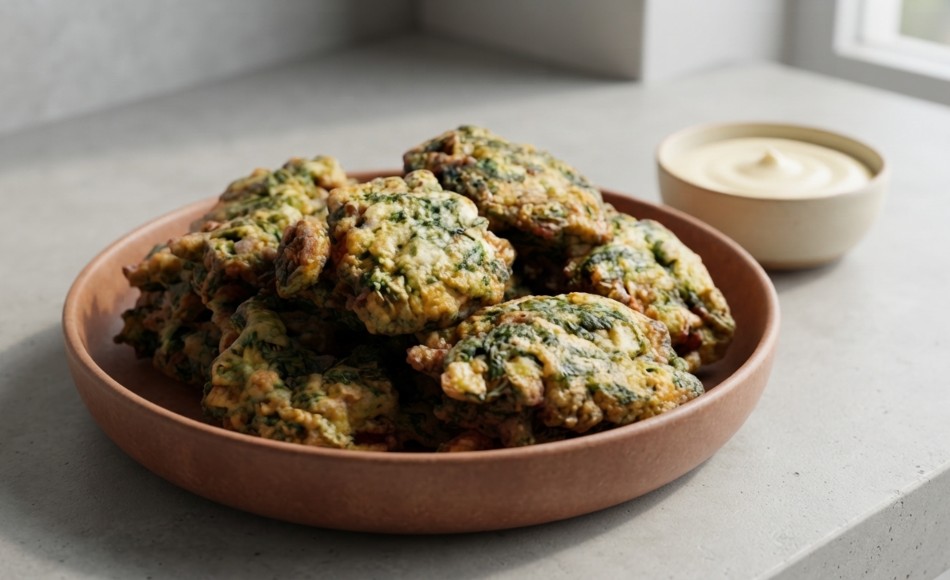
Buñuelos de acelga, or Argentine chard fritters, are a beloved home-cooked dish: small fried patties made with chard, egg, and flour, golden and crisp on the outside and tender inside. They’re an economical and tasty way to make the most of leafy greens, and they show up in Argentine family kitchens without needing any special occasion.
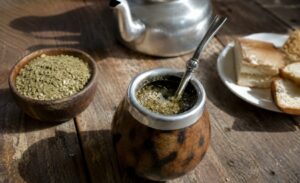
They’re commonly served as an appetizer, as a light main dish alongside a salad, or as part of an afternoon snack with mate. Their simplicity and everyday ingredients have made them a classic of Argentine home cooking, passed down from one generation to the next.
Print
Argentine Chard Fritters
- Prep Time: 15 minutes
- Cook Time: 15 minutes
- Total Time: 30 minutes
- Yield: 4 servings
- Category: Appetizer
- Cuisine: Argentine
Ingredients
- 700 g of Fresh chard (leaves only) (1 large bunch (about 1.5 lb))
- 2 large of Eggs
- 120 g of All-purpose flour (1 cup)
- 50 g of White onion, finely chopped (1/3 cup) (optional)
- 40 g of Grated hard cheese (such as Parmesan) (3 tablespoons) (optional)
- 1 clove of Garlic, minced (optional)
- Salt, to taste
- Black pepper, to taste (optional)
- Nutmeg, to taste (optional)
- 500 ml of Vegetable oil, for frying (2 cups)
- Salted water for cooking the chard
Preparation
- Wash and cook the chard, rinse the chard leaves thoroughly, trim the thick stems if you like, and boil them in salted water for about 5 minutes, until tender.
- Drain and chop, drain the cooked chard, press it firmly with your hands or a strainer to remove excess water, and finely chop it with a knife.
- Make the batter, in a bowl combine the chopped chard with the eggs, flour, onion, cheese, and garlic if using. Season with salt, pepper, and nutmeg, and mix until you get a thick, even batter.
- Fry the fritters, heat the oil in a skillet over medium-high heat and drop in spoonfuls of batter, flattening them slightly. Fry each side for 2 to 3 minutes, until golden and crisp on the outside.
- Drain and serve, lift the fritters out with a slotted spoon and set them on paper towels to remove excess oil. Serve them hot.
Practical Tips
- Squeeze the cooked chard well; if it stays damp, the fritters will soak up too much oil and won’t turn out crisp.
- Adjust the amount of flour based on how moist the chard is: if the batter is too runny, add a bit more until it holds together on a spoon.
- Fry just a few fritters at a time so the oil doesn’t lose heat and they cook evenly.
- For a milder flavor, you can skip the garlic and use only the onion.
Traditional variations
- Some households add a bit of ricotta to the batter for softer, juicier fritters.
- Other families mix in chopped cooked ham for a heartier version.
- It’s also common to make the batter with just chard and egg, leaving out the cheese, for a lighter version.
Serving Suggestions
Chard fritters are traditionally served hot, fresh out of the pan, as an appetizer or a light main dish.
They’re often paired with mate or tea for an afternoon snack, especially in households outside the big cities.
Recommended sides
- Salsa criolla (Argentine tomato-onion relish)
- Fresh tomato and lettuce salad
- Lemon wedges for squeezing on top
- Mate or tea for an afternoon snack
A Bit of History
Chard fritters are part of Argentine home cooking inherited from Spanish and Italian culinary traditions, adapted with whatever seasonal greens each family’s garden provided.
Their simple, budget-friendly preparation made them a regular on everyday tables, especially as a way to use up fresh chard from the market or the backyard garden.
Frequently Asked Questions
Argentine Chard Fritters (Buñuelos de Acelga) is a traditional recipe made with simple ingredients and a homemade cooking method that preserves its authentic flavor.
Preparation time is usually short if you follow the steps in order; the exact duration depends on the quantities and serving size.
It pairs well with traditional side dishes and typical drinks, depending on personal taste and local custom.
Yes, it generally keeps well in the fridge in a covered container and can be enjoyed the next day, as long as you check it is still fresh.
Yes, some ingredients can be adjusted to taste, though it is best to keep the main ones to preserve the dish's characteristic flavor.