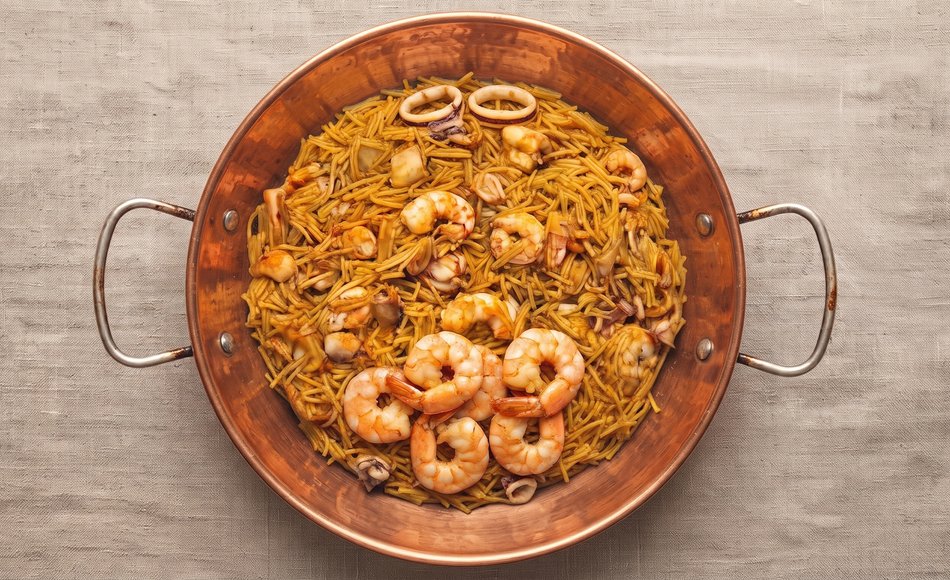
Arroz a banda is one of the most iconic seafood rice dishes from Spain's Valencian coast, especially linked to fishing towns like Santa Pola and Dénia, where it began as a resourceful way for fishermen to turn unsellable catch and broth from the local fish market into a hearty, flavor-packed rice.
Its name, which translates to "rice on the side," refers to the traditional way of serving it: the rice comes first, cooked in a rich fish broth, while the fish itself is served separately, or "a banda," as a second course alongside garlicky alioli. Eating in these two stages turns arroz a banda into a full culinary experience, deeply rooted in family meals and local festivities along the Alicante coastline.
Today it's found on menus across Spain, though the most authentic versions are still cooked in a wide paella pan, built on a sofrito of ñora pepper, garlic, and tomato that gives the rice its deep color and unmistakable depth of flavor.
Print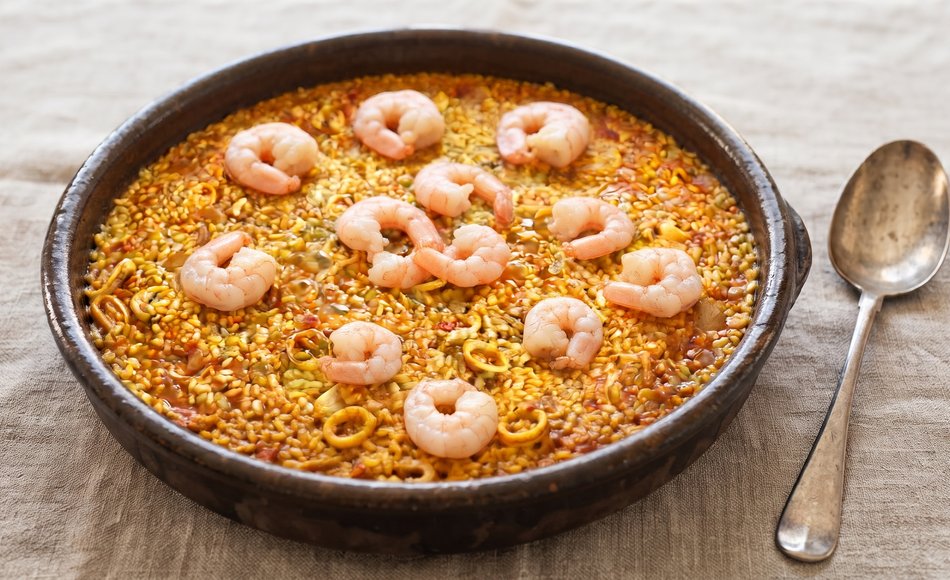
Spanish Arroz a Banda
- Prep Time: 20 minutes
- Cook Time: 25 minutes
- Total Time: 50 minutes
- Yield: 4 servings
- Category: Main Course
- Cuisine: Spanish
Ingredients
- 400 g of bomba rice (2 cups)
- 1.4 liters of fish stock (fumet) (6 cups)
- 300 g of cleaned cuttlefish, chopped (1 medium cuttlefish)
- 2 dried ñora peppers
- 3 cloves of garlic, chopped
- 1 medium ripe tomato, grated
- 1 pinch of saffron threads
- 100 ml of extra virgin olive oil (7 tablespoons)
- Salt, to taste
- Alioli, for serving, to taste (optional)
Preparation
- Make the sofrito base, heat the olive oil in a wide paella pan over medium heat, fry the whole ñora peppers for a few seconds until fragrant, remove them, scrape out the pulp with a knife, and set it aside.
- Brown the cuttlefish and garlic, in the same oil, sauté the chopped garlic with the cuttlefish for about 5 minutes, until the cuttlefish turns golden and releases its juices.
- Add the tomato and ñora pulp, stir in the grated tomato and reserved ñora pulp, and cook over medium heat, stirring, until the tomato loses its water and the sofrito turns a deep reddish color.
- Pour in the broth and saffron, add the hot fish stock to the sofrito, stir in the saffron, season with salt, and bring everything to a boil.
- Cook the rice, spread the rice evenly across the pan, cook over high heat for the first 10 minutes without stirring, then lower the heat to medium-low for another 8 to 10 minutes, until the rice absorbs the broth and a light socarrat forms on the bottom.
- Rest and serve, remove the pan from the heat, cover with a clean kitchen towel, let it rest for 5 minutes, and serve the rice piping hot alongside homemade alioli.
Kitchen Tricks
- Use a well-concentrated fish stock made with small rockfish, fish heads, and a bit of tomato, since it's the flavor base for the entire dish.
- Don't stir the rice while it cooks, stirring releases starch and can turn this dry, separate-grain rice into a soupy one.
- For a more pronounced socarrat, raise the heat during the last minute of cooking, but watch closely so it doesn't burn.
- Bomba rice is the best choice because it absorbs plenty of liquid without overcooking, making it easier to hit the perfect texture.
Traditional variations
- In towns like Dénia, the stock is often enriched with monkfish or red shrimp, which are then served as a second course alongside the rice.
- In Santa Pola, it's common to add a bit of octopus along with the cuttlefish, without changing the essence of the dish.
- Some families replace saffron with food coloring, though purists insist saffron is essential for the dish's authentic flavor and color.
Traditional Way to Serve
Arroz a banda is traditionally served in two stages: first the rice, loose-grained with a light socarrat on the bottom, always accompanied by a generous spoonful of homemade alioli stirred in to taste with each bite.
The fish and seafood used to make the broth are served afterward, on the side, as a second course, usually with a drizzle of olive oil and a squeeze of lemon.
Recommended sides
- Homemade alioli
- Toasted bread
- Valencian white wine
Origin and Tradition
The term "a banda" comes from Valencian and means "apart" or "on the side," referring to how fishermen separated the fish from the broth before turning it into rice, so that no part of the day's catch went to waste.
Although it's now considered a restaurant specialty, arroz a banda began as a humble, practical meal cooked on boats and at the fish markets of Alicante, where lower-value fish found its best use in a broth that fed the crew's rice.
Frequently Asked Questions
It's Valencian for «on the side»: the rice is served first, and the fish from the broth is served separately as a second course.
Dried peppers fried for a few seconds, whose pulp is scraped out for the sofrito; they add color and depth of flavor.
No: it cooks for 10 minutes over high heat without stirring, then another 8 to 10 minutes over medium-low heat.
The lightly toasted layer that forms on the bottom of the pan at the end of cooking.
Always with allioli; it rests 5 minutes covered with a cloth before being served hot.