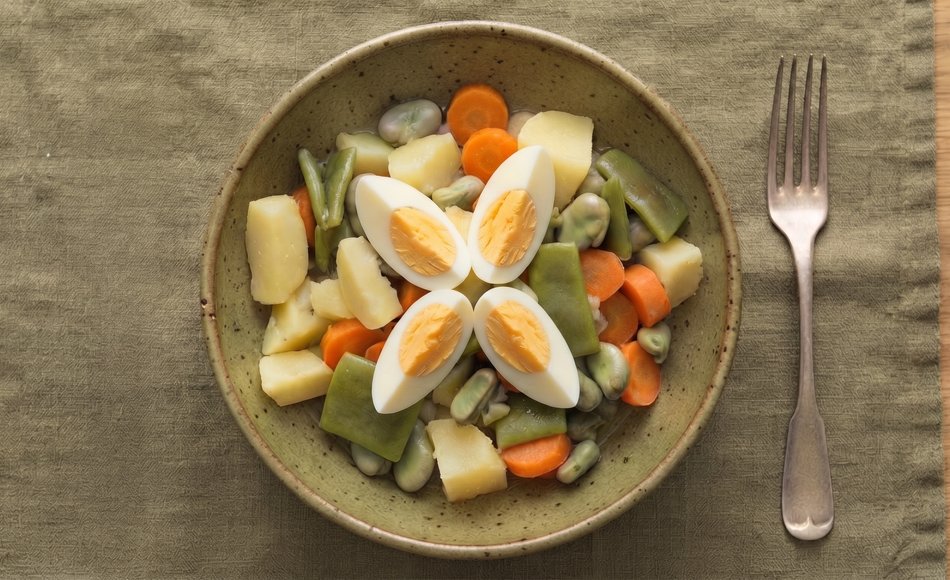
Menestra de verduras de Tudela is one of the most representative dishes of Navarra's cuisine, and in particular of the Ribera del Ebro, one of Spain's most celebrated vegetable-growing regions. It brings together several seasonal vegetables in one pot — artichokes, fava beans, peas, green beans, wild asparagus, and carrots — each cooked carefully on its own and then combined in a light garlic and Serrano ham sauce.
Tudela has been known for generations as a major vegetable garden, thanks to the fertile land irrigated by the Ebro and Queiles rivers, and this menestra was born precisely as a way to showcase the best vegetables of each season together in a single dish. It's a common sight on family tables in the area, especially in spring, when fresh artichokes, fava beans, and asparagus all come into season, and it's also part of the recipes featured during the city's Feria de la Verdura (Vegetable Fair) held every September.
Print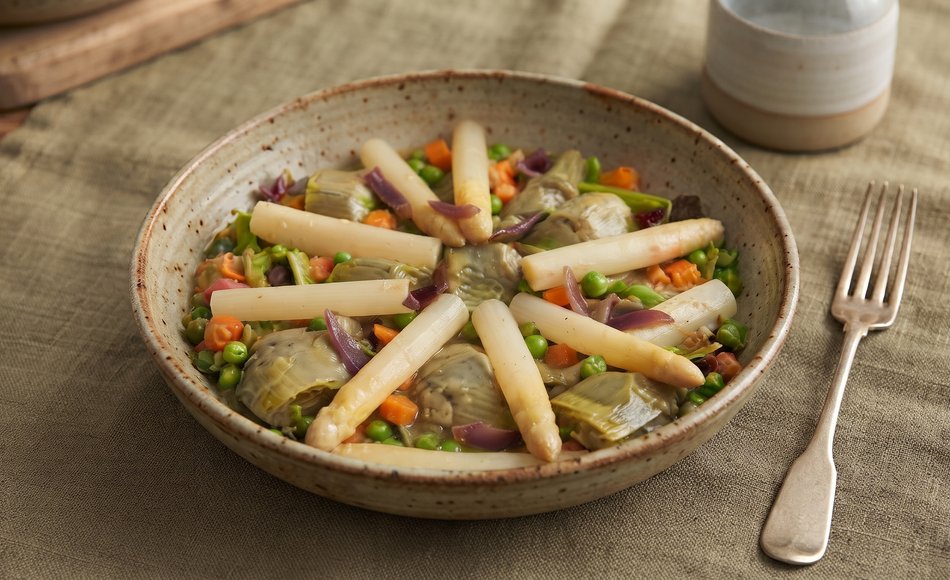
Menestra de Verduras de Tudela (Spanish Vegetable Medley from Navarra)
- Prep Time: 25 minutes
- Cook Time: 35 minutes
- Total Time: 1 hour
- Yield: 4 servings
- Category: Main Course
- Cuisine: Spanish
Ingredients
- 500 g of fresh artichokes (4 medium artichokes)
- 200 g of fresh or frozen shelled fava beans (1 1/3 cups)
- 150 g of fresh or frozen peas (1 cup)
- 200 g of green beans (2 cups)
- 150 g of wild asparagus (espárragos trigueros) (1 small bunch)
- 200 g of carrots (2 medium carrots)
- 100 g of Serrano ham, diced (about 1/2 cup)
- 2 garlic cloves, chopped
- 30 g of all-purpose flour (2 tablespoons)
- 100 ml of dry white wine (1/2 cup) (optional)
- 60 ml of extra virgin olive oil (4 tablespoons)
- Juice of 1 lemon (to keep the artichokes from browning)
- 2 hard-boiled eggs, for garnish (optional)
- 1 tablespoon of fresh parsley, chopped
- Salt, to taste
- 1 bay leaf (optional)
- Salted water for cooking the vegetables
Preparation
- Prep the artichokes, pull off the tougher outer leaves, cut them into quarters, scrape out the inner fuzzy choke, and drop them straight into a bowl of water with the lemon juice so they don't brown while you prep the rest of the vegetables.
- Clean and cut the remaining vegetables, peel and slice the carrots, trim and cut the green beans into pieces, clean the wild asparagus, and shell the fava beans and peas if you're using fresh ones.
- Cook each vegetable separately, boil the carrots and green beans in salted water with the bay leaf for about 10 to 12 minutes, the artichokes and fava beans for about 15 minutes, and the asparagus and peas for just 5 minutes, until everything is tender but still holds its shape; drain and set aside a little of the cooking liquid.
- Make the sauce, heat the olive oil in a wide pot, brown the chopped garlic together with the diced Serrano ham, stir in the flour and cook for a couple of minutes to remove the raw taste, then add the white wine and a ladle of the reserved vegetable broth, and cook while stirring until the sauce thickens slightly.
- Add the cooked vegetables, gently fold all the drained vegetables into the pot with the sauce, stirring carefully so they don't break apart, and let everything simmer together over low heat for 5 more minutes so the flavors come together.
- Serve the menestra hot, garnish with chopped hard-boiled egg and fresh parsley right before bringing it to the table.
Kitchen Tips
- Cook each vegetable separately and just until tender: this keeps their color and texture intact and keeps any one vegetable from overcooking while another is still raw.
- If you're using fresh artichokes, work quickly and keep them in lemon water until the last moment so they don't brown and dull the color of the dish.
- Save some of the vegetable cooking liquid: it's the perfect base for giving the sauce body and flavor without watering it down.
- Menestra often tastes even better the next day, once the vegetables have had time to soak up the flavors of the sauce.
Traditional variations
- During Lent or in the vegetarian version, it's made without Serrano ham, boosting the flavor with extra garlic, a touch of paprika, and sometimes a few chopped almonds.
- In the winter months, some families in Tudela swap in or combine cardoon with the artichokes, another prized vegetable from the Navarra vegetable gardens.
- Some households add borage, a vegetable typical of the Ebro riverbank region, alongside the rest of the seasonal vegetables.
Recommended Presentation
Tudela-style menestra is served hot, straight from the pot or in a deep plate, usually as a first course or as a light main dish on its own.
It's common to garnish it with chopped hard-boiled egg and fresh parsley right before serving, alongside crusty bread for mopping up the sauce.
Recommended sides
- Rustic bread for dipping in the sauce
- A young white wine from Navarra
- It can also be enjoyed on its own as a complete dish
A Gastronomic Curiosity
Tudela, in the Ribera region of Navarra, is known as one of Spain's great vegetable-growing areas thanks to the fertile land irrigated by the Ebro and Queiles rivers, which produces artichokes, asparagus, fava beans, borage, and cardoon of well-regarded quality.
Since 1972, the city has held its Feria de la Verdura (Vegetable Fair) every September, an event built around these vegetables that reflects how central the local huerta is to the town's identity. Menestra was born precisely as a way to bring together and showcase, in a single dish, the best vegetables of each season.
Frequently Asked Questions
To keep them from browning while you prep the rest of the vegetables.
Because each one needs a different cooking time (carrots and green beans 10 to 12 minutes, artichokes and fava beans about 15 minutes, and asparagus and peas just 5 minutes), so they all turn out tender without overcooking.
It's used to make the sauce, together with the white wine, giving it body and flavor.
In the Lenten or vegetarian version, the Serrano ham is left out and the flavor is boosted with extra garlic, a touch of paprika, and sometimes a few chopped almonds.
Rustic bread for dipping in the sauce and a young white wine from Navarra, though it can also be enjoyed on its own as a complete dish.